Govt seeks shift from welfare dependence
28 Sep 2026
Government’s high expenditure on social protection programmes has yet to translate into visible sustainable livelihoods for beneficiaries, Chief of Staff in the Office of the President Dr Oupa Tsheko has said. Speaking during a meeting on social security programmes with the Mogoditshane-Thamaga District management on Wednesday, Dr Tsheko said Botswana spent about 4.4 per cent of its Gross Domestic Product (GDP) on social security programmes, making the country one of the highest spenders globally.
He said despite the significant resources committed to social protection, the country was yet to see corresponding evidence of beneficiaries moving towards sustainable livelihoods. “When these social protection programmes are monitored, expenditure will reduce and the impact should be seen,” he said.
Dr Tsheko said the reform of social protection programmes should be guided by the circumstances of individual communities rather than a one-size-fits-all approach. He said projects should be unique to localities and respond to the needs and opportunities of particular communities.
The meeting formed part of ongoing efforts under the Botswana Economic Transformation Programme (BETP) to reform the country’s social protection system, with the objective of developing a social protection policy and appropriate frameworks.
The BETP presentation, delivered by Ms Gomolemo Tselakgopo, outlined a shift from fragmented assistance towards integrated social protection, economic empowerment and self-reliance. The reform proposes, among other measures, a single social registry, rationalisation and modernisation of programmes, sustainable livelihood interventions, pathways to social security and structured exit strategies.
Ms Tselakgopo said the programme had identified fragmentation as one of the key weaknesses in the current system. She said according to BETP findings, although 79 per cent of poor Batswana benefited from at least one social protection programme, 21 per cent remained unserved. She further noted that Botswana currently runs about 37 social protection programmes across ministries, placing increasing pressure on government finances.
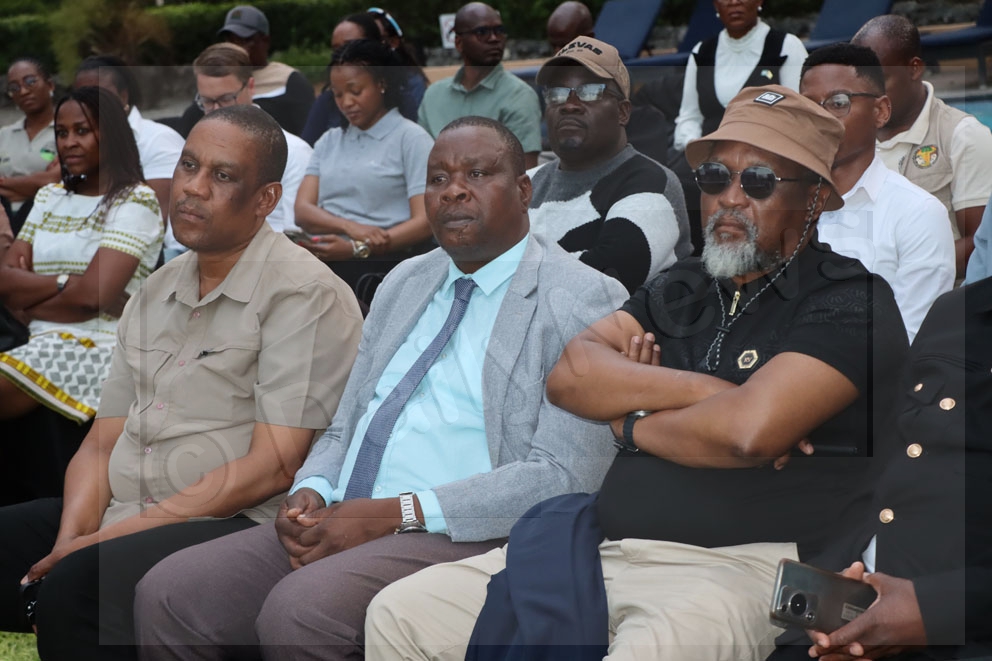
At district level, chief social and community development officer, Ms Itumeleng Lebani highlighted the scale of demand for welfare services in Mogoditshane-Thamaga. The district has 1 744 beneficiaries registered across various welfare programmes, comprising permanent and temporary destitution support, orphan care, community home-based care, children in need of care and needy students. Females account for 1 018 of the beneficiaries compared with 726 males.
Ms Lebani said gender disparities persisted across the programmes, with women more affected by poverty. She also raised concern that many young and able-bodied people, including graduates, continued to depend on social safety nets because of unemployment.
She said the district was also finding it difficult to break the cycle of poverty among families, while the current definition of needy students under the 2002 Destitute Policy excluded some genuinely vulnerable children whose parents did not qualify as destitute.
The district has also enrolled 547 qualifying beneficiaries under the newly introduced Child Support Grant, with beneficiaries receiving payments in August, including back payments from April. A further 293 applications have been processed and submitted for registration.
Ms Lebani further highlighted pressure on social welfare officers, saying the district had registered 455 cases involving children, of which 271 were child abuse cases.
Of the abuse cases, 212 involved sexual offences, including 96 rape cases and 88 cases of defilement.
With 17 social workers handling the cases while also assessing clients for safety nets and registering beneficiaries for the Child Support Grant, she said officers were struggling to meet court dates and provide counselling services optimally. The district is meanwhile pursuing economic empowerment initiatives intended to help vulnerable people move beyond welfare dependency. These include economic empowerment projects, community projects and the Wealth Creation Programme. Of 1 466 wealth creation projects, 1 024 are operational, while 251 are non-operational and 80 have failed.
Ms Mita Estrehuizen cautioned, however, that beneficiaries could not be expected to graduate from poverty without being equipped with sustainable skills. Her observation echoed the BETP’s Sustainable Livelihoods Approach, which seeks to move social protection beyond traditional assistance by building beneficiaries’ skills, assets and income so they can eventually graduate from assistance.
Dr Karabo Thakwane called for social protection systems to be interfaced so that they could communicate with each other, while the Social Protection director in the Ministry of Local Government and Traditional Affairs Ms Gomotsegang Manne reported progress towards establishing a single social registry.
She said the registry is 96 per cent complete and has captured 18 social protection programmes across ministries, with 262 beneficiaries already captured. The system is intended to improve coordination and prevent beneficiaries from receiving overlapping assistance from different programmes.
For Ramaphatle chief Mr Elijah Dube, the reform should also draw lessons from the past. He urged government to reflect on how Batswana traditionally sustained their livelihoods and revisit cultural practices that had enabled communities to support themselves before the introduction of modern welfare systems.
He said such practices should be examined and incorporated where relevant as Botswana searches for sustainable solutions to poverty and social vulnerability.
The BETP social protection reform envisages a system in which vulnerable citizens are not only supported but are empowered to become self-reliant, with the ultimate goal of building a socially protected Botswana where citizens can thrive with dignity and purpose. ENDS
Source : BOPA
Author : Lindi Morwaeng
Location : Mogoditshane
Event : Meeting with Chief of Staff
Date : 28 Sep 2026
Related News
28 Sep 2026
28 Sep 2026
Stakeholders call for environmental laws

28 Sep 2026
Evolution of brigades since independence

28 Sep 2026