Evolution of brigades since independence

28 Sep 2026
Practical wisdom bridges the gap between abstract thought and real world execution, proving that an ounce of action is worth a tonne of theory. William Pitt The Younger, former prime minister of the United Kingdom, posits that ‘theoretical principles must sometimes give way for the sake of practical advantages.’
This ethos, however highlights the philosophical tension between ideology and pragmatism that defined his career from 1783 to 1801 and 1804 to 1806, which is the pre-independence era for Bechuanaland and that tension lives on to date. This tension of pragmatism versus ideology is evident between main stream education’s academic institutions of higher learning and Technical and Vocational Education and Training (TVET) institutions.
However, Mr Mothusi Van Rensburg, Boiteko Mall centre manager told BOPA that Botswana Brigade movement had evolved from community-driven education with production pilot projects in the 1960s into formalised, government supported TVET institutions.
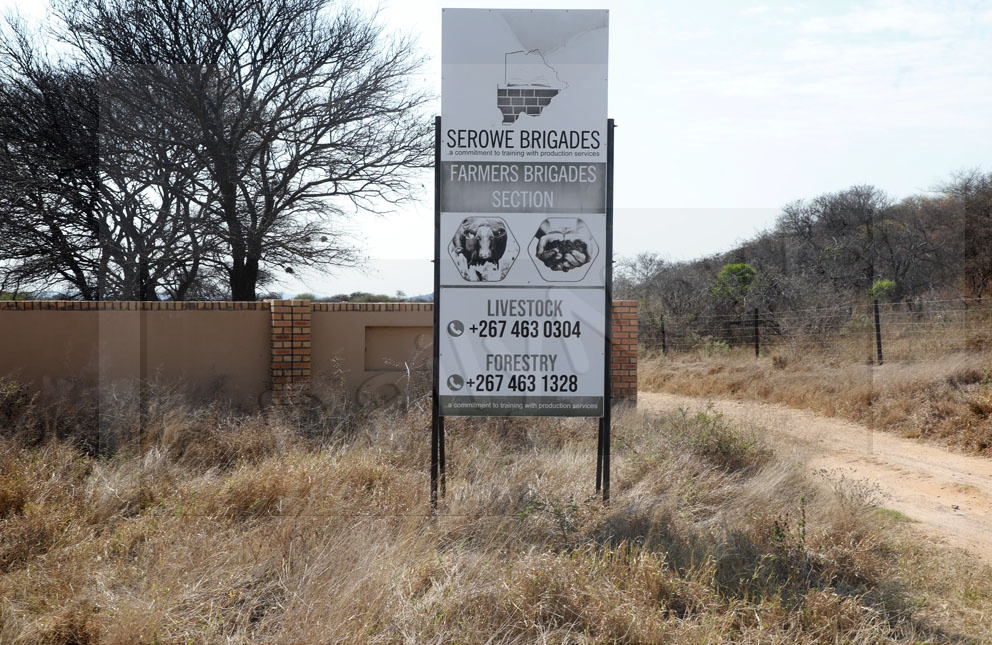
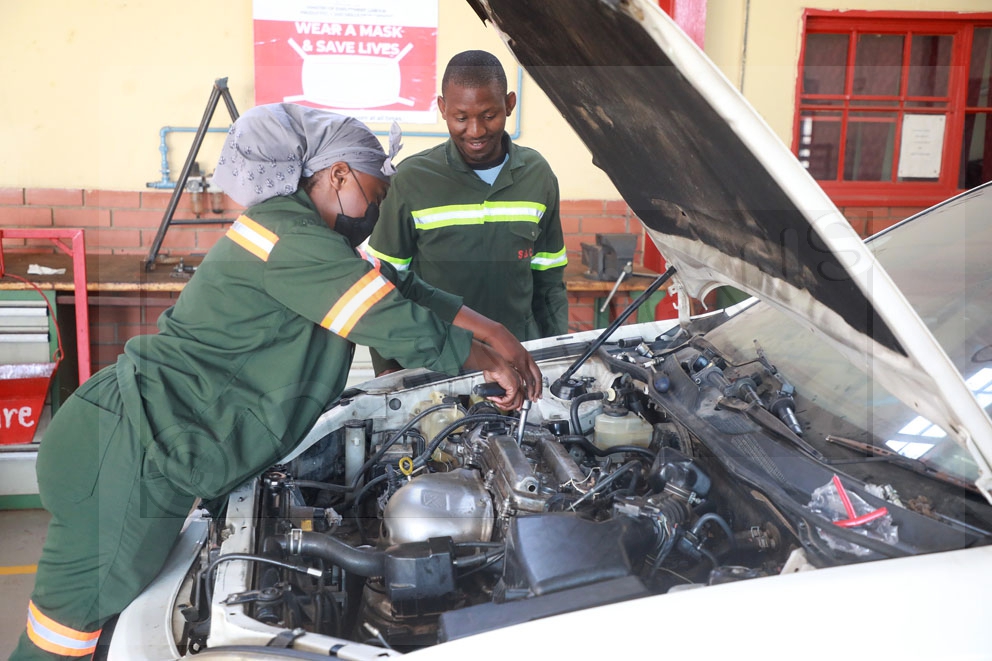
Mr Mothusi, son of Mr Patrick Van Rensburg, who is the pioneer of ‘Education with Production’ said his father started the first brigade in Serowe in 1965 that was affiliated to Swaneng Hill School as the Serowe Builders Brigade. Mothusi said the original philosophy combined classroom learning with practical work, enabling students to build community infrastructure while learning trades like carpentry, welding and bricklaying.
He said over the years, financial strain led the government to take over many brigade operations, shifting focus towards formal employment training rather than local cooperatives. He said his father who was born in 1931 and died in 2017 was an anti-apartheid activist and self-made alternative educationist whose work received international recognition with the Right Livelihood Award in 1981. Born in KwaZulu-Natal into what he described as a very ordinary South African family that believed in the virtue of racism. Contrary to family style, he said Mr Van Rensburg became self-styled rebel who tirelessly pursued his own vision of a brighter future for emerging societies in post-colonial Southern Africa.
In addition, the renowned philosopher devoted his life to implement an alternative, egalitarian approach to education focusing on quality and functional schooling for the majority. “Exiled from South Africa in 1960 because of his involvement in the London boycott campaign that gave birth to the Ant-Apartheid Movement, Mr Van Rensburg moved to Botswana, the then Bechuanaland,” said Mothusi.
He said his father was keen to solve daily life problems using education with production, to create employment, eradicate poverty and change people’s lives.
Mothusi said brigades had deviated from his father’s legacy or original vision but admits that times had changed and daily challenges were no longer the same and therefore, if he was to come today, he would come up with a different initiative.
He said there was nothing wrong with the deviation as TVET was still necessary but what was now lacking was the capacity for graduates to create employment for themselves unlike in the past. Therefore, he said brigades should be more practically oriented than theoretical, arguing that would equip graduates to be employers rather than just employees.
Furthermore, he said TVET institutions were still relevant given that white-collar jobs were now saturated and that the large employer was government who was battling with a huge wage bill in the dark era that diamonds were no longer selling like in the past.
Mothusi spoke of the need for the government and institutions to aggressively cut courses or programmes that lacked direct employability in favour of tech and vocational fields.
“Evaluating courses in higher education to eliminate redundancy and misalignment with markets or economy is a critical, ongoing global movement and therefore, Botswana should not be spared from the precept,” said Mothusi. He said such a move was driven by intense financial pressures, shifting economic priorities and regulatory changes which led universities worldwide of undergoing massive curriculum overhauls.
Mothusi remains optimistic that the misconception of brigades as inferior would change out of necessity. Foundation for Education with Production is a non-governmental organisation established in 1980 by Van Rensburg to promote an alternative to model of learning that bridges the gap between theory and practical work.
Historian and biographer, Dr Kevin Shillington, describes Mr Van Rensburg as a rebel, visionary and radical educationalist. Dr Shillington states that Mr Van Rensburg founded cooperatives, provided vocational training and was among the earliest educationalists to espouse the discipline of development studies.
Furthermore, he said he also founded Botswana’s first independent newspapers, Mmegi wa Dikgang (The Reporter), as a means of fostering literacy and community education. He said Mr Van Rensburg was an innovative and charismatic visionary who captured the zeitgeist of the late twentieth century and whose work and vision still had resonance for debates in educational policy today.
Serowe Brigades Centre acting principal, Mr Moses Mongwa, said brigades were partly living the vision of Mr Van Rensburg because back then, it was education with production of which institutions were operating under the status of community based organisations, therefore operations were governed by a board of trustees. He said it was obligatory for brigades to raise funds for operations thus there was the training and the production side and therefore, proceeds generated from production were used in the running of operations.
“Historically, brigades operated as self-sustaining community owned entities financed through production sales and private donors here and there but nowadays, there is no production, it’s only training,” said Mr Mongwa.
Furthermore, Mr Mongwa said in 1997 when he joined brigades, he discovered that training was subsidised though could not specify the exact year subsidies started. He said the stipend for brigades and technical colleges students was raised significantly under the government’s equity plan, to strike a balance between TVET institutions and those of main stream education. Mr Mongwa said plans were afoot to relive Mr Van Rensburg’s vision, noting the element of training with production had recently been promoted and that the document of training with production guidelines had been completed and were at the final stage of implementation.
Commenting on why brigades and TVET institutions were perceived inferior, Mr Mongwa said, ‘brigades should not be viewed as a fall-back option or sign of academic failure but as valuable, specialised institutions designed to provide critical vocational, technical and entrepreneurial skills that directly serve as practical pathway to employment or self-reliance.’
He also spoke of the importance of technological integration for TVET students through blending digital tools, artificial intelligence and virtual simulations into hands-on trade programmes to prepare learners for modern work places.
Research illustrates that government started subsidising brigades in 1967 beginning with initial financial support for Builders’ Brigade in Lobatse.
It further shows that the Department of Community Development alongside the Botswana Christian Council and the US Embassy set up and began subsidising the Lobatse Builders’ Brigade so it only had to cover 60 per cent of its recurrent costs.
Similarly, early support was extended in Kanye and Francistown while in the 1970s, government assistance expanded as the movement grew, with formal training subsidies later covering portions of instructor salaries and trainee allowances.
In addition, in later years the Ministry of Higher Education increased its financial involvement through institutions like the Brigades Development Centre before eventually moving toward wider government integration and restructuring. The transition toward full government takeover of community-run brigades officially began in 2001.
In mid 2000s the then Ministry of Education and Skills Development now Ministry of Higher Education ramped up consultations and began systematically converting brigades into technical colleges. By late 2009, about 20 brigades had come under full state control, with the process continuing through 2010 to absorb staff and upgrade facilities.
Nonetheless, the transition moved away from the original self-reliant ‘Education with Production’ model pioneered by Mr Van Rensburg toward a fully state-funded and structured technical education system. ENDS
Source : BOPA
Author : Keith Keti
Location : Serowe
Event : Interview
Date : 28 Sep 2026
Related News

28 Sep 2026
28 Sep 2026
Stakeholders call for environmental laws

28 Sep 2026