


Xiconomics Why China's Green Turn Matters in A Warming World
06 Jun 2026
With the campaign message: Now for Climate, this year's World Environment Day calls for urgent action as the planet's warning signs grow harder to ignore.
From scorching temperatures and raging wildfires to severe floods and droughts, extreme weather events are unfolding with growing frequency, posing a shared challenge to humanity's future.
Amid these challenges, China has pursued a path that seeks harmony between development and nature, and is joining countries worldwide in a pursuit of a greener future for all.
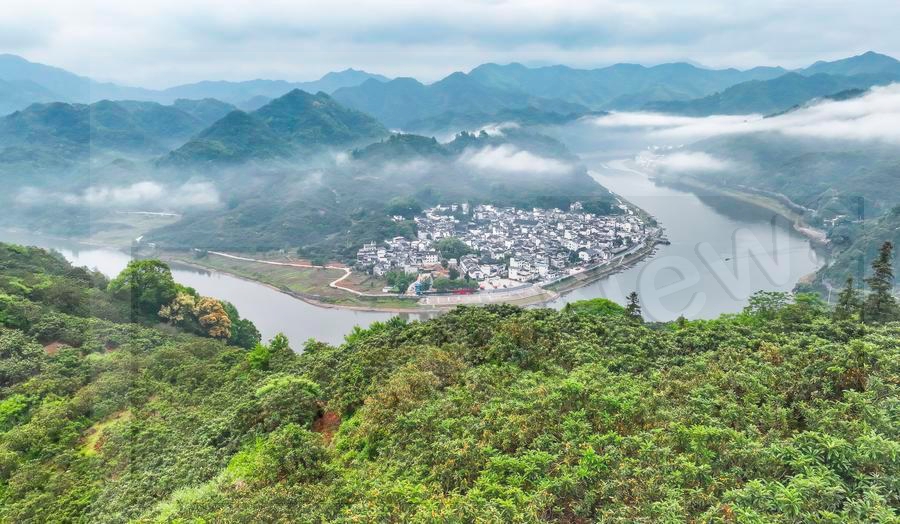
GREEN DEVELOPMENT IN ACTION The 'two mountains' concept, which holds that lucid waters and lush mountains are invaluable assets, has served as a guiding principle of China's environmental governance.
First articulated by Chinese President Xi Jinping in Anji County in 2005 when he was then Party chief of Zhejiang Province, it holds that ecological conservation and economic development can go hand in hand, creating mutually reinforcing benefits.
Across the country, this vision has been translated into policies, projects and local practices. At the headwaters of the Yangtze River, the Yellow River and the Lancang River lies the Sanjiangyuan region, often referred to as China's "water tower."
Since the establishment of Sanjiangyuan National Park in 2021, local authorities have sought to balance ecological conservation with community development.
Through an innovative stewardship programme, nearly 20 000 herders have been employed as ecological rangers, earning annual government subsidies while contributing to the protection of the region's grasslands, wetlands and wildlife.
Stretching more than 6,300 km, the Yangtze River supports over 40 percent of China's population and serves as a vital economic artery.
To restore its ecological health, China launched a 10-year fishing ban across key waters of the Yangtze basin in 2021, alongside broader efforts to curb pollution and rehabilitate river ecosystems.
Nature is beginning to respond. Along sections of the Yangtze River where ecological restoration efforts have taken effect, sightings of the Yangtze finless porpoise -- affectionately known as the "smiling angel" -- have become more common, alongside a gradual recovery of native fish species.
This reflects China's broader approach to green development: ecological conservation and economic progress are not competing goals, but mutually reinforcing ones.
Since 1978, China's Three-North Shelterbelt Forest Programme has rehabilitated vast stretches of desertified land in the country's arid north. By the end of 2025, the restored area had reached 336,000 square km, roughly the size of Germany. Its influence now extends far beyond China.
Experience gained from the program has helped inform restoration efforts in other regions, including Africa's Great Green Wall Initiative along the southern edge of the Sahara Desert.
Earlier this year, China adopted the landmark Ecological and Environmental Code, providing a comprehensive legal framework for ecological conservation and environmental protection.
Fuad Gani, vice director of the Graduate School of Sustainable Development at the University of Indonesia, said that China's ecological civilization philosophy stands out for its ability to translate environmental goals into long-term policies and governance frameworks.
"It is one of China's most valuable contributions to advancing green transformation on the global stage," he said.
STEERING GREEN DEVELOPMENT TOGETHER In Uzbekistan's Navoi region, rows of wind turbines now rise from the dry, open landscape near Zarafshan, harnessing Central Asia's powerful winds to generate clean electricity for homes and businesses.
For many countries rich in renewable resources, the challenge of climate action is often not a lack of ambition, but a lack of access to finance, affordable technology and practical expertise, Mohamed Adow, director of Power Shift Africa, a Nairobi-based think tank driving climate action across Africa, told Xinhua.
Chinese technology, manufacturing capacity and engineering experience are helping to make that access more attainable. ENDS
Source : Xinhua
Author : Xinhua
Location : Beijing
Event : Feature
Date : 06 Jun 2026
Related News



14 Sep 2026
Direlang Living for radio

28 Aug 2026