


Serole turns waste into opportunity
06 Jul 2026
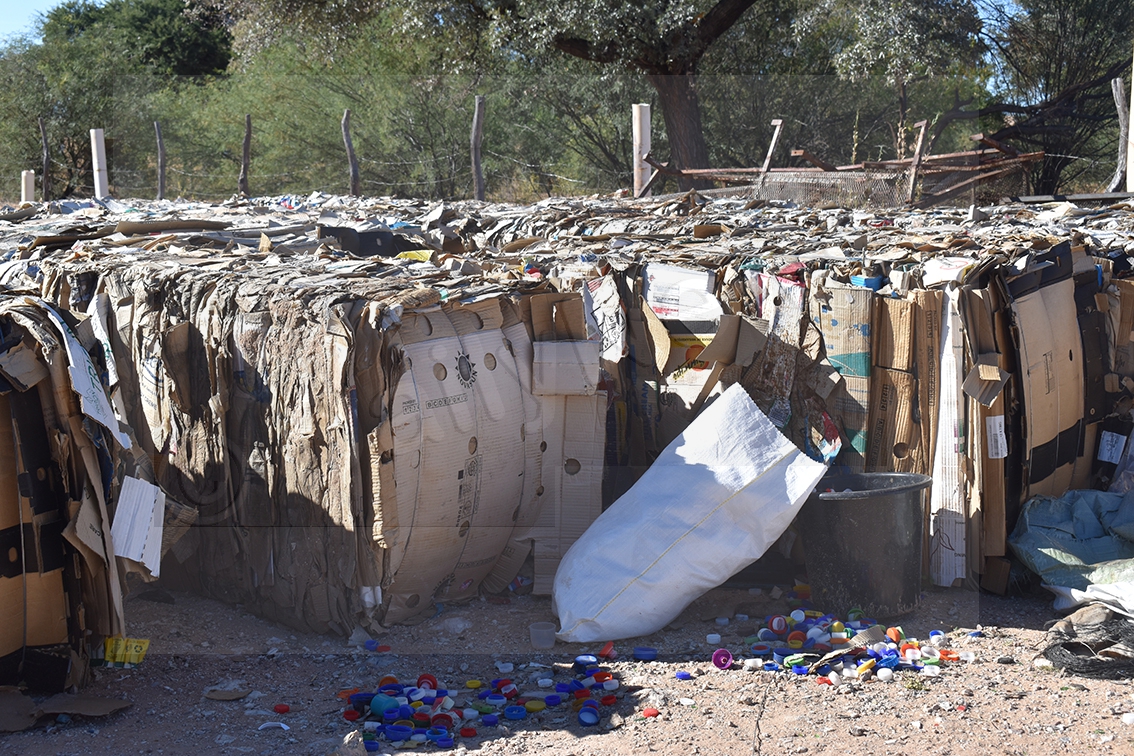
At first glance, Mr Walter Serole’s homestead in Hukuntsi appears to be a picture of disorder.
Plastic, bottles lie scattered across the yard, stacks of cardboard boxes line the perimeter, and a towering machine dominates the space, hinting at the heavy work that unfolds daily.
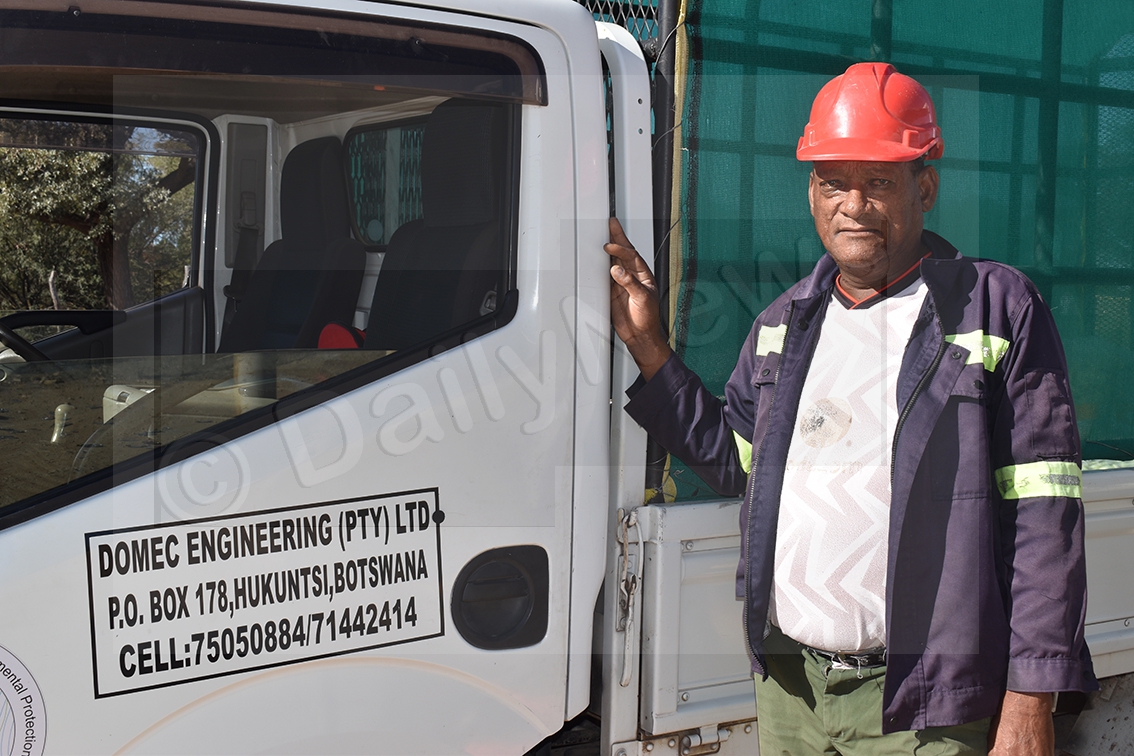
Nearby, transport vans stand ready for the next load as Mr Serole, clad in a safety helmet, moves confidently through what many would dismiss as chaos.
For him, however, this is not a rubbish dump.
It is a workplace, a source of livelihood, and proof that opportunity can be found in the things others discard.
Before venturing into recycling business, Mr Serole worked as a driver for the Kgalagadi North District Council.
He explains that his perception of waste began to change during this period, after routinely collecting discarded materials from a local supermarket.
He recalls meeting a man who informed him that the cardboard boxes he was collecting were not just waste, but valuable materials that could be sold in Gaborone.
That conversation completely changed how he viewed thrown-away items.
Driven by curiosity, he began intentionally collecting more cardboard boxes and eventually travelled to Gaborone to find companies that buy recyclable materials.
This experience marked the beginning of what later became his recycling business, Domec Engineering Pty Ltd.
The business officially launched in 2019, turning his growing interest in recyclable materials into a structured, income-generating enterprise.
Today, Mr Serole’s daily work involves collecting tins, plastics, used paper and cardboard boxes from around the district, which he then sorts and compacts before selling them to established recycling companies such as Pro-Meg, Waste Recycling, and Collect-a-Can.
When he first started, the work was gruelling, as he relied entirely on manual labour to compact the materials. This manual process was slow and physically demanding, making it highly challenging to handle large volumes of waste.
However, the introduction of a large compacting machine has significantly improved his operations.
The machinery has made processing recyclable materials faster and more efficient, drastically increasing the volume he can manage.
Despite this progress, operational space remains a major hurdle.
Mr Serole notes that he can no longer operate effectively from home, as his yard has become overcrowded with recyclable materials and equipment.
Although, the Kgalagadi North District Council had previously indicated that they would discuss identifying an alternative site with the Kgalagadi North Land Board to operate from, little progress has been to date.
In the meantime, he continues to run his business from his congested homestead.
Funding is another major challenge that brings visible emotions to Mr Serole.
A lack of capital continues to stall his expansion plans.
He previously approached the Citizen Entrepreneurial Development Agency (CEDA) for financial assistance but did not receive support. As a result, he has been unable to acquire additional necessary equipment, including more tin-crushing machines, leaving him dependent on a single unit. Labour management presents its own set of difficulties.
Mr Serole notes that some of his employees frequently report for duty under the influence of alcohol, which severely impacts productivity and workplace workflow.
Furthermore, he says many workers prefer short-term daily tasks, expecting payment at the end of each day rather than committing to longer employment periods, making it difficult to maintain consistency and stability within the business operations.
Community habits such as burning recyclable waste by some community members, he notes also impact his bottom line as it directly reduces the volume of material he can salvage.
This makes it difficult to meet his monthly target of about 100 stacks of cardboard boxes, resulting in lower income.
Also, he says rising fuel prices makes it expensive to run his vehicles efficiently, which is a critical problem since transport is essential for delivering the materials to Gaborone.
Despite these steep challenges, Domec Engineering Pty Ltd has grown significantly since its inception.
Mr Serole has managed to acquire two vehicles to support his operations and permanently employs three people, an effort he notes contributes in a small way to curbing unemployment.
The business has also generated significant returns at times, with highest earnings reaching about P44,000 in a single month.
This income has enabled him to cover daily living expenses, support his family, and reinvest in the business.
Furthermore, he says the operation benefits the wider community. When local individuals are unable to sell their recyclable materials directly to big companies, Mr Serole’s team collects and transports the items to Gaborone on their behalf.
They sell the materials and return the full proceeds to the residents, deducting only the direct transport costs.
This arrangement has helped many locals earn an income from waste they would have otherwise thrown away.
Mr Serole’s greatest wish is to secure a dedicated commercial plot that will give him space to expand the business far beyond its current capacity.
His ultimate vision is to see Domec Engineering Pty Ltd grow into a fully-fledged recycling factory, creating even more employment opportunities for his community.
Despite the obstacles, Mr Serole remains hopeful that his dream of owning a large-scale recycling plant will become a reality some day, allowing him to transform even more waste into opportunity while uplifting those around him.ENDS
Source : BOPA
Author : Samantha Gabaeme
Location : Hukuntsi
Event : Feature
Date : 06 Jul 2026
Related News
14 Sep 2026
Direlang Living for radio

28 Aug 2026