


Mmamatlakala tragedy carries painful memories
09 Jul 2026
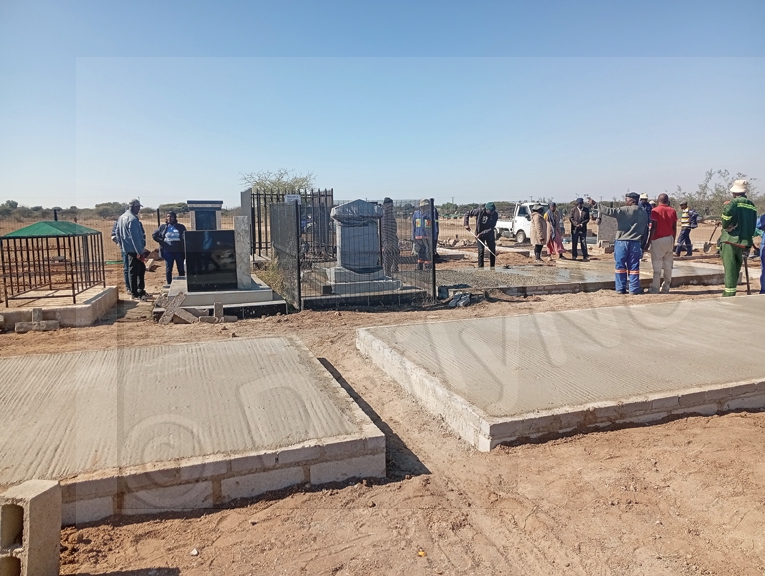
The sound of an angle grinder cut through the stillness of Garanta Cemetery as sparks danced above freshly laid concrete.
Nearby, men worked quietly on the newly built grave foundations, smoothing and preparing them for the permanent tombstones that would soon mark the final resting places of their loved ones. At first glance, it looked like an ordinary day of preparation, but nothing about this place was ordinary.
In a matter of days, the cemetery would become the centre of a nation’s remembrance as families, government officials, church leaders and mourners gather for the Tombstone
Unveiling and Memorial Monument Ceremony for Mmamatlakala victims on July 18.
The occasion will honour the 45 people who lost their lives when a bus carrying St. Engenas Zion Christian Church (ZCC) pilgrims from Molepolole to Moria, South Africa, plunged into a ravine at Mamatlakala on March 28, 2024.
More than two years have passed since the nation stood united in grief. The funeral is over. The flowers faded long ago. Life, everyone said, had to move on.
Yet, walking among the graves this week, it became clear that for many families, grief has refused to keep time. One moment captured that reality more than anything else.
Fixed above each grave since the burial were temporary metal frames bearing the names of the deceased. As permanent tombstones took shape, the frames had served their purpose. Ordinarily, they would simply be removed and taken away.
Instead, relatives carefully stripped away the metal, cut it into smaller pieces and quietly laid the fragments on top of the grave foundations before the tombstones were installed.
No one wanted to take them home. Some family members explained that according to their beliefs, taking the metal structures home could invite another death into the family.
Others said they simply could not bear the thought of carrying home another reminder of the loved one they had buried. The metal would remain where it belonged, with the dead.
It was a small act, almost unnoticed among the bustle of preparations. Yet it spoke volumes about grief, memory and the unseen ways people continue to carry loss.
Equally striking was who was missing. Not every bereaved family could bring themselves to return to the cemetery. Some sent brothers, sisters, uncles or cousins to prepare the graves on their behalf. For them, more than two years had done little to soften the pain.
The cemetery was no longer simply a place of burial. It had become a place where courage was quietly measured.
As I watched families smoothing fresh cement, pulling weeds and preparing the final resting places of their loved ones, memories carried me back to another morning, one that remains etched in my mind as though it happened yesterday. It was May 4, 2024.
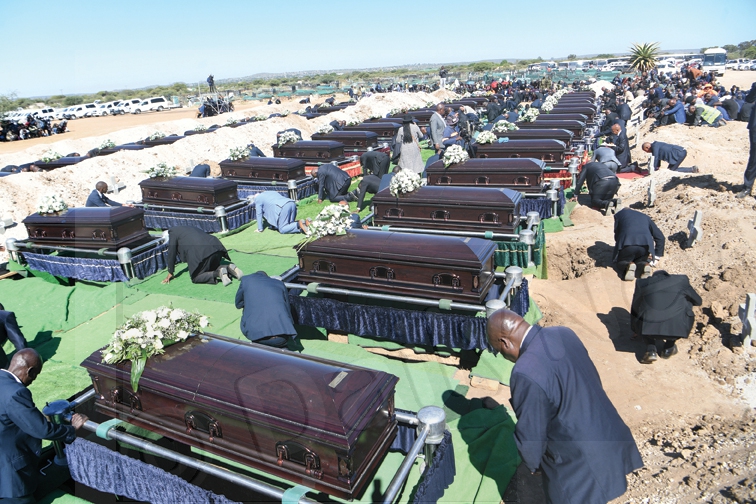
Forty-five wooden brown coffins arrived at Molepolole Sports Complex in solemn procession, escorted by flashing police lights. One after another, they were laid side by side on the grass before thousands of mourners who had gathered to bid farewell to husbands and wives, mothers and fathers, sons and daughters, friends and neighbours whose journey of faith had ended in unimaginable tragedy.
That morning, the nation buried 45 lives. This week, standing among the same families once again, I realised something else. The funeral ended. The mourning never did.
The road to this moment began on a Thursday morning in March 2024, when a journey of faith turned into one of this nation’s darkest moment.
On that day, a bus carrying 45 members of the St. Engenas Zion Christian Church (ZCC) Molepolole Branch left Botswana, carrying pilgrims who were travelling to Moria, South Africa, for the annual Easter pilgrimage.
They left with prayers, hope and anticipation of a spiritual journey. They never returned home.
Near Mmamatlakala in Limpopo Province, South Africa, the bus crashed, killing 44 passengers and the driver. Only an eight-year-old girl survived, becoming a symbol of hope amid a tragedy that shook Botswana and attracted international attention.
In the days that followed, the nation mourned.
Families waited anxiously for news. Some travelled to South Africa to identify their loved ones. Others endured the painful process of waiting for confirmation as authorities worked to establish the identities of those who had perished.
The streets of Molepolole carried the weight of sorrow. Homes that had once been filled with laughter and conversations fell silent as families prepared to receive their loved ones for the final time.
The tragedy was not only about the 45 people who died on the road between Botswana and Moria. It was about the many lives they left behind. However, the Setshwantsho family from Ditshegwane remembers the support they received during the immediate aftermath.
“During the tragedy and a month after the funeral, we received psychosocial support from social workers,” said family representative, Mr Gothata Setshwantsho, brother to the late Ms Kakanyo Juliet Setshwantsho, who was among those who died in the tragedy.
But as time passed and the public attention faded, the family had to confront the reality of rebuilding their lives without their loved one.
Ms Setshwantsho left behind two children, a 20-year-old daughter and a 14-year-old son who is now in Form One. For them, the loss was not only emotional. It changed their daily reality.
Their mother, who had been a source of care and support, was suddenly gone. The grandparents who had helped look after the children later passed away in 2025 and 2026, adding another layer of grief to a family already struggling to cope. Mr Setshwantsho said the boy, in particular, needs support as the family struggles to meet his needs.
The child’s father, Mr Tolly Losiame, said unemployment has made it difficult for him to provide everything his son requires.
For the family, the tragedy did not end with the burial. It continues through the challenges faced by those who survived. They believe counselling should continue because grief does not follow a timetable.
They also welcomed the government’s decision to erect tombstones and establish a memorial monument, saying the initiative would help preserve the memory of their loved ones and assist families who may not have been able to afford individual tombstones.
AS FAMILIES PREPARE FOR JULY 18, THE MONUMENT REPRESENTS MORE THAN A STRUCTURE
It represents an acknowledgement that behind every name engraved there is a story of a life lived, a family changed and a wound that still needs healing.
For the Siako family, the pain of Mamatlakala accident carries a particularly painful memory. They are the family of the only child survivor of the tragedy, the young girl now 10, whose survival brought a rare moment of hope to a nation struggling to comprehend the scale of the loss. But behind that story of survival was another family grieving deeply.
The survivor lost her grandmother, the late Ms Onkemetse Siako, who was among the 45 people who died when the bus plunged into the ravine in Limpopo.
Speaking on behalf of the family, Mr Kabelo Selome said they received psychosocial support during the immediate aftermath of the tragedy.
However, he believes the support ended too soon. He said while counselling was provided during the incident, it should have continued beyond the funeral because families were left to deal with the long-term effects of grief on their own.
“Social workers should have continued assessing families even after the funeral to understand their conditions and determine whether they still needed support,” he said.
For many families, he explained, the hardest part came after the crowds had gone, the condolences had slowed down and life was expected to return to normal.
Some relatives still cannot bring themselves to visit the graves of their loved ones, a sign that the emotional wounds remain open more than two years later.
Mr Selome welcomed government’s efforts to provide tombstones and establish a memorial monument, saying it was a meaningful gesture that ensured all victims would be remembered with dignity.
He said many families would have struggled to afford tombstones, especially those who lost several relatives in the same tragedy.
However, he acknowledged that the process had also brought painful emotions back to the surface.
“Go kgobola ntho legogo,” he said, meaning the initiative had brought back memories and reopened wounds that families had been trying to live with.
For the Siako family, the memorial will therefore carry two meanings.
It will be a place of honour and remembrance, but also a reminder of a loss that continues to shape their lives.
BEYOND THE STORY OF THE SURVIVOR, FAMILIES CONTINUE TO REBUILD THEIR LIVES AROUND AN ABSENCE THAT CANNOT BE FILLED
Among them is the Balotlegi family, which suffered one of the heaviest losses in the tragedy. The family lost four members in the Mamatlakala crash, including Ms Mokgabo Balotlegi, who was born in 1951. For her daughter, Ms Onthatile Balotlegi, the death of her mother changed the direction of her entire life.
Before the tragedy, she worked as a hairdresser while her mother helped care for her young children. When her mother died, that support system disappeared overnight.
She was forced to leave her job to take care of her children. Today, she describes life as extremely difficult because there is no longer an income coming into the household.
The loss of her mother and the other family members left behind what she described as a permanent scar. The memories, she said, continue to return unexpectedly.
For Ms Balotlegi, her mother’s absence is felt not only through grief, but through the everyday struggles of raising children and trying to survive without the person who once helped hold the family together.
For Mr Moneedi Tshekiso, the pain of Mamatlakala is carried through multiple names and memories.
He is part of the Balotlegi family that lost four members in the tragedy, including his sister Ms Mokgabo Balotlegi. But his loss did not end there.
He also lost his wife, Ms Boitshoko Tshekiso, his brother Mr Motlapele Tshekiso and his niece Ms Thato Tshekiso in the same crash.
In one devastating moment, a family lost a mother, a wife, a sister, a brother and a daughter. Two years later, Mr Tshekiso says life remains difficult.
The death of his wife changed the structure of his household. He suddenly found himself carrying the responsibility of raising their four children alone.
Having retired from the public service the previous year, he said the responsibility has not been easy, especially as he tries to support children who are also dealing with the emotional consequences of losing their mother.
One of his greatest concerns is the impact the loss has had on their education. He said his youngest son, who is currently in Form Three, has struggled since his mother’s passing and his academic performance has declined.
For Mr Tshekiso, supporting the children is not only about meeting their daily needs. It is about ensuring that the tragedy does not determine their future. He appealed for assistance towards the education and welfare of children who lost parents and caregivers in the crash, saying many families are still struggling to rebuild their lives.
Despite the pain, Mr Tshekiso expressed appreciation for the government’s decision to erect tombstones for the victims and organise the memorial ceremony.
He said they had often wondered how they would manage to provide permanent memorials for all four family members they lost.
The government initiative, he said, had lifted a burden from families already carrying heavy emotional and financial responsibilities.
However, like many other families, they hope that the support does not end with the unveiling ceremony.
Mr Tshekiso and Ms Balotlegi also appealed for government to fulfil its earlier commitment to assist families in visiting the accident scene in South Africa.
For them, returning to the place where their loved ones took their final breaths is not about reopening wounds, but about finding answers, acceptance and a form of closure.
Hence for many bereaved families, the journey to healing remains incomplete.
For Mr Oaitse Sekei, the tragedy took away not only his sister, but also important pillars of support within his family and church community.
Speaking on behalf of his late sister Ms Gogaisakitso Sekei and four St. Engenas pastors who died in the crash, he described life after Mamatlakala as extremely difficult.
His sister had been the family’s breadwinner. She worked as a shop assistant in Gaborone and supported her three sons, who were left behind after her death.
But the family’s grief was compounded by another painful loss.
Mr Sekei said they recently buried their father on June 2 this year, a reminder that for some families, mourning has continued through one loss after another.
Although the family received counselling during the immediate aftermath of the crash, he said some members have still not recovered.
“We still need counselling,” he said.
He explained that one of his relatives remains unable to visit the gravesite because the pain is still too overwhelming. For Mr Sekei, this is evidence that healing cannot be measured by the passing of time alone.
He called for continued psychosocial support for affected families and said there should be special consideration for children who lost breadwinners in the tragedy. He said some children need support with basic welfare needs, education and future opportunities because the people who provided for them are no longer there.
He also raised concerns that some families were still waiting for assessments promised through the South African Motor Vehicle Accident authorities.
For the Mmunyane family, the pain of Mamatlakala tragedy has been followed by even more heartbreak.
Mr Montisetsi Mmunyane, the first-born son of the late Ms Baalatlha Kareng, said life changed completely after the tragedy. His mother, who was born in 1946, was among the faithful pilgrims who lost their lives on the journey to Moria.
Mr Mmunyane said shortly after losing his mother, the family experienced more deaths, including the loss of their father and sister.
Each passing brought back memories of the tragedy and deepened the pain they were already carrying.
“For us, these deaths brought nothing but immense pain,” he said.
He explained that the family had relied heavily on the old age pension of their mother, and her passing created additional challenges as they tried to survive without the support she provided.
The memorial monument will preserve the names of those who died.
But for the families left behind, remembrance is also about acknowledging the responsibilities and roles those individuals carried while they were alive.
Among the voices calling for recognition is Ms Gaolebale Siako, the mother of the young survivor. Her story is unique because, while the nation celebrated her child’s survival, she was also carrying her own private grief.
In the middle of a national tragedy, she lost her mother, the late Ms Onkemetse Siako. But there was little time for her to mourn. Her immediate responsibility was caring for her daughter, who had survived the crash and needed protection, medical attention and emotional support.
Ms Siako said she had to put aside her own pain because her child needed her. During that period, she said, her focus was on ensuring that her daughter was safe and receiving the necessary care.
Ms Siako said that during the time her daughter was receiving specialised attention away from home, she was also required to be there for her.
She later lost her job because of the responsibilities that came with caring for her child after the tragedy. She said the support that had been provided to her daughter after the incident gradually stopped after she returned home.
She also said she had previously received a government allowance of P5,000 for almost a year which has since stopped. For Ms Siako, the aftermath of Mamatlakala has been a difficult journey of rebuilding.
She believes people often remember the survivor, but forget the family members who were also affected by the tragedy.
“I also lost my mother,” is the message she wants people to remember. ENDS
Source : BOPA
Author : Lindi Morwaeng
Location : MOLEPOLOLE
Event : Interviews
Date : 09 Jul 2026
Related News
14 Sep 2026
Direlang Living for radio

28 Aug 2026