Bula Buka pioneers reclaim their future
28 May 2026
For many learners, receiving a D grade in the Junior Certificate Examinations has for a long time felt less like a report card and more like a closed door. Every year, an estimated 40 per cent of learners who sit for their JCE hit an educational brick wall after failing to progress to senior secondary school.
They find themselves stranded outside the gates of the conventional education system, too young to give up, yet seemingly stripped of a clear path forward. Left to navigate the streets, these out-of-school youth face a reality of vulnerability, rising idleness and limited economic survival.
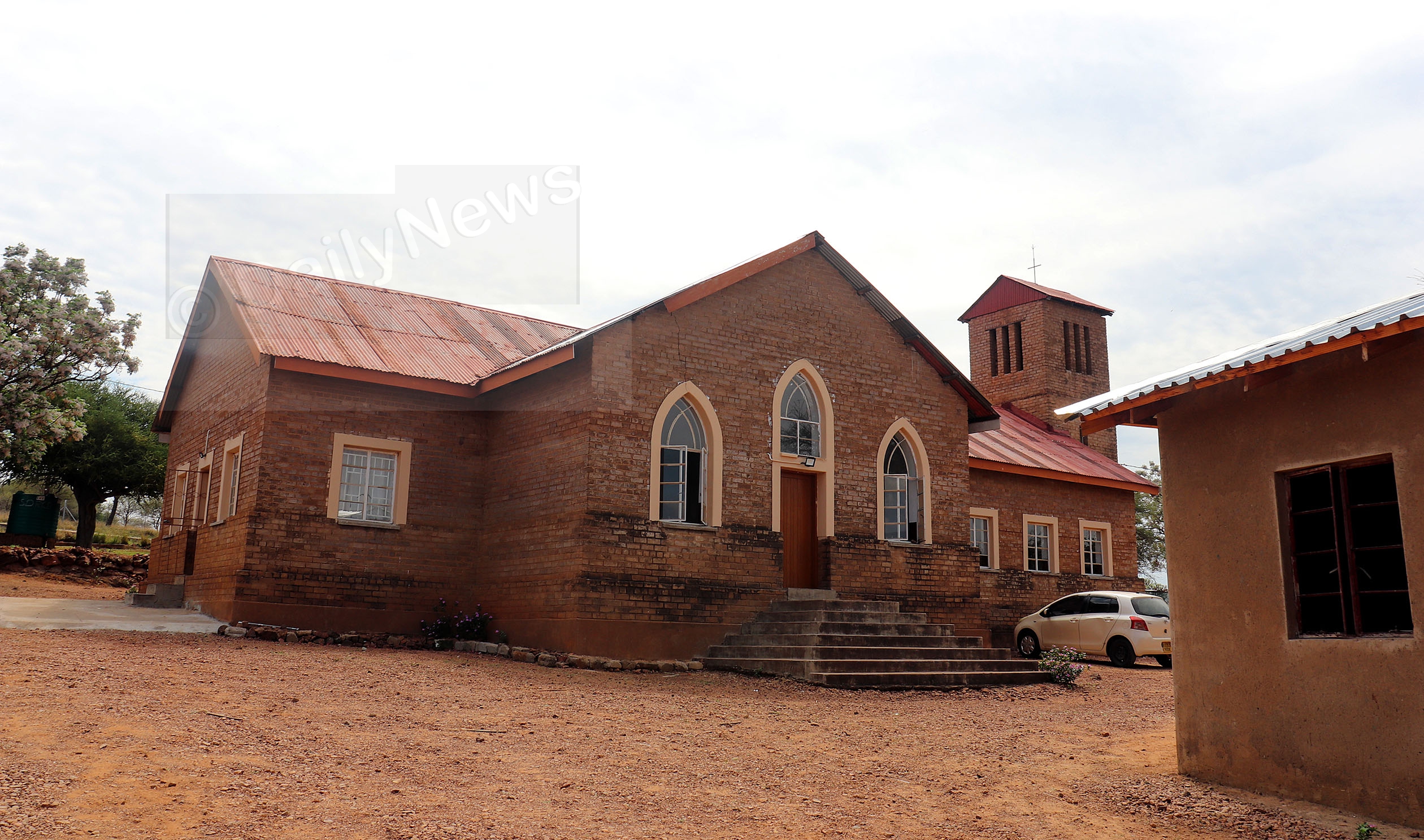
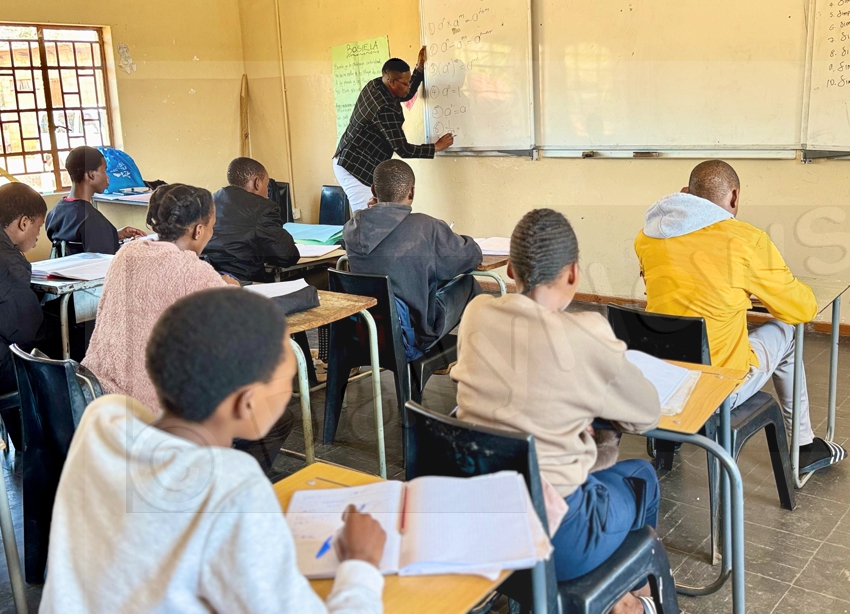
However, this term, the atrmosphere at Ipeleng Primary School, which has been designated Bula Buka learning centre, feels entirely different. At least 15 young learners are sitting in a classroom, not as dropouts, but as pioneers.
They are the first local faces of Project Bula Buka, which was first introduced to the public in Mmathubudukwane late last year and officially launched on a national scale in February 2026.
Now, on a daily basis, 17-year-old Lebogang Seleka of Otse wakes up each morning with a renewed sense of purpose, to reclaim his future.
Having fallen short of entering senior secondary school by a single point in the 2025 Junior Certificate Examination (JCE), Seleka’s academic dreams were nearly derailed.
However, that has since changed as every weekday from 10am to 2pm, he now sits intently at his desk at the Lobatse Learning Centre, re-studying Science, Mathematics, Setswana and English. He fervently credits government for this second chance, keeping his eyes firmly fixed on entering senior school once the 2026 JCE results are released.
The Bula Buka initiative represents an empathetic pivot in state education strategy. Spearheaded by the Minister of Child Welfare and Basic Education, Ms Nono Kgafela-Mokoka, the initiative brings together a coalition consisting of the ministry, the Botswana Open University (BOU), Youth Empowerment Education Trust (YEET) and the Education Infrastructure and Management Company (EIMC).
The central philosophy driving the project is straightforward but deeply humane; one exam result or one difficult season does not define a lifetime. Instead of forcing these teenagers back into the rigid, academic boxes that failed them the first time, Bula Buka offers customised and flexible pathways blending core academics with hands-on trade skills, heavily integrated with Science, Technology, Engineering, Arts and Mathematics (STEAM).
The programme goes to extraordinary lengths to ensure that those who fell through the cracks are not treated as second-class citizens. At the Lobatse Learning Centre, the 15 enrolled learners don regular school uniform and participate seamlessly in standard school activities like sport. The goal is to entirely strip away the stigma of the second chance and restore a true sense of belonging and community.
Getting these youth back into the classroom required tearing down traditional bureaucratic hurdles. Recognising that technological limitations and geographical isolation frequently lock out the most vulnerable populations, government launched aggressive manual registration drives, penetrating remote areas like the Central Kgalagadi Game Reserve (CKGR), Seronga and Hukuntsi.
To make registration completely frictionless, they even partnered with local retail spaces like Choppies and JB Stores, allowing young citizens to sign up for a new future right at their local shop or fuel station.
In Lobatse, this effort pulled together a fragile net of 15 learners from across the region who refused to let a D grade be the final sentence on their potential. Out of the current cohort, eight are from Lobatse, three from Digawana, three from Otse and one from Lejwana.
For many families, Project Bula Buka is both a financial and social saviour. Ms Mmantsho Mosarwa, a grandmother from Mogobane, expressed gratitude for the project. Her granddaughter, normally a strong learner, missed out on senior school progression due to a temporary bout of ill-health during exam season.
“This initiative is incredibly helpful, especially since we do not have the finances to take our children to private schools or hire private tutors to supplement their learning,” Ms Mosarwa said.
Additionally, she said it kept adolescents off the streets, away from social ills like drug and alcohol abuse and kept them engaged in something meaningful.
Despite its promising start, educators note that the project is still managing minor teething problems.
Ms Queen Koronale, a Project Bula Buka Mathematics teacher, noted that resource constraints such as a shortage of textbooks and notebooks, remain a challenge. However, she emphasised that the ministry was working to bridge the gap by providing essential teaching materials, classroom spaces and leveraging digital learning platforms.
Nonetheless, Ms Koronale highlighted that the current low learner-teacher ratio allowed for personalised attention.
“At the end of the day, every single learner is attended to and they appear highly optimistic and eager to learn,” she said.
Senior adult education officer for the Lobatse Sub-Region, Ms Mavis Mogotsakgotla, confirmed that the academic pathway was progressing smoothly.
She added that preparations to enrol learners for the vocational pathway were well underway.
“Learners have already been profiled and the logistics to get the vocational ball rolling have already started,” she said.
On one hand, the rollout of Project Bula Buka comes at a crucial moment of reflection for local leaders. Addressing a full council meeting recently, Lobatse mayor, Mr Aron Ganakgomo, praised the project as a vital instrument for equity, inclusion and opportunity, demonstrating government’s commitment to ensure that no child was left behind.
However, the urgency of reforming how the community educated its children was laid bare as the mayor shared the recent and discouraging 2025 BGCSE results for Lobatse Senior Secondary School.
Despite incorporating elements of the new Outcome-Based Education (OBE) strategy, performance dipped slightly from 17.90 per cent to 17.10 per cent of learners achieving a C-grade or better, falling short of the school’s 20 per cent benchmark.
“Education remains a shared responsibility that requires the collective effort of all stakeholders,” Mayor Ganakgomo told the council, thus urged parents and the community to stay involved.
For learners like Seleka and others, however, the focus remains entirely forward-looking. Thanks to Project Bula Buka, the door to a brighter future has been pushed wide open again. ENDS
Source : BOPA
Author : Calviniah Kgautlhe
Location : LOBATSE
Event : FEATURE STORY
Date : 28 May 2026
Related News
08 Oct 2026