Botswana Records Gains In Reducing Child Malnutrition
28 Sep 2026
In 1966 at Independence, Botswana was ranked among the 25 poorest and least developed countries in the world, facing severe vulnerabilities in food security and nutrition, worsened by a five year drought cycle at Independence according to analysis by Food and Agriculture Organisation (FAO).
The government of the day then established the Food and Nutrition Unit within the Ministry of Health in the early 1970s, to design programmes to monitor nutrition, it further sates.
Child malnutrition which is categorised by undernutrition and overnutrition is a result of receiving insufficient nutrients or calories required for healthy development resulting in stunting (low height for age), wasting (low weight for height) and underweight (low weight for age).
Over the years, Botswana has managed to lower the prevalence of underweight amongst children aged under five years to less than 10 per cent, according to Ministry of Health chief public relations officer, Dr Christopher Nyanga.
“Botswana managed to reduce underweight prevalence to less than 10 per cent from 2000 to date as well as stunting from 30 per cent in the year 2000 to 21 per cent in 2017. A particularly important period was noted from 2013 when Botswana scaled up integrated management of malnutrition,” said Dr Nyanga.
In 1996, he stated that underweight prevalence was 17.2 per cent and declined to 7.9 per cent in 2017. Stunting prevalence on one hand, he said decreased to 21.3 per cent in 2017 from 28.9 percent in 1996 while wasting decreased from 11.3 per cent in 1996 to 5.1 per cent in 2015/16 and further decreased to 4.0 per cent in 2017.
“Stunting is a result of chronic or recurrent undernutrition, usually associated with poor socioeconomic conditions, poor maternal health and nutrition, frequent illness or inappropriate infant and young child feeding and care in early life,” said Dr Nyanga.
Regarding overweight, he said about four per cent of children aged under five years were overweight in 2017 and were mostly children who lived in urban areas.
The gains in addressing malnutrition, he said were made possible through Botswana government’s interventions in nutrition and social protection programmes to prevent and curb malnutrition, especially for vulnerable groups.
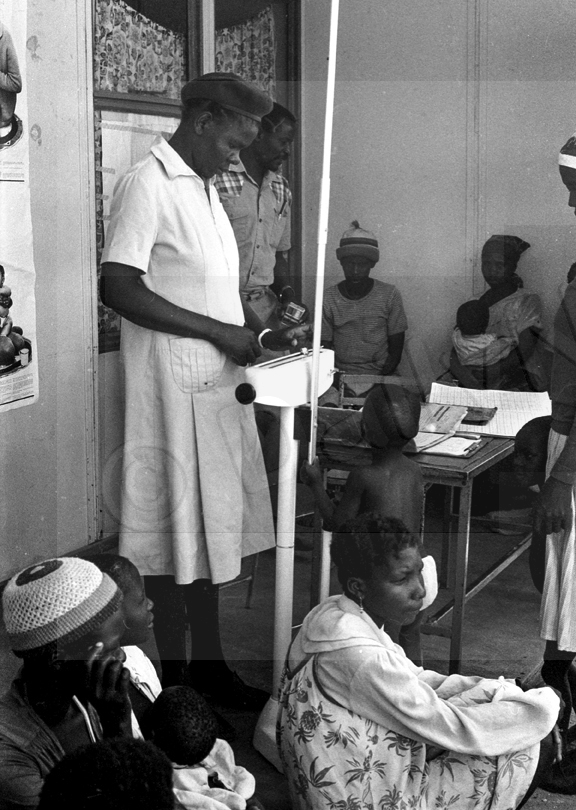
The monthly monitoring of child growth for children aged 0-59 months through Child Welfare Clinics provided health care officers with data to monitor child growth, risks and most affected areas hence help guide government interventions in drought relief programmes, Dr Nyanga said.
Integrated Management of Acute Malnutrition which involved screening, referral and treatment of children with severe and moderate acute malnutrition at outpatient and inpatient facilities, he said helped ensure that children with severe acute malnutrition received Ready-to-Use Therapeutic Food (RUTF) and other appropriate medical and nutritional care.
Supplementary feeding for children under the age of five years and medically selected pregnant women was another approach where the children and selected groups received Tsabana or Malutu, beans and vegetable oil during monthly visits to clinics.
“Supplementary feeding provides additional nutritious food to the children. It is a social protection intervention that targets all children between ages of 6-59 months despite their nutritional status. It is particularly important not only to children but also to pregnant and lactating women who are underweight and/or with medical complications,” Said Dr Nyanga.
Micronutrient supplementation of Vitamin A was among methods used in Botswana to prevent vitamin A deficiency among young children.
“It forms part of integrated child nutrition and health services and complements other interventions such as breastfeeding promotion, growth monitoring and treatment of acute malnutrition. Evidence shows that Vitamin A supplementation can reduce all-cause mortality in children by 12-24 per cent,” said Dr Nyanga.
Other available health interventions, he said included immunisations and de-worming which contributed to improving health of the child and subsequently preserving their nutritional status.
Thanks to Botswana’s development partners such as United Nations Children’s Fund which play a critical role in Supports Child Nutrition programmes including management of acute malnutrition by procurement of RUTF, Reformulation of Tsabana and Malutu, landscape analysis, Nutrition Surveillance (digitalisation of nutrition data), Micronutrient interventions and Emergency Nutrition response among others.
Dr Nyanga said said FAO assisted with technical and financial support on nutrition policy and Food Safety Legislation while SADC supported the Ministry of Health to develop a food fortification strategy.
Despite the achievements, the country has not completely won the battle against malnutrition especially in rural areas.
Dr Nyanga said currently underweight prevalence for children under five was at four per cent according to institutional data derived from the monthly growth monitoring of children at child welfare clinics.
He however, said some districts which persistently reported high prevalence of malnutrition were Boteti, Ghanzi, Hukuntsi, Letlhakeng and Mabutsane. ENDS
Source : BOPA
Author : Kedirebofe Pelontle
Location : GUMARE
Event : FEATURE STORY
Date : 28 Sep 2026
Related News

14 Sep 2026
Direlang Living for radio

28 Aug 2026