

Judges develop legislate law - Dingake
01 Apr 2014
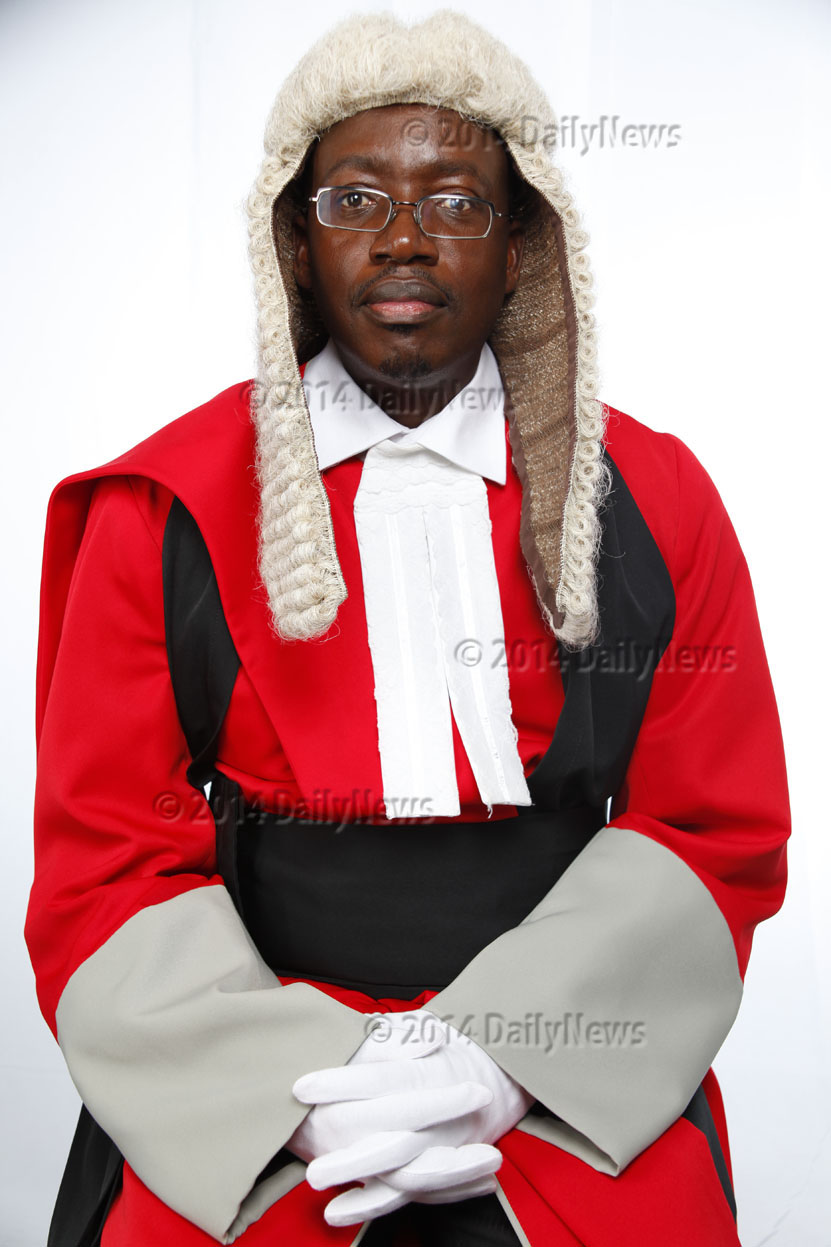
Misconception that the legislature is the only arm of government that make the law is wrong, High Court judge, Dr Key Dingake has said.
Addressing the first National Association of Women Judges and Magistrates conference on the role of the judiciary and legal profession in protecting the rights of vulnerable groups in Gaborone March 28, Justice Dingake said judges also developed the law and legislated it.
“The theoretical perspective that informs my discussion of this section may somewhat controversial to some of us, but it is the intellectual and philosophical defensible. It is that judges make the law,” he said.
A point in case, Justice Dingake argued, was the famous Unity Dow’s case against the Attorney General in which the presiding judge ruled that the law was discriminatory against women.
Justice Dingake therefore explained that none should be confused by such misconception because law on its own, could hinder justice and sometimes be an instrument of injustice.
He said other arms of government should avoid being executive minded “otherwise they will undermine the rights of the people.” He added that it was under such backdrop that judges enjoyed privilege to render justice, which was also the duty of any judicial officer.
“Executive mindedness undermines the people’s confidence in the independence of the judiciary and has often been condemned by judges,” he said.
Justice Dingake further said concepts such as separation of powers, counter majoritarian difficulty and judicial activism, as well as numerous jurisprudential theories were employed to interrogate the property of such law making and how judges should (or should not) perform their law making functions.
“While it can be hardly contested that democratically elected legislatures are the primary law making bodies, it can hardly be denied that in a limited way judges make law.
For judges, law making is a refined art, one that accounts for past legal precedent and is based on a clinical and informed analysis of what the law “is” rather than what “it should be.”
Tragically, judges make law, even when their decisions are inelegant, incoherent, or inconsiderable of the relevant legal sources, arguments and implications. Even wrongly decisions are binding,” he added.
Justice Dingake also explained that in their process of making the law, judges needed to be informed and courageous and that they should not be timorous souls, fearful or biased.
On other issues, Justice Dingake reiterated that the right to equality and freedom from unfair discrimination was the centre piece of the enjoyment of fundamental rights by women, the disabled, sexual minorities, the children and any other vulnerable or marginalised population groups within the society.
He said it was the role of the judiciary and lawyers to ensure that no human being was treated less because of their social standing and other human rights through proper interpretation of the law, development of common and customary law and that in that process the courts must be vigorous and using the foreign law as a guide.
As such, he said the use of international law was permissible to shed light when there was a lacuna in the constitution adding “we should not be shy to use soft law when it is necessary”.
He stated that women, the disabled, children and sexual minorities were human beings, and were entitled to enjoy all fundamental rights and freedoms that every other being on earth is entitled to.
“As such, persons that fall under these social groups have a right to be treated equally.” He explained that the major stumbling block to the enjoyment of the fundamental rights of these vulnerable groups was the discrimination that such persons suffered.
Thus, Judge Dingake said it was important that judicial officers, in interpreting the law, should never lost sight of the fact that the final cause of law was the welfare of society of which women, children and sexual minorities were part.
In her welcome remarks, another High Court Judge Ms Mercy Garekwe told attendants that the conference’s major objective was to encourage discussions on human rights issues, particularly as they relate vulnerable groups.
The agenda of the conference mainly focused on the jurisprudence relating to the rights to equality and dignity by including topics relating to women’s rights, disability rights and the rights to minorities.
On the other hand, the conference served as a platform to alert judges to recent comparative jurisprudence on such topics and created opportunity for judges and other presiding officers on the relevance of using international law in judicial decisions-making. Ends
Source : BOPA
Author : Thamani Shabani
Location : GABORONE
Event : Magistrates conference
Date : 01 Apr 2014
Related News

01 Jun 2026
First Lady Champions Children rRghts



01 Jun 2026