Strong Security Underpins Economic Growth - Mohwasa
01 Jun 2026
National security and structural stability are the indispensable foundation for sustainable economic activity.
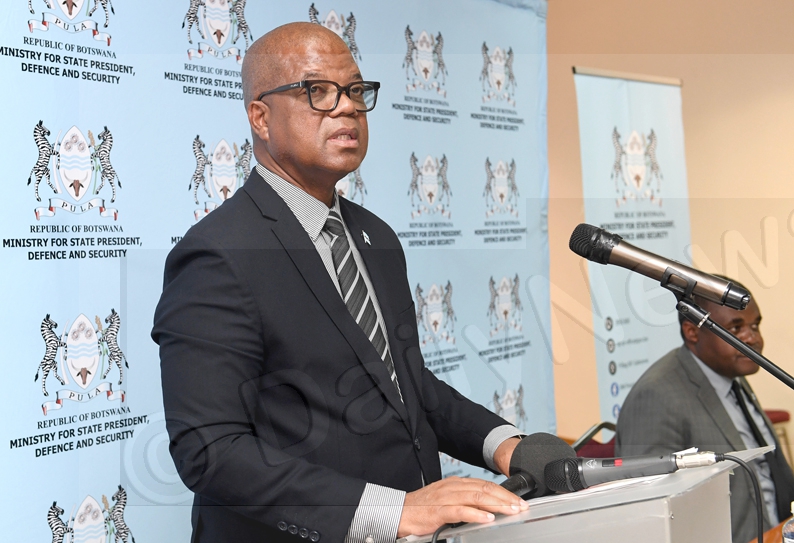
This was said by the Minister for State President, Defence and Security, Mr Moeti Mohwasa.
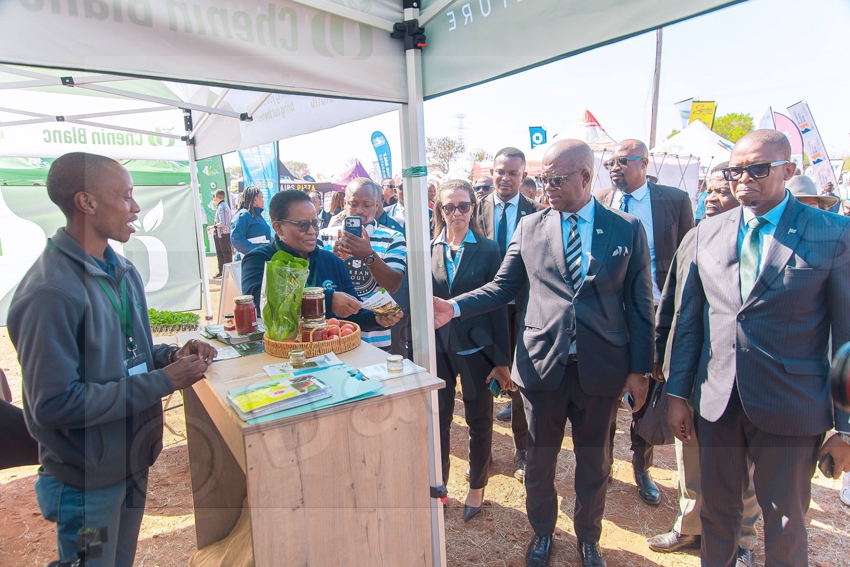
Addressing the 30th Business Botswana Northern Trade Fair in Francistown on Thursday, Mr Mohwasa said peace, rule of law and institutional safety created the stability that attracted long-term investment and enabled the operationalisation of the Botswana Economic Transformation Programme, (BETP).
He said BETP established secure trade lanes, uncompromised border logistics and protected infrastructure.
Mr Mohwasa said government was securing national transport corridors and rail networks against disruption and economic sabotage, including support for the Mmamabula-Lephalale and Mosetse-Kazungula-Livingstone links.
He said government was also modernising cyber-security frameworks to safeguard digital transactions and fiercely protecting intellectual property to encourage innovation in local manufacturing.
“Peace is not merely the absence of conflict. It is the presence of regulatory and physical certainty where an entrepreneur can deploy capital without fear,” he said.
He said regional stability was being reinforced through high-level Bi-National Commissions with Zimbabwe, Zambia, Namibia and South Africa, and continued engagement with other neighbours to harmonise trade frameworks, remove non-tariff barriers and streamline cross-border logistics.
Mr Mohwasa stated that through government’s structural philosophy, the private sector must be the engine of growth, with Business Botswana as the primary driver.
“The BETP signals a shift away from government running commercial enterprises to government acting as facilitator, regulator, architect and protector of an enabling market,” said Mr Mohwasa.
To support that shift, he announced a P1.85 billion allocation for infrastructure maintenance in the 2026/2027 financial year, the rollout of a fully digital National e-Procurement System and a proposed P1.31 billion for Micro, Small and Medium Enterprises financing.
He challenged businesses to move beyond low-risk retail import models and into high-value manufacturing, commercial agro-processing and advanced industrial services, and to leverage the African Continental Free Trade Area (AfCFTA), using the new National AfCFTA Implementation Strategy.
Mr Mohwasa said the value chain revolution required private sector execution, capital and agility, with government guaranteeing stability, physical safety and institutional protection.
Business Botswana Chief Executive Officer, Ms Tumi Mbaakanyi, expressed appreciation to sponsors, exhibitors, partners and stakeholders for strengthening enterprise development, investment promotion and regional business linkages.
She also acknowledged participants from Zambia in the Botswana-Zambia Business Forum, saying their presence reinforced the need to move regional integration from policy aspiration to practical business execution through trade, investment and connected value chains.
Ms Mbaakanyi said competitiveness today, depended on connected ecosystems that linked mining, manufacturing, logistics, services, data and finance into functioning value chains.
Following the trade fair’s discussions, Ms Mbaakanyi outlined three priorities; strengthening structured access to reliable data with Statistics Botswana, deepening supplier development and procurement linkages for citizen-owned and small enterprises, and establishing a follow-up mechanism with industry to convert bottlenecks into practical reforms.
“These outcomes will not remain at the discussion level. They will be integrated into our ongoing engagement platforms to ensure continuity, implementation and accountability,” she said. ENDS
Source : BOPA
Author : Thamani Shabani
Location : FRANCISTOWN
Event : Botswana Northern Trade Fair
Date : 01 Jun 2026
Related News
08 Oct 2026
08 Oct 2026
Ikageng graduates build VDC houses
08 Oct 2026
Road re-construction project at 34 per cent