UB to honour Kengalogile family legacy
14 Jul 2026
Remembering and honouring the fallen community veterans who made a positive impact in the society they lived, preserves their legacy, fosters community connection and ensures the sacrifices they made continue to inspire and guide future generations.
For the late Mr Piet Rakeeku Kengalogile, born 1880 and died 1955, and Ms Yarubi Piet Kengalogile, born 1870 and died 1969, to cede their personal land for use by the government to establish a world class research institute was a profound sacrifice with a direct positive bearing on the future of the entire nation.
The Kengalogile family willingly availed more than 20 hectares of land, where the Okavango Research Institute now sits, a premier, fully -fledged research institution of the University of Botswana in Maun.
Established in 1994, the facility is dedicated to the study of wetlands and adjacent drylands, focusing on the Okavango Delta ecosystem. It also provides postgraduate training, community outreach and critical scientific data.
In remembrance and recognition of the Kengalogile family’s benevolent gesture, the University of Botswana will unveil two tombstones July 25 at Sexaxa, to honour their legacy.
The event will celebrate the family’s good deed and the longstanding collaboration between the University of Botswana and the people of Ngamiland in advancing research that benefits Botswana and the Okavango Delta.
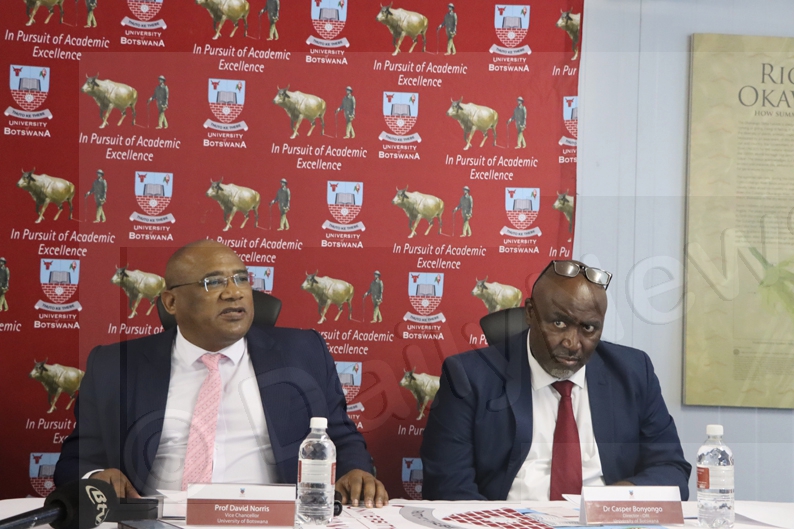
ORI director, Dr Casper Bonyongo, confirmed the upcoming event which represents the fulfilment of a commitment made by the university many years ago, and an enduring acknowledgement of the importance of community partnership, cultural heritage and shared stewardship in advancing national development.
Narrating the origins of the institute, a press release from ORI states that the university remains deeply appreciative of the generosity, trust and foresight demonstrated by the Kengalogile family.
It acknowledges their selfless decision that laid the foundation for an institution that has become one of Botswana’s foremost centres of scientific excellence, producing research that informs environmental policy, conservation planning and sustainable development nationally and internationally.
The prestigious institute can be traced to a defining period in Botswana’s environmental history during the late 1980s and early 1990s. At the time, the government was exploring opportunities to utilise the waters of the Okavango Delta to support national economic development.
One of the proposed initiatives involved dredging the lower Boro channel to increase water flows into the Thamalakane and Boteti Rivers, thereby improving water delivery to Mopipi Dam and strengthening water security for the Orapa Diamond Mine.
The release also indicates that the proposal that generated the national controversy was formally advanced in 1989 as part of the Southern Okavango Integrated Water Development Project (SOIWDP). The project was recommended in a feasibility study prepared by Snowy Mountains Engineering Consultants (SMEC) for Botswana’s Department of Water Affairs.
While the proposal was intended to support strategic national development, it generated significant concern among local communities, conservation organisations and international environmental groups. Community leaders, led by veteran politician, the late Motsamai Mpho, together with local and international conservation organisations, strongly opposed the proposal.
Furthermore, the release indicates that the international advocacy groups, including Greenpeace, publicly expressed concerns regarding the potential ecological consequences of altering the hydrology of one of the world’s largest inland wetlands. The December 1990 National Geographic magazine vividly portrayed the Okavango and significantly raised international awareness of the delta at the height of the Boro controversy.
At one stage, implementation appeared imminent, with heavy machinery already mobilised to the project site. However, following extensive public opposition, the government suspended the proposed dredging project.
The debate surrounding the proposal exposed a critical national challenge.
Although strong views were expressed by all parties, there was very limited scientific evidence available to objectively evaluate the likely environmental, hydrological and socio-economic consequences of the proposed intervention.
The absence of rigorous scientific knowledge highlighted the urgent need for a permanent research institution dedicated to understanding the Okavango Delta and providing independent scientific evidence to support national decision-making.
Recognising this knowledge gap, the government directed the University of Botswana to establish a specialised research centre in Maun, to generate the scientific information necessary for evidence-based environmental management and policy formulation and in response, the University established the Okavango Research Centre in 1994.
Over the years, the centre expanded significantly in scope, capacity and international reputation, eventually evolving into today’s Okavango Research Institute, internationally recognised as a leading centre for wetland research, environmental science and sustainable natural resource management. ENDS
Source : BOPA
Author : Esther Mmolai
Location : GABORONE
Event : Event
Date : 14 Jul 2026
Related News

06 Oct 2026

06 Oct 2026
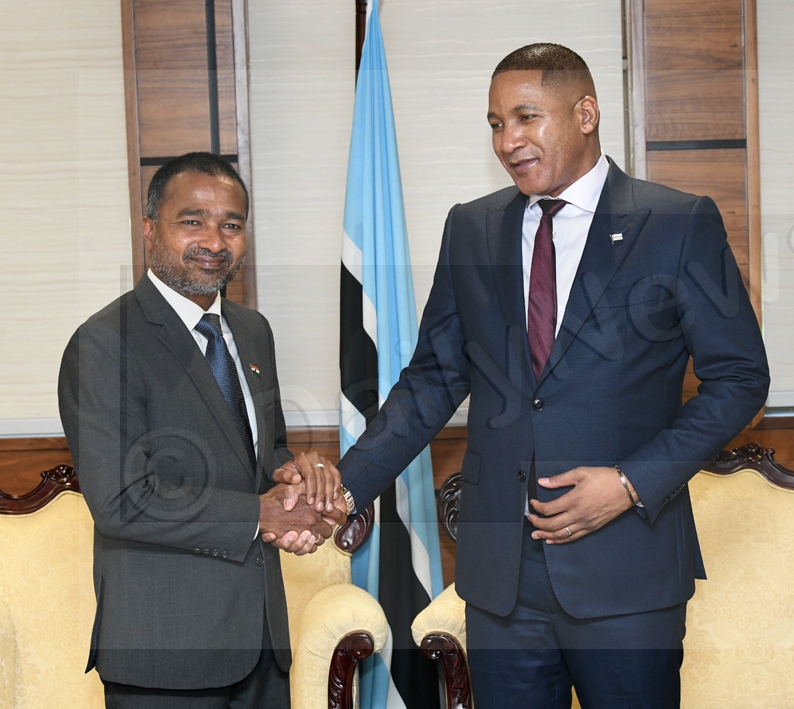
Envoy pledges continued support for Botswana

06 Oct 2026
Access to sign language critical
06 Oct 2026