Tsabong water crisis to ease as projects nears completion
14 Jul 2026
Water Utilities Corporation (WUC) is on the verge of delivering relief to the water-stressed Tsabong District, with key multi-million Pula infrastructure projects sitting between 98 per cent and 99 per cent completion.
The near-total success of these major pipelines and upgrades comes at a critical time for the region, which is currently battling a harsh daily water deficit of 280 cubic meters.
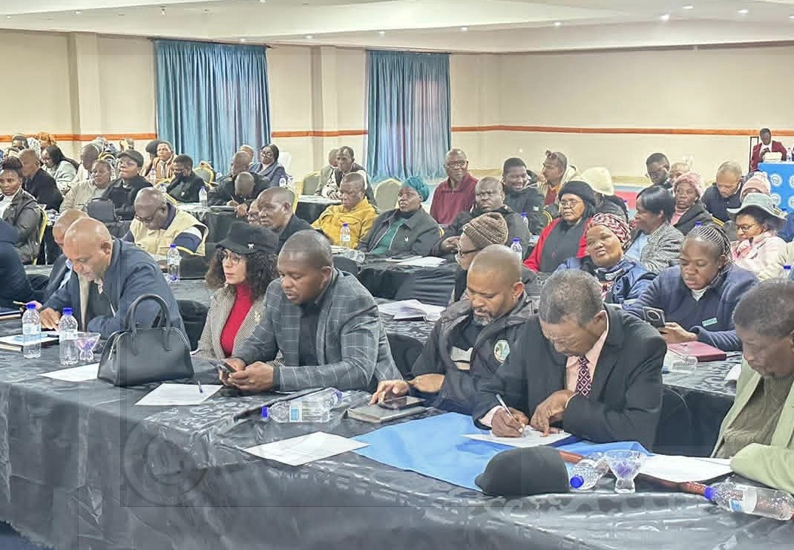
Speaking at a stakeholder engagement workshop in Tsabong, WUC General Manager Mr Benjamin Baitshenyetsi highlighted that despite immense pressure on underground aquifers, a massive infrastructure turnaround was nearly ready for final delivery.
“Pipeline and supply upgrades are nearing full operational status,” Mr Baitshenyetsi announced, pointing to a string of engineering successes designed to secure the region’s supply.
Among the near-complete projects is the Kokotsha–Werda Water Transfer Project Phase 1, which is at 98per cent completion and would officially bring water from the plant to Kokotsha village.
Furthermore, both the Makopong village new boreholes project linking the village to the Draaihoek network and the critical Maubelo Borehole to Tsabong project have reached 99 per cent completion.
To completely bypass reliance on an unstable power grid, the General Manager also confirmed that solar-powered borehole conversions had already been 100 per cent completed at Maralaleng, Omaweneno, Tsabong, and McCarthy’s Rust.
Looking ahead, Mr Baitshenyetsi unveiled an aggressive roadmap starting in August 2026, which will see network extensions to new plots, the opening of a new Customer Service Office at Werda, and the rollout of smart prepaid water meters to curb physical water losses.
However, the major operational victories highlighted by the General Manager face a severe threat from a mounting financial crisis within the district.
Following Mr Baitshenyetsi’s briefing, WUC Supervisor of Customer Accounts, Mr Ontlametse Tlaang, laid bare a crippling financial backlog, revealing that consumers in the Tsabong District owe the corporation over P13 Million.
Mr Tlaang expressed concern over the mounting debt, warning that it starved the corporation of vital liquidity and directly threatened its capacity to keep these newly built systems running efficiently.
“The heavy debt burden severely restricts the corporation’s liquidity and directly compromises its capacity to maintain and upgrade vital infrastructure to serve the public efficiently,” Mr Tlaang stated.
According to financial data presented by the supervisor, local families and residents are the primary drivers of the crisis. Domestic consumers hold the lion’s share of the debt at 53 per cent, amounting to an astonishing P6,934,875.81.
Government departments are the second-largest debtors owing 33 per cent, P4,343,103.68, of the total arrears, while local businesses and councils account for the remaining 9 per cent and 5 per cent respectively.
Furthermore, Mr Tlaang made a strong appeal to stakeholders, emphasising that long-term water security relied heavily on immediate debt settlement and proactive water conservation. ENDS
Source : BOPA
Author : Naomi Leepile
Location : TSABONG
Event : Stakeholder engagement workshop
Date : 14 Jul 2026
Related News

06 Oct 2026

06 Oct 2026
Envoy pledges continued support for Botswana

06 Oct 2026
Access to sign language critical
06 Oct 2026