


The Reckoning forensic
11 May 2026
Last week, we traced the two-decade trail of Auditor General reports tabled before Parliament, discussed in the Public Accounts Committee, and filed away into what this column called the Republics slow-moving archive of things we choose not to see.
The picture was grim. Project after project, ministry after ministry, the same pattern: money spent, overruns accumulated, deadlines missed, documentation vanished, and nobody held to account.
The Executive signed the cheques. Parliament asked the questions. And both, by their inaction, agreed to let it continue. But the Auditor General was not the only institution shouting into the void.
The Ombudsman Parallel Failure
While the Auditor General counted the money, the Ombudsman counted the grievances.
And the picture was no better. In 2021/2022 and 2022/2023, the Ombudsman office received an average of 1 200 cases annually.
It completed 48 per cent. The shortfall; Availability of information required to complete the case at the time.
Four offices across a country of 2.3 million people. Land delays. Compensation disputes.
Transfer irregularities. Allowances unpaid.
The Ombudsman could investigate. Could recommend. Could find maladministration. But like the Auditor General, the office could not compel. Could not prosecute.
Could not make a ministry obey. And so the complaints accumulated.
Citizens who had been wronged by the same ministries that the Auditor General found wasteful came to the Ombudsman, received findings in their favour, and watched as those findings were ignored by the same Executive that Parliament refused to hold to account.
The Ombudsman reports were tabled in Parliament too.
They suffered the same fate. Noted. Discussed. Filed. Two oversight institutions. Two decades of warnings. One common destination: the archive of unheeded counsel.
The Era of Observation Without Closure
Under Dr Festus Mogae. Under Lieutenant General Ian Khama Seretse Khama. Under Dr Mokgweetsi Masisi. The Executive spent. Parliament watched. The Ombudsman documented the human cost. And all three agreed, by their silence, to let it continue. The reports kept coming.
The PAC called officials. Asked questions. Generated headlines for a day or two. But the broader system increasingly cultivated a culture of administrative endurance. Of survival. Of waiting out the storm.
Reports were deliberated. Recommendations were made. Action plans were signed. And then? Silence. The machinery of consequence advanced fitfully, inconsistently, or not at all. The Republic grew habituated to warning without resolution.
To treating audit findings—and ombudsman findings—as weather. Something you remark upon, then go about your day. The media ran the stories. Mmegi, the Sunday Standard, Business Weekly. The NPF scandal.
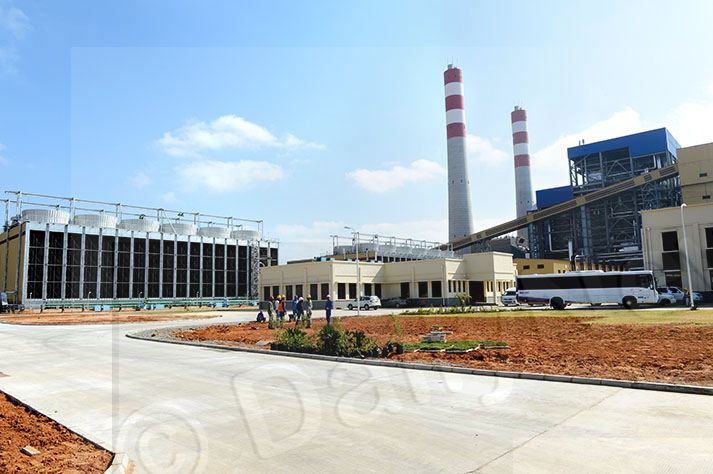
The Morupule B billions. The BCL liquidation. The inflated tenders. But stories need consequences to become more than tomorrow fishwrap.
And consequences require two things: an Executive willing to act, and a Parliament willing to hold it to account. For two decades, Botswana had neither.
The Auditor General’s Dilemma
Here is the thing about that office. It could see.
It could count. It could name the weaknesses and recommend the fixes. But it could not prosecute. Could not govern. Could not make a minister lose sleep.
And critically, it could not make Parliament act on its findings.
The reports occupied a peculiar liminal space: constitutionally important, deeply serious, yet politically survivable.
A bullet that everyone knew was coming, because it never quite arrived.
Over time, this engendered the Botswana paradox. Abroad, we were the stable democracy. The low-corruption success story.
The diamond miracle.
At home, the oversight reports told a different story. Of a state wrestling with persistent financial disorder.
Of warnings that accumulated like unopened mail.
And of a Parliament that had the constitutional duty to scrutinise, the platform to demand answers, and the power to withhold approval, but chose, year after year, to table the reports, adopt the recommendations, and move on.
Why the Forensic Moment Matters
It is not just the P160 billion. Though that number has a way of focusing the mind. It is not just the P33 billion in estimated loss—overpricing, unsupported payments, suspected diversion, non-delivery, waste.
It is that for the first time, decades of fragmented admonitions are being synthesised into a single, integrated accounting. More than 80 investigations. More than 80 senior office holders.
More than 150 companies and counterparties.
This alters fundamentally the character of the national conversation.
The Auditor General gave us annual observations. Discrete, polite, filed away. The forensic programme is trying to build something else. A case history.
A map of systemic failure that connects the dots. But the question is not whether the forensic auditors can find the money. The question is whether Parliament will do anything with what they find.
The Republic’s Reckoning
After two decades of lonely warnings, the Auditor General has finally found the scale of the problem laid bare.But the old question remains.
Can a system habituated to surviving scrutiny genuinely transform itself under scrutiny’s weight? The answer will not be found in reports.
It will be found in what happens next. Whether the Shakawe contractor who walked away with P45 million faces more than a footnote. Whether the P5.9 million overpaid to Hukuntsi consultants is recovered.
Whether the P31.6 million overrun on Tutume roads is explained. Whether the P1.5 million in interest on Palapye police station payments is accounted for. Whether the P250 million NPF scandal produces convictions, not just headlines.
Whether the P11 billion Morupule B debacle yields more than a power import bill. Whether the P451.5 million spent on BCL houses is justified by what remains. Whether the P3.3 billion in social welfare grants is properly controlled.
Whether the 554 per cent variance in Ipelegeng guardhouse costs is investigated. Whether the boreholes drilled without land rights are regularised, or simply left pumping illegally.
Whether the 47 per cent of unstarted road safety activities are finally executed.
Whether the P66.5 million in unremitted National Petroleum Fund investments is recovered.
Whether the P2.69 million owed to Botswana Innovation Hub is paid, or written off as another impairment.
Whether the Ombudsman 1 200 annual cases are finally resolved, or continue to languish at 48 per cent completion.
For years, the Auditor General described the symptoms. Project by project. Pula by Pula. The Executive spent. Parliament watched.
The Ombudsman documented the human toll. And all three agreed, by their inaction, to let it continue.
The forensic era claims to be pursuing the cure.
Whether it succeeds may determine not merely the future of public finance in Botswana.
It will determine whether this Republic still knows how to hold itself to account. And whether the next Auditor General’s report—and the next Ombudsman’s report—will find, at last, that someone in the Executive, and someone in Parliament, finally acted on what they said.
It might have been a lonely job. Perhaps, with the advent of the forensic report and prosecutions, the Auditor General might soon find company. ENDS
Source : BOPA
Author : Tshireletso Motlogelwa
Location : Gaborone
Event : opinion
Date : 11 May 2026
Related News

10 Oct 2026
Feature Reliving the Long March 90 years on


09 Oct 2026