


Railway expansion to unlock economic opportunities
09 Mar 2026
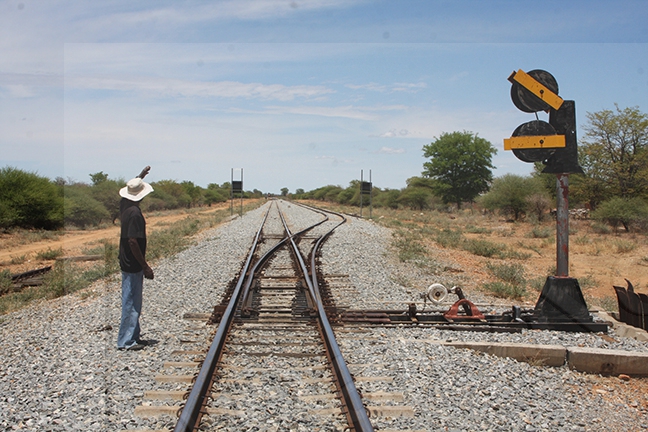
Botswana’s substantial investment and expansion in its railway network will help unlock economic opportunities by connecting landlocked resources to regional, international and coastal markets.
Addressing a kgotla meeting in Rakops on Thursday, Assistant Minister of Transport and Infrastructure, Mr Keoagile Atamelang said such a move would accord the country an opportunity to transform into a regional logistics hub.
Furthermore, Mr Atamelang who is also Member of Parliament for Boteti East said the move would boost mining, agricultural, and commercial trade. To this end, he said major rail infrastructure projects that would be done under the National Development Plan (NDP)12 would be focusing on regional connectivity, coal exports and diversifying trade routes.
Such projects include, among others, a link between Mmamabula and Lephalale in South Africa, Mosetse via Kazungula en route to Livingstone in Zambia; the Trans-Kalahari Railway from Gobabis in Namibia and the Zimbabwe-Mozambique corridor.
Elaborating on the rail projects, which offer a lifeline for Botswana’s economy by creating a vital artery to both domestic and export markets, Mr Atamelang stated that the Mmamabula-Lephalale rail line would link Botswana’s coal-rich Mmamabula to South Africa’s Lephalale area, unlock coal reserves, and facilitate trade.
As for Mosetse-Kazungula rail project, he said the initiative aimed to connect markets to the North-South corridor, significantly reducing transit times for goods and providing a boost to agricultural hubs such as the Pandamatenga farms.
Furthermore, he underscored that the Trans-Kalahari Rail Project, which was a massive initiative, aimed to create a shorter and more efficient route for international trade.
“The Zimbabwe-Beira-Machipanda line connection would link Botswana to a new deepwater port in Techobanine in Mozambique mainly for transporting. The same would also link Zimbabwe to Beira,” he said.
He thus urged constituents to tap into opportunities that would be presented by projects and better their lives. Also, Mr Atamelang spoke of the need to build roads in production zones, citing industrial parks, manufacturing hubs, special economic zones, cattle-posts and ploughing fields, emphatically pointing out that such was critical for the creation of efficient supply chains and resultant growth of the economy.
Furthermore, he relayed that the ministry was also pondering on the use of soil stabilisation technology and technique that elongated the life-span of a road from five to 16 years without routine maintenance.
“Tarmac road is very expensive with only a kilometre road stretch costing P9 million while a gravel road done through soil stabilisation technology only cost P300 000,’’ he said. BOPA
Source : BOPA
Author : Keith Keti
Location : Rakops
Event : Meeting
Date : 09 Mar 2026
Related News

13 Oct 2026
Expo sparks regional leather expansion
12 Oct 2026
Partnership to boost vehicles maintenance
12 Oct 2026
Farmers urged to treat agriculture as a business
12 Oct 2026