


Tsodilo Resource to establishe viability of rare minerals
18 May 2026
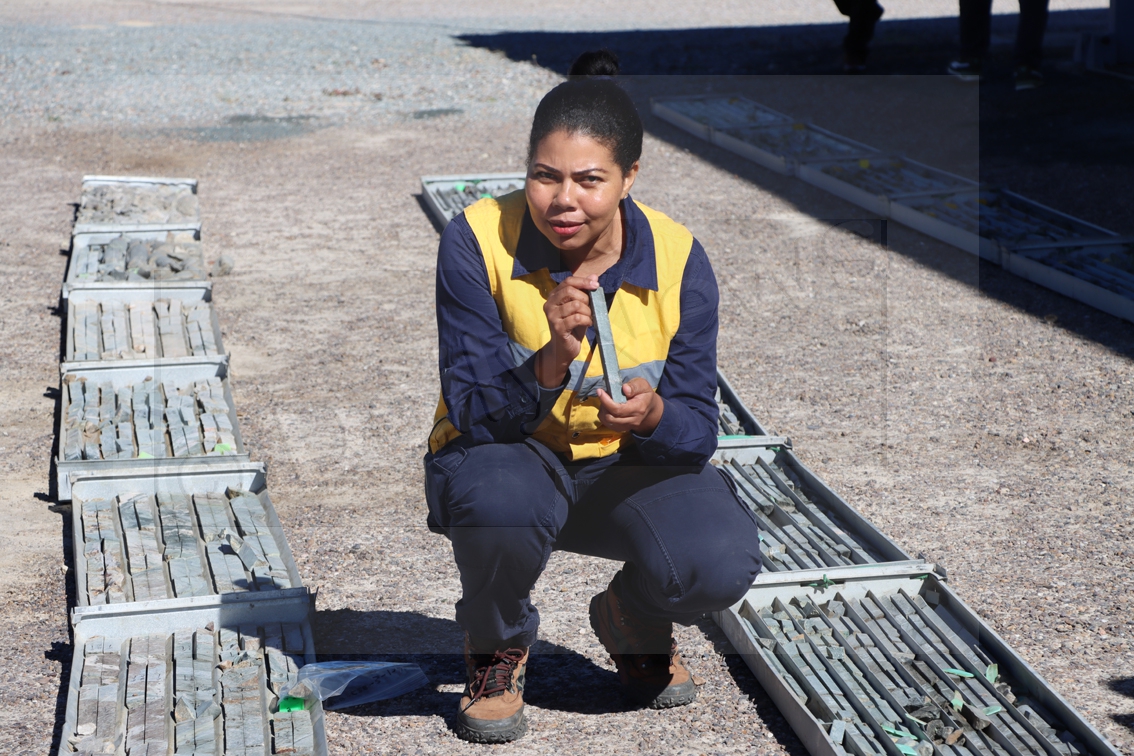
Following the discovery of significant rare earth and critical minerals at Gchwihaba Metals Project near Shakawe in the Okavango District, Tsodilo Resource, a base and precious metal exploration company is undertaking a study to establish the viability of the mineral deposits.
The international company, whose mission is to build a leading Africa-focused mineral exploration, production and development, discovered high grade deposits containing 15 rare earth elements along with five other critical minerals; copper, cobalt, nickel, vanadium and silver located between 20-50 metres below the earth’s surface.
To strengthen its understanding of the deposits and advance the potential expansion of the discovered minerals, the company has partnered with University of Cape Town (UCT) alongside two Botswana national research institutions, Botswana Institute for Technology Research and Innovation (BITRI) and Botswana Geoscience Institute (BGI).
This was shared during a press briefing where the company’s geologist, Ms Mary Toteng stated that through the strategic collaborative research with their partners, they would be able to investigate more on the discovered deposits to determine if they could be explored and mined profitably while managing environmental risk and to also identify the best beneficiation method to process the minerals efficiently.
“These identified rare earth elements are hosted within carbonatite deposits, which some researchers believe can present significant long-term economic potential for our country hence our collaboration with these institutions to advance research development and our understanding,” she added.
She also appreciated that the discovery of the rare minerals came at a time when the demand had surged as countries accelerate energy transition and industrial modernisation efforts.
Ms Toteng said that BITRI would help contribute to sample preparation and analytical support while BGI provides geoscientific data integration and assists with regulatory alignment.
She said UCT would help fast-track the evaluation, the identification and quantification of the Rare Earth Elements (REE) using automated mineralogy and would also develop a genetic model for REE mineralisation in the Gcwihaba skarn system.
Should the findings be confirmed, the discovery would provide the country with an opportunity to reduce dependency on diamonds, which are currently not doing well in the market.
An expert from UCT, Dr Geoffrey Howarth lauded the collaboration, saying it would help researchers better understand the geology and mineral composition of the deposits while supporting future exploration and mineral beneficiation efforts.
BITRI X-ray spectroscopy scientist, Mr Bakang Modukanele stated that the rare earth minerals were a scarce commodity, one valuable and essential for modern-day technology.
He said discovering the rare earth minerals positioned Botswana as a potential leader in production after China, which is the world’s largest producer with an estimated 270 000 tonnes of mined REEs, he said.
Mr Modukanele said BITRI would do some sampling to determine if the deposits were indeed viable for mining and said if they presented significant potential for future expansion, the minerals would enable diversification away from diamonds.
“From what we have learnt, I will say the future is bright because Botswana is really blessed with a diversity of minerals and it is only that we have taken long to diversify up-taking of other minerals in such a manner that we are sustainable even when the diamonds are not selling,” he added.
Giving the overview of the Tsodilo Resource Company, project coordinator, Mr Kobamelo Baikgodisi highlighted that it is engaged principally in the acquisition, exploration and development of mineral properties in the country.
Mr Baikgodisi explained that Tsodilo Resource Company’s common shares are listed on the Canadian Stock Exchange.
He acknowledged that the iron project and the rare earth minerals represent a transformative opportunity for Botswana economic diversification. “Let us expand beyond diamonds. Let us look into iron and rare earth minerals as they demonstrate the possibility of long-term economic prosperity,” he said. ENDS
Source : BOPA
Author : Esther Mmolai
Location : Maun
Event : Press conference
Date : 18 May 2026
Related News

13 Oct 2026
Expo sparks regional leather expansion
12 Oct 2026
Partnership to boost vehicles maintenance
12 Oct 2026
Farmers urged to treat agriculture as a business
12 Oct 2026