


Botswana Meat Commission Records P54m Profit

26 Feb 2026
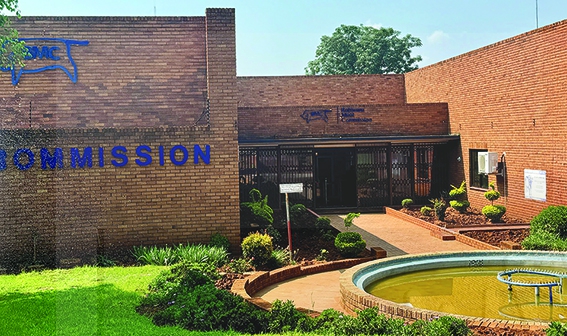
The state-owned enterprise, the Botswana Meat Commission (BMC), has recorded a P54 million profit for the 2025 financial year, marking what management describes as a transition from recovery to stabilisation.
Addressing Lobatse Town Council on Wednesday, BMC Chief Technical Advisor, Mr Oabona Ramotshwara said the Commission achieved an unaudited profit of P54.3 million for the year ended 31 December 2025, reversing a P132 million loss recorded in 2024.
He said the performance was underpinned by improved throughput at the Lobatse Plant, which slaughtered 62 204 cattle in 2025, compared to 51 070 cattle in 2024, representing a 22 per cent increase. Plant utilisation improved from 49 per cent to 60 per cent.
Mr Ramotshwara attributed the improved performance to stronger margins, tighter cost control, faster cash conversion, and enhanced farmer incentives.
However, he noted that the recent outbreak of Foot and Mouth Disease (FMD) had slowed operations in 2026. Although the Lobatse abattoir has a capacity to slaughter 600 cattle per day, it is currently underutilised due to FMD protocols.
He explained that while the Department of Veterinary Services had granted permission for local slaughter, BMC was primarily an export facility and could not be sustained by local slaughter alone.
He said the Commission was awaiting completion of vaccination and surveillance processes by Veterinary Services before resuming export operations.
“We are currently undertaking maintenance shutdown works so that when we resume export production, we are fully prepared and not hindered by pending maintenance,” he said.
Mr Ramotshwara further identified ageing infrastructure as a key operational risk.
“The structure was constructed many years ago and we continue to repair it. Some parts are no longer fixable, and some manufacturers of spare parts no longer exist. We are making strategic upgrades to ensure continuity of operations,” he said.
He revealed that BMC generated P1.04 billion in revenue in 2025, of which nearly P700 million, approximately 70 per cent, was spent on cattle procurement. He described the business as high-cost and said management continued to explore innovative ways to manage operating expenses.
On global market volatility, Mr Ramotshwara said logistics disruptions and international conflicts had affected operations.
“Wars and conflicts around the Horn of Africa and parts of the European Union have disrupted shipping routes.
From Cape Town, vessels can be delayed for one to two weeks due to ocean instability, which increases our costs,” he said.
He emphasised Botswana’s small footprint in the global meat supply chain, noting that while BMC slaughters around 60 000 cattle annually, countries such as Brazil and Argentina can slaughter that volume within hours.
“Brazil slaughters approximately 300 000 cattle per month. We operate in a niche market, and that is why we focused on improving selling prices in 2025,” he said.
He added that BMC improved its cash conversion cycle by shifting from requiring a 50 per cent deposit on orders to demanding 100 percent upfront payment from customers.
“Traditionally, logistics delays affected our ability to pay farmers on time.
By requesting full upfront payment, we reduced the farmer payment waiting period from three months to seven days,” he said.
Councillors welcomed the positive results but raised several concerns.
Thema/Motswedi councillor Mr Velem Heii described BMC as the bedrock of Botswana’s economy and encouraged the commission to consider increasing buying prices for farmers as profits improve.
Nominated councillor, Mr Kago Malele sought updates on the proposed Democratic Republic of Congo market for canned stew, estimated to generate US$ 4 million (more than P52 million), and suggested that BMC explore acquiring cargo aircraft in future to reduce shipping delays.
Tsopeng North councillor, Mr Gobuamang Motlogelwa raised concerns about persistent odours emanating from holding pens and rendering processes, calling for stronger mitigation measures to protect nearby residents.
Peleng East councillor Mr Bafo Monakwe urged the Commission to develop its unused properties to improve the town’s aesthetic appeal.
Maokaneng councillor, Mr Oaitse Kedise echoed concerns over odour management and called for utilisation of five drilled boreholes to assist in addressing water shortages in Lobatse.
He also commended BMC for relocating its cattle receiving bay away from the A1 road to reduce traffic congestion and suggested that rejected cattle be returned directly to owners rather than remain within BMC premises.
Tsopeng South councillor, Mr Moalosi Rasesia applauded the commission for rehabilitating boreholes to improve water supply and recommended that BMC explore generating its own eco-friendly electricity to ease pressure on the town’s power supply.
He described the P54 million profit as an important milestone and urged management to implement measures to sustain the gains. BOPA
Source : BOPA
Author : Calviniah Kgautlhe
Location : LOBATSE
Event : Interview
Date : 26 Feb 2026
Related News


13 Oct 2026
Expo sparks regional leather expansion

12 Oct 2026
Partnership to boost vehicles maintenance
12 Oct 2026
Farmers urged to treat agriculture as a business
12 Oct 2026