


Beneath the surface The dangerous world of Scuba diving
05 Feb 2026
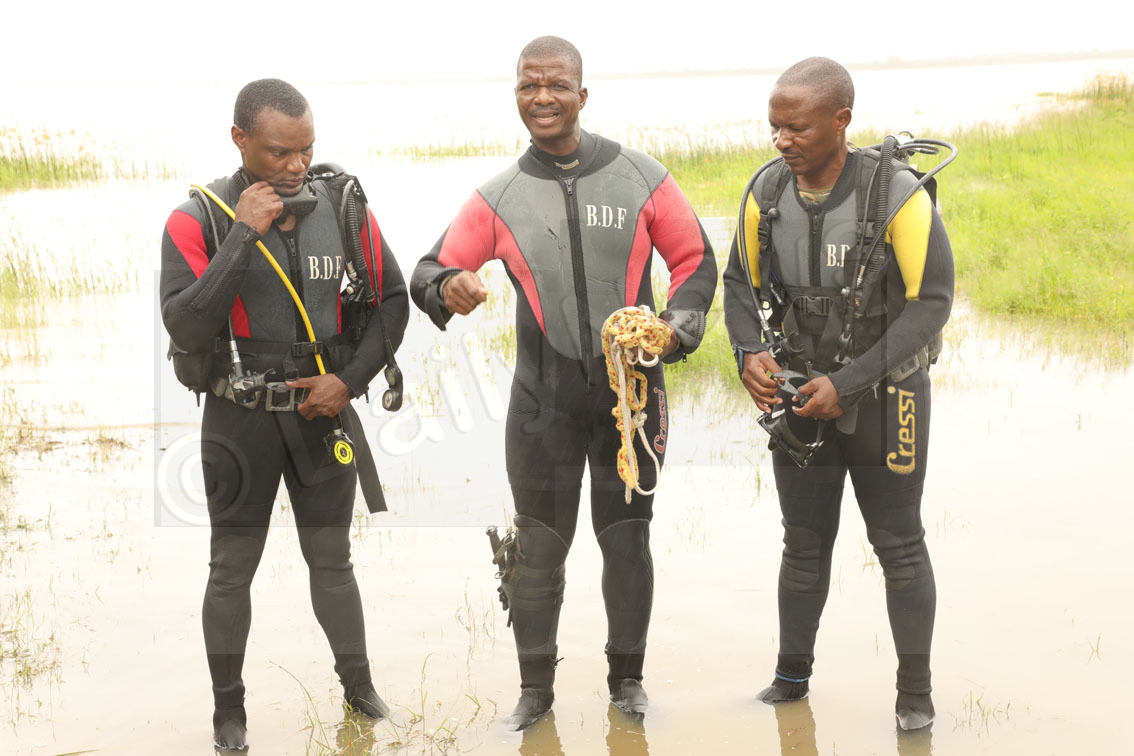
For a Botswana Defence Force (BDF) scuba diver, Warrant Officer Class 1 Thuto Nyame, scuba diving is not just a job, it is a calling that demands bravery, skill and the guts to handle tough situations.
Mr Nyame’s work and that of others in the same field, is a source of pride as it gives them the opportunity to positively impact lives.
“We brave the unknown, often putting our own lives on the line, but because it is something that we love, we do it with so much dedication,” he said.
Whenever called for a mission, the first thing that comes to Mr Nyame’s mind is the end goal, that being the successful completion of a mission.
For instance, upon receiving a report of a drowning incident, preparation starts right away, entailing getting all the equipment necessary for undertaking the rescue.
Scuba diving missions require several items of equipment including a Scuba tank for breathing, a mask and snorkel, fins, a weight belt and safety accessories such as cutting tool, among many others.
Mr Nyame however notes that issues of visibility underwater can also determine which items to use or not to use.
“Mo Botswana re segofaditswe ka metsi a mantsho, re a bo re le mo lefifing la ntshwarela ngwana” he stated, explaining that the dark waters in the country’s rivers usually present a unique challenge.
Once they go into the water, they apply their skills and techniques, adopting different search patterns as per the varying circumstances of each search mission.
According to Mr Nyame they usually use a strategy they term a movement box where they mark a stretch that they will focus on within a body of water and once they have cleared it, they mark the next one and move on to it.
This, however, depends on the type of the river they are conducting a search in.
For instance, the presence of rocks in a river can make a search mission difficult, but a properly skilled scuba diver would ordinarily be able to navigate through.
According to Mr Nyame differentiating human bodies from other objects is at times tricky because of algae, which when covering an object, identifying it becomes less straight-forward.
“While searching, whatever you come across, you feel it by hand to check if it is indeed what you are looking for,” he said.
“A human body is unique; you can easily tell if it is what you’re touching. As for underwater animals, you cannot confuse their bodies with that of a human because animals don’t allow us to get closer, they just escape,” he said.
The scuba diver recounts operations involving crocodile attacks as particularly difficult and often unsuccessful because the reptiles kill their prey as soon as they snatch it.
Though a crocodile that has killed a human being can be identified, there is usually no certainty in the identification and choosing to kill a suspected crocodile could result in many being erroneously eliminated.
Mr Nyame’s work has seen him participate in many rescue missions, but memories of one operation have stuck with him.
He recalls an operation, which he was part of in 2021 in Tonota, where two men fainted out of poor air circulation inside a well they were trying to desludge.
With the well narrow and quite deep, air circulation as good as non-existent, the oxygen in his tank got depleted while he was still in the well; and when he came out after hours of them trying to extricate the victims, the effects of the lack of oxygen began to hit him.
But despite the risks and challenges associated with scuba diving, Mr Nyame cannot trade the satisfaction that follows a successful rescue mission for anything.
It is the fuel that keeps him going. ENDS
Source : BOPA
Author : Kelebogile Taolo
Location : Francistown
Event : Interview
Date : 05 Feb 2026
Related News


10 Oct 2026
Feature Reliving the Long March 90 years on

09 Oct 2026