


Residents weigh pros and cons of Constitutional Court
03 Feb 2026
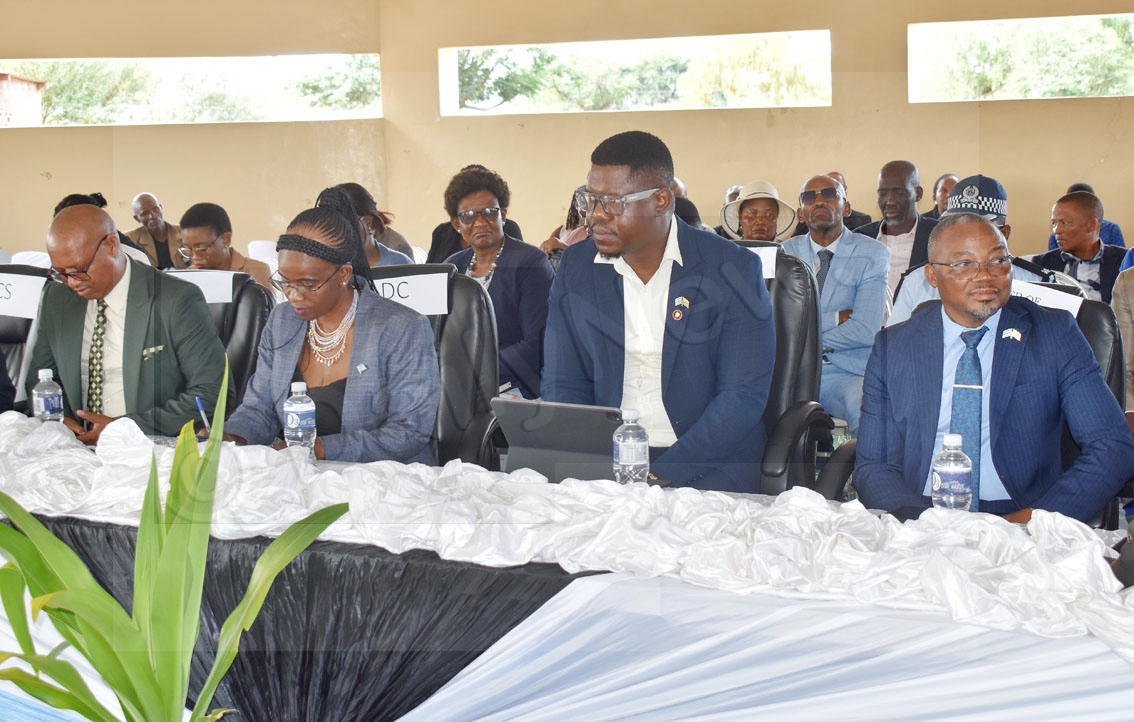
A recent kgotla meeting on the proposed establishment of Constitutional Court reflected divergent views from different speakers from the 14 villages that make up the Kgalagadi District.
The meeting, addressed by the Minister of Local Government and Traditional Affairs, Mr Ketlhalefile Motshegwa in Hukuntsi, revealed a strong appetite among residents to better understand the proposed Constitutional Court and its broader implications for the country.
On the other hand, some speakers described the establishment of Constitutional Court as long overdue, while others urged caution, citing economic constraints and the need for a more comprehensive reform process.
Central to the discussion was whether the court should be established immediately or be introduced as part of a wider constitutional review.
Although there was broad consensus on the importance of a Constitutional Court, some speakers argued that its establishment would be more appropriate if undertaken within a holistic constitutional review.
They cautioned that pursuing the process independently would place a significant financial burden on government, particularly at a time when the country is grappling with economic recession.
According to the speakers, a comprehensive constitutional review that incorporates the establishment of a Constitutional Court would be a more cost-effective and efficient approach.
They further warned that proceeding with the court as a standalone initiative could result in two national referendum, one for the Constitutional Court and another for a future constitutional review, thereby escalating costs for the government.
Despite raising concerns over cost and timing, speakers emphasised that their views should not be interpreted as opposition to the Constitutional Court, but described their position as a call for prudent sequencing of reforms to ensure fiscal responsibility.
Addressing the gathering earlier on, Minister Motshegwa acknowledged the concerns raised and conceded that the establishment of a Constitutional Court would indeed be costly. However, he said a cost-benefit analysis had already been conducted and showed that the Court would have a positive impact on the economy.
Mr Motshegwa also moved to dispel fears that the Constitutional Court would abolish the death penalty, clarifying that the law was explicit on the matter and that the creation of the court would not alter its legal status.
He added that the need for such a court was urgent as it directly concerns the protection of citizens’ rights.
Mr Motshegwa observed that some people may not fully appreciate the importance of the court simply because they have never personally encountered constitutional challenges.
He further noted that the Constitutional Court would play a critical role in clarifying constitutional matters and strengthening democracy.
Mr Motshegwa described its establishment as a significant step towards entrenching constitutionalism, upholding the rule of law, and safeguarding the Bill of Rights.
He further linked strong constitutional institutions to economic growth, noting that countries that upheld democracy, human rights and the rule of law were better positioned to attract foreign direct investment.
He added that the Umbrella for Democratic Change (UDC) was committed to a human-rights-centred government, stating that a specialised Constitutional Court would sharpen jurisprudence on constitutional and human rights matters.
Mr Motshegwa noted that a full constitutional review process was expected to take more than four years, and stressed that the Constitutional Court could be introduced in the interim, arguing that it would help pave the way for broader constitutional reforms.
The minister raised a concern over the growing backlog of cases within the judiciary, revealing that courts were currently handling 1 216 criminal cases and 3 337 civil cases.
He said the introduction of specialised courts, including the Constitutional Court, would help reduce the backlog and improve efficiency.
In his welcome remarks, Kgosi Merapelo Tshweneyagae commended government for rolling out nationwide public consultations, noting that Batswana had previously expressed concern about being sidelined during the parliamentary passage of the Bill.
He said the current engagements were reassuring and would enable citizens to make informed decisions when voting.
Kgosi Tshweneyagae said the outreach was important as it provided clarity on the proposed Constitutional Court and ensured that citizens were adequately informed on its purpose and implications.
Meanwhile, he noted that the Minister had in the past engaged the nation on matters relating to Bogosi and traditional affairs, with the aim of reviewing laws to ensure that the institution of Bogosi operated efficiently and in accordance with Setswana customs and traditions.
He said while there had been expectations that the legal reforms concerning Bogosi would be implemented expeditiously, progress had been slower than anticipated. As such, he said traditional leaders had sought clarity on the delays affecting the process. ENDS
Source : BOPA
Author : Thuso Kgakatsi
Location : Hukuntsi
Event : Kgotla meeting
Date : 03 Feb 2026
Related News


10 Oct 2026
Feature Reliving the Long March 90 years on

09 Oct 2026