


Marginalised tribes throw weight behind Constitutional Court
02 Feb 2026
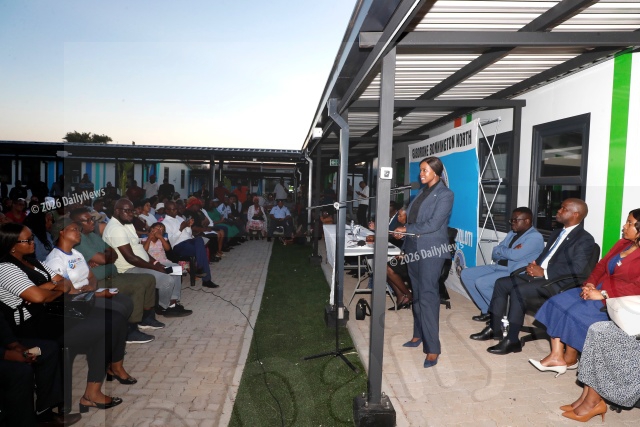
As part of the ongoing nationwide consultations on the establishment of the Constitutional Court, the Minister of Local Government and Traditional Affairs, Mr Ketlhalefile Motshegwa recently addressed a kgotla meeting in Mabutsane.
In addition to Mabutsane residents, the meeting was also attended by representatives from other 18 villages which fall under the Mabutsane district jurisdiction, among them tribal leaders, village development committee members and other local structures.
From Kanaku, a village 9km from Mabutsane, Kgosi Moratiemang Tshubalobone expressed their desire to see the Constitutional Court being introduced in order to promote equality among all tribes in Botswana.
He said as Basarwa, they had been overpowered by other tribes and their rights were violated.
“As I speak, there are people who represent us at Ntlo ya Dikgosi and we are denied the opportunity to represent ourselves. Even right now, we do not have any Mosarwa who has been appointed a chief representative,” he said.
He said the establishment of the Constitutional Court would accord them the opportunity to fight for their rights since the current judicial system failed them.
He noted that the specialised court would also assist with jurisdiction and tribal boundaries.
Sharing the same sentiments, Kgosi Biki Nthomang from Lefhoko said it was unfair for many of their tribes to be grouped under Bangwaketse, yet they had their own identities.
“We support the introduction of this Constitutional Court, which is expected to protect the rights of all tribes. We are currently referred to as Bangwaketse but we do not want that, as Bakgalagadi we want to reclaim our own identity,” he said.
Nevertheless, some opined that establishing the Constitutional Court was not a priority area during the current fiscal challenges.
In his contribution Mr Motlhatlhedi Motokwane noted that the government should defer the process and instead focus on improving the health and education sectors.
He also said the Constitutional Court could be part of a comprehensive Constitutional review, after intensive consultations with Batswana.
“There is need for a comprehensive review of the Constitution, which will also include the Constitutional Court, to ensure separation of powers. It is also important to assess the needs of the people and prioritise them accordingly, in line with the financial situation,” he noted.
Mr Chapson Bokitla also noted that even though he acknowledged the importance of the court in protecting people’s rights, it should be established by a comprehensive review of the Constitution.
He said this would enable it to interpret the revised Constitution, rather than preceding it.
The minister assured them that introducing the Constitutional Court would not affect other plans and programmes from other sectors and ministries.
He said while a comprehensive review of the Constitution entailed a long process, there was need to establish the court in order to protect the rights of people, which continued to be violated, owing to the inefficiency of the current system.
He further noted that this would enhance democracy efficiency of the judiciary in Botswana.
Additionally, Mr Motshegwa allayed fears that the government was planning to abolish the death penalty through the Constitutional Court.
He explained that all laws were made by Parliament and there was no provision to amend them without the same process. “The mandate of the courts is to preside over matters and implement what is prescribed by the existing law, they do not make laws. Therefore, there is no how the Constitutional Court could ban the death penalty, it could only be changed by Parliament,” he explained. ENDS
Source : BOPA
Author : Kehumile Moekejo
Location : Jwaneng
Event : Kgotla meeting
Date : 02 Feb 2026
Related News

10 Oct 2026
Feature Reliving the Long March 90 years on
09 Oct 2026