


Letsholathebe records improved medical supplies
28 Jan 2026
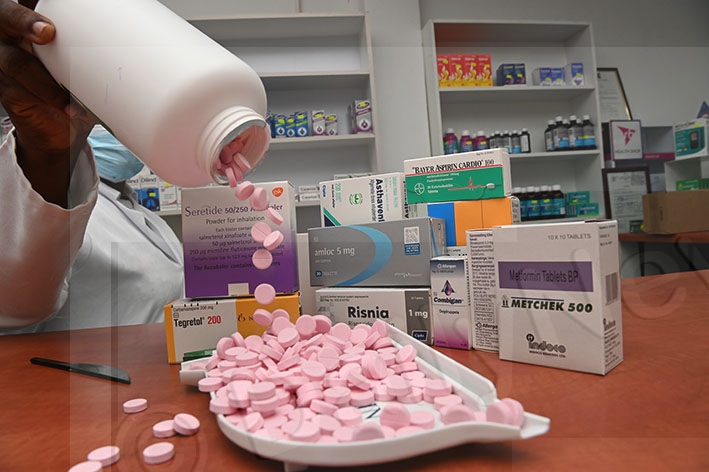
Letsholathebe Memorial Hospital in Maun is showing signs of recovery as availability of medicines including essential ones and other medical supplies has improved from 15 per cent to 30 per cent, with another consignment expected before the end of this week.
This was revealed by the hospital superintendent, Dr Lebogang Mokotedi during Minister for State President, Defence and Security, Mr Moeti Mohwasa’s tour of the hospital on Tuesday.
“Drugs availability and other medical commodities have gradually improved this year as compared to last year and we are expecting more orders before the end of the month.Despite the shortage, we have been trying our level best to offer quality services with the little we had,” revealed Dr Mokotedi.
It was reported in December that the hospital was experiencing shortage of drugs and non-drug commodities and that inconsistent supplies of the required commodities affected patient management, especially those requiring to be assisted on emergency basis.
By then, vital drugs were reported to be at 75.5 per cent, essential drugs at 63.9 while necessary drugs remained at 52.1 per cent with an order fill rate of 21 per cent from the Central Medical Stores.
She also apprised the minister that they had ensured the security of medicines in the facility as all medication storage was restricted to only authorised personnel.
To further strengthen security, she stated that their intention was to install alarms and CCTV cameras in drug storage areas.
Regarding feeding of patients, she said it also remained a serious challenge due to financial constraints citing that they operated under a tight budget where allocation of funds for food services was limited.
Another challenge was shortage of ambulances as only six out of 18 were functional, saying the shortage affected the flow of referrals to both Francistown and Gaborone.
Dr Mokotedi also reported a shortage of medical specialists, among them a surgeon, a gynaecologist and a physician, explaining that currently they were operating with one gynaecologist, whose services patients waited 24 to 26 months to access.
Despite the challenges, she shared some of their achievements citing that facility recently underwent refurbishment for both the Intensive Care Unit (ICU) and the theatre to improve service delivery.
The ICU, which was officially opened last year August had not been fully operational due to structural anomalies and equipment issues.
Currently, the hospital management has procured equipment and awaiting staff and its functionality was hailed as a major milestone for the hospital, enhancing critical care capabilities for Maun and surrounding districts.
“The introduction of this unit is a significant upgrade to the hospital’s capacity to handle critically ill-patients locally. We now need a doctor who will man the unit,” Dr Mokotedi said.
In addition, she informed the minister that a new haemodialysis unit was also introduced, which was being operated on a public-private partnership basis.
For a long time, patients had to travel long distances to as far as Francistown to access kidney health services and Dr Mokotedi praised government efforts to bring quality health services including highly specialised ones.
For his part, Minister Mohwasa praised employees of the hospital for their resilience and high level of commitment in delivering quality services despite working under difficult conditions.
He appreciated that staff had demonstrated resilience and a strong sense of moral duty to maintain quality patient care in the face of several challenges, which include drug shortages.
Mr Mohwasa assured the hospital management that the Ministry of Health was working around the clock to address the challenges at hand so as to improve service delivery.
He said the ministry was working hard to address the issue of shortage of medicines by ensuring that they reached every hospital and clinic across the country on time.
Mr Mohwasa admitted that there was shortage of drugs, which he partly blamed on corruption by suppliers and an inefficient procurement system.
He emphasised that government was however working tirelessly to improve the efficiency of the medicine supply chain.
The minister and his entourage toured some sections of the hospital including the pharmacy, some laboratories, and specialised units to appreciate challenges.
He also visited the outpatient department where he interacted with patients queuing for services. ENDS
Source : BOPA
Author : Esther Mmolai
Location : MAUN
Event : tour of the hospital
Date : 28 Jan 2026
Related News


10 Oct 2026
Feature Reliving the Long March 90 years on

09 Oct 2026