



School feeding more than a meal
28 Jan 2026
School feeding is a powerful, multi-sector investment that strengthens education systems, improves child wellbeing and support local economies.
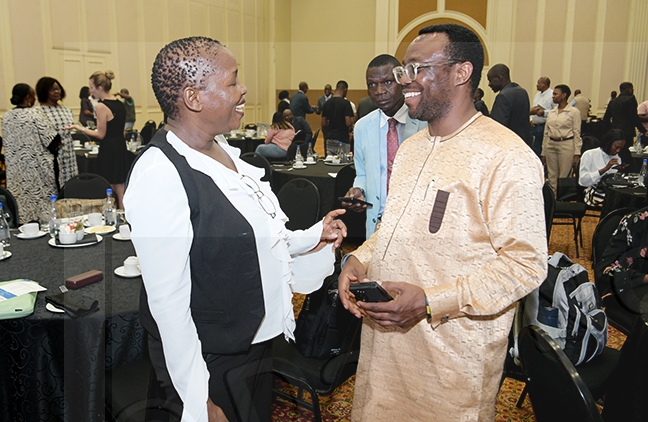
This was said by African Union Senior Education Policy Officer, Dr Caseley Stephens, during the 11th African Diaspora Scientific Federation breakfast meeting in Gaborone recently.
He explained that well-designed school feeding programmes improved health and welfare outcomes, reinforced social protection systems and built community resilience, while increased school attendance and retention.
“It connects nutrition, health and education in one powerful strategy. It contributes directly to human capital formation and long-term economic productivity,” Dr Stephens added.
He further highlighted that school feeding aligned with the African Union Agenda 2063, particularly Aspiration One, which envisioned a prosperous, inclusive and sustainable Africa driven by its people.
He further said the holistic impact of school feeding was precisely why its relevance continued to grow across AU member states.
Deputy Permanent Secretary in the Ministry of Child Welfare and Basic Education, Mr Steve Botlhasitse said school feeding programmes were central to Africa’s development agenda.
Mr Bothasitse stressed that access to meals was a key retention tool, warning that learners were more likely to miss school when food was unavailable.
“If learners are not given meals in our schools, they will somehow miss school,” he said.
As such, he urged stakeholders, including the Ministry of Local Government and Traditional Affairs and the tourism sector to adopt a proactive approach to sustaining school feeding programmes.
“We must plan ahead and find solutions to ensure that meals are nutritious, safe and accompanied by clean water and good hygiene practices is essential,” he said.
Extending an invitation to the business community, Mr Bothasitse said partnerships could help strengthen systems, scale effective practices and build resilience so that every school, in every community, could reliably provide safe and nutritious meals.
“Your backing in school feeding programmes is an investment in Africa’s future workforce and communities,” he said.
Also addressing the meeting was Acting Deputy Permanent Secretary, Ms Veronica Mochotlhi, who traced the evolution of Africa’s school feeding agenda, noting that it gained momentum following a 2016 study visit to Brazil focused on home-grown school feeding models.
She said the initiative linked local farmers to school feeding programmes, boosting nutrition, education and local economies. Ms Mochotlhi said following that engagement, African heads of state resolved to establish the Africa Day of School Feeding, which debuted in Niger as an annual event.
She noted that the 2025 Africa Day of School Feeding was commemorated in the Central African Republic under the theme: A Decade of Nourishment: Celebrating the Past, Securing a Just Future.
Looking ahead to 2026, she said the focus would be on inspiring action, sharing knowledge, identifying barriers and co-creating solutions to strengthen school meal policies, governance and financing.
She added that each year should highlight progress, discuss challenges and mobilise support to scale up these programmes so that they reached every child in Africa.
Meanwhile, Botswana is set to host the 11th African Diaspora Scientific Federation commemoration on February 28. BOPA
Source : BOPA
Author : Gontle Merafhe
Location : Gaborone
Event : Meeting
Date : 28 Jan 2026
Related News
24 Sep 2026
Boko calls for global inclusion
24 Sep 2026
Bi-national Commission to boost economic ties

24 Sep 2026