


Farmers unity panacea to FMD fight
27 Jan 2026
Robust government interventions, coupled with a united and proactive farming community through cohesive farmers’ associations, remain central to the fight against the spread and containment of Foot and Mouth Disease (FMD).
Representatives of three farmers’ associations said in interviews on Saturday that recent FMD outbreaks in South Africa and Zimbabwe had caused considerable anxiety among farmers in Botswana.
The disease was first reported in South Africa’s Waterberg District in Limpopo Province in December, prompting Botswana to heighten surveillance, particularly in border areas such as Tsabong, Good Hope, Ramotswa, Tlokweng, Kgatleng and Mahalapye.
To date, there has not been a single reported incident of the disease spillage into the Botswana, due to the various interventions that include movement restrictions, high alert and vigilance due to the proximity of the Waterberg district to border villages, biosecurity advice, as well as deployment of vaccines.
The FMD outbreak that has hit neighbouring Zimbabwe has compounded the matter and sent shockwaves and left farmers frightened across the breadth and length of Botswana.
As of January, latest outbreaks were reported in the Mangwe district of Matabeleland South, near Botswana border. Fifty-four active cases have been reported thus far in the area, with infections linked to a stray buffalo.
The twin outbreaks have sent shockwaves through Botswana’s cattle industry, a key contributor to national revenue through long-standing access to the lucrative European Union market.
Farmers fear that failure to contain the disease using both traditional control measures and innovative approaches could cripple the industry, especially at a time when the country is grappling with resource constraints brought about by prolonged economic challenges.
Southern District Beef Farmers Association vice chairperson, Mr Tiroyaone Mmereki, said existing farmers’ association structures should be fully utilised if the country was to prevail in the fight against FMD.
He said the Ministry of Lands and Agriculture should routinely engage the Botswana National Beef Producers Union whenever disease outbreaks occur, as this would enable effective mobilisation of farmers through its affiliate structures.
“The Botswana National Beef Producers Union would then be able to mobilise us as its bona fide affiliates to chart the way forward,” he said.
Mr Mmereki called on farmers to take the lead in combating animal diseases by working closely with fellow farmers and relevant authorities, including the Ministry of Lands and Agriculture and the police.
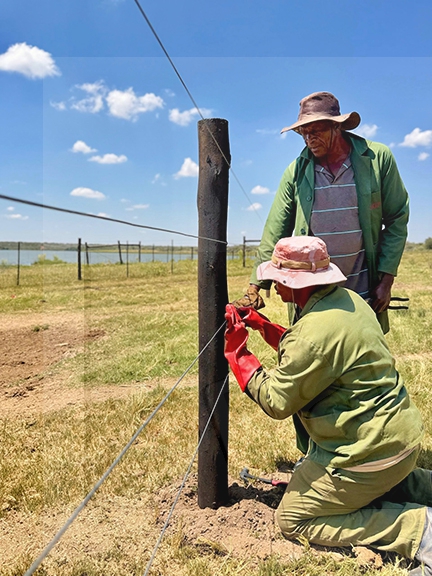
He also raised concern over the poor maintenance of cordon fences across the country, which he said posed a serious threat to disease control efforts.
He noted that many fences had not been properly maintained for over a decade, allowing wild animals such as elephants to stray beyond their natural habitats and increasing the risk of disease transmission.
He urged members of his association from Pitshane Molopo, Manyana and Lobatse through to Mabutsane, to work together and act as vigilant custodians of the cattle industry.
Echoing his sentiments, C8 Beef Farmers Society chairperson, Mr Phokompe Pifelo warned that the deteriorating state of cordon fences could allow diseases to spread easily across zones.
“This is also exacerbated by unavailability of patrols,” said Mr Pifelo, whose society covers farming communities from Makoro to Makoba.
Last year, he said as a precautionary measure, the society partnered with the Ministry of Lands and Agriculture to repair a cordon fence in the Sese area, with the ministry providing resources while farmers contributed labour.
Mr Pifelo emphasised that individual farmers must rise to the occasion and demonstrate commitment to safeguarding the industry, especially in light of limited government resources.
He stated that acute shortage of resources from government called on the farming community to join efforts to curb threats poised by FMD and other enemies of a full-throttle beef industry.
The views of the two associations were aligned with those of the TOTUMA Commercial Farmers Association.
Its chairperson, Mr Stephen Pillar, said effective communication was equally critical in mitigating the FMD threat.
“We stay informed and closely monitor developments so that we can share information with our affiliates,” he said, adding that the association, which represented farmers from Tonota, Tutume and Masunga, had established mechanisms to rapidly disseminate information on the disease.
Mr Pillar said the association would urgently engage the Ministry of Lands and Agriculture to consider deploying patrols along the Botswana-Zimbabwe border, similar to operations in the Bobirwa District.
“This would help curb disease spillover, especially given the prevalence of illegal border crossings in areas such as Maitengwe and other border villages in the North East,” he said.
FMD outbreaks in Botswana date back to the 1930s, a history that prompted the country to establish local vaccine production through the Botswana Vaccine Institute.
The use of effective vaccines, alongside other control measures, remains a cornerstone of Botswana’s FMD management strategy.
FMD is a highly contagious viral disease affecting cloven-hoofed domestic and wild animals, including cattle, pigs, sheep, goats and deer. It is regarded as an economic disease due to its devastating impact on livestock production and trade.
Over the years, Botswana has developed a comprehensive national FMD strategy based on passive and active surveillance, movement control, zoning, strategic vaccination, biosecurity, public education, awareness campaigns and robust legal frameworks.
In Botswana, FMD is primarily transmitted to cattle from wild animals, particularly buffalo, in endemic areas, with outbreaks historically concentrated in the North West District due to livestock-wildlife interaction. BOPA
Source : BOPA
Author : Mooketsi Mojalemotho
Location : Serowe
Event : Interview
Date : 27 Jan 2026
Related News



10 Oct 2026
Feature Reliving the Long March 90 years on



09 Oct 2026