


ConCourt to address legal framework challenges
19 Jan 2026
The establishment of a Constitutional Court, if effected quicker, can offer a remedy to some of the existing challenges faced by the country’s legal framework, in addition to safeguarding rights, President Advocate Duma Boko has said.
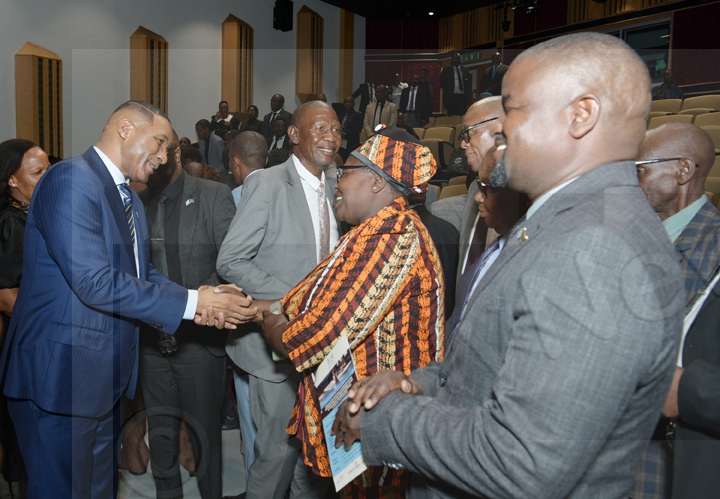
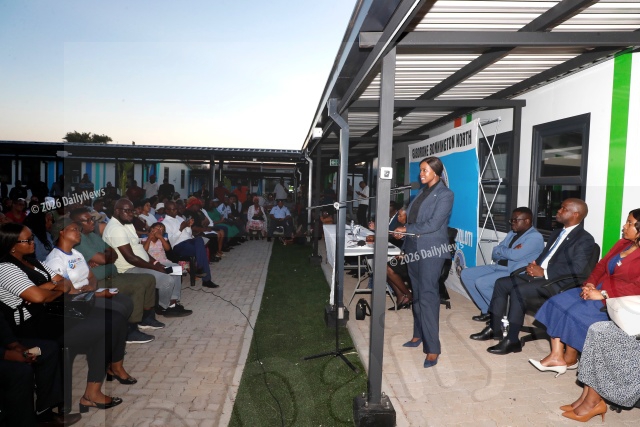
The President was speaking during a consultative meeting with Ntlo Ya Dikgosi at the Mass Media Complex in Gaborone on January 16. He said people had varying ideas over important constitutional matters and the Constitutional Court could be an arbiter.
Whereas some interpret Section 106 of the Constitution as preventing the right for election petitions to reach the Court of Appeal, the President said others still read a different interpretation, and such contentions could be mediated by the Constitutional Court.
Sections 77, 78 and 79 of the Constitution, which prescribe representation in Ntlo Ya Dikgosi has also been a bone of public contention, and such varying views could be ventilated over the review process and a solution mediated by a Constitutional Court.
The President also cited the example of Monnanyana versus the State case of 2002 where a court admitted that they had erred, raising the ‘functus officio’ principle (a body being unable to alter its own decision) thus unable to remedy the circumstances of a person who had stayed in jail longer than should have been the case.
He said Section to 3 to 16 of the Constitution was a Bill of Rights that was sacrosanct as it involved fundamental human rights, but the establishment of the Constitutional Court and the review would focus on other aspects such as distribution of power, establishment of institutions and entrenching further rights.
President Boko said it was important for the Constitutional Court to precede the comprehensive constitutional review exercise, as the latter was a complex process of examining and amending the country’s Constitution and could take long before completion.
He acknowledged that it had been an oversight for the executive to not consult with the parliamentary advisory chamber before the Bill was gazetted.
President Boko also offered an apology to members of Ntlo Ya Dikgosi for not consulting with them prior to the Constitutional Court Bill being tabled before the National Assembly last year.
Nonetheless, the President said the consultative meeting, while commencing after the bill had passed through the committee stage of the National Assembly, was still important to bring Ntlo Ya Dikgosi on board with regards to the importance of the establishment of the Constitutional Court.
In discussing the President’s submission, Kgosi Puso of the Batlokwa said their request as members of Ntlo Ya Dikgosi was that before tabling the Bbill on an important issue such as constitutional reforms, the minister responsible should meet them privately to explain the motive and aspects of the Bill.
This would permit Ntlo Ya Dikgosi to debate complex matters of national importance from a more informed position in the best interest of the public they represented.
Kgosi Lotlaamoreng II of the Barolong called for Ntlo Ya Dikgosi to be offered basic training on the law and the interpretation of statutes in order for them to discuss constitutional issues from a more informed position.
For her part, Kgosi Mosadi Seboko of the Balete stressed the need for countrywide consultation and public education on constitutional matters, in order for the public to contribute meaningfully on any reform exercise.
Ntlo Ya Dikgosi chairperson, Kgosi Malope II of the Bangwaketse said they had heeded the requests for the President to further explain the Constitutional Court, as they felt there had been a need for more dialogue.
The President promised Ntlo Ya Dikgosi representatives that he would soon meet them privately for further consultation and discussion on the matter. ENDS
Source : BOPA
Author : Pako Lebanna
Location : GABORONE
Event : Consultative meeting with Ntlo Ya Dikgosi
Date : 19 Jan 2026
Related News

10 Oct 2026
Feature Reliving the Long March 90 years on
09 Oct 2026