


Empowerment Key To Sustainable Development
13 Jan 2026
As Botswana navigates economic uncertainty and shrinking donor support, the Resource Mobilisation Conference 2025 delivered a reminder that sustainable development is not about handouts, but empowerment.
The four-day conference, which brought together non-governmental organisations (NGOs), community-based organisations (CBOs) and non-profit organisations from across the country, was described as a timely intervention aimed at equipping civil society with the skills and strategies needed to survive and thrive in difficult times.
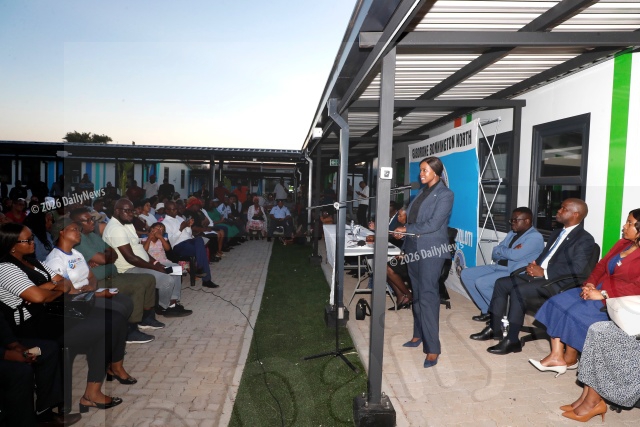
Addressing delegates in Gaborone Monday, the Minister of Justice and Correctional Services, Mr Nelson Ramaotwana, reaffirmed that NGOs, CBOs and non-profit organisations remained central to Botswana’s development agenda.
“These organisations have been and continue to be the backbone of our development as a country,” he said, emphasising that their contribution cuts across social welfare, economic empowerment and community transformation.
Mr Ramaotwana stressed that civil society carried a standing obligation in shaping development outcomes, including environmental stewardship and community resilience.
He assured participants that government remained committed to creating an enabling environment for their work and partnerships, noting that his ministry played a direct role in the registration and monitoring of some non-profit entities, including foundations.
Beyond regulation, he highlighted practical collaboration, particularly within correctional services. He said NGOs, churches and civil society organisations had partnered with his ministry to support former prisoners, helping them rebuild their lives through skills training and income-generating projects.
“Last year, churches mobilised resources for ex-prisoners to engage in agriculture, carpentry and other projects,” Mr Ramaotwana said.
“These initiatives, he said was about giving people the means to stand on their own, not just temporary assistance.
The minister expressed gratitude for the role civil society played in the reintegration of former inmates, noting that such efforts reduced reoffending while restoring dignity and self-reliance.
Drawing from his own constituency of Gaborone South, Mr Ramaotwana reflected on how NGOs and CBOs had directly contributed to local development, reinforcing his belief in partnership-driven progress.
“There was no way I could turn down an opportunity to engage with my partners in development at national, ministerial and constituency level,” he said.
The conference was organised by the Botswana Council for the Disabled, an umbrella body for organisations serving people with disabilities, working alongside a citizen-owned private company and supported by corporate partners. The blend of local NGOs, private sector expertise and corporate funding was praised as the kind of partnership government seeks to promote.
However, Mr Ramaotwana said traditional wisdom reminded people that no single entity could achieve greatness alone.
“Government cannot take this country to its glory days by itself, we need partnership, we need everyone to play a part,” he said.
Mr Ramaotwana said the philosophy aligned with Botswana’s current policy direction. With the adoption of National Development Plan 12 (NDP 12) and the Botswana Transformation Economic Plan (BTEP), the country was shifting towards a private-sector-led economy, supported by strategic collaboration with government and communities.
The conference theme, “Smart Resource Mobilisation: Key to Sustainable Development,” was described as both challenging and necessary, particularly at a time when some donors were withdrawing from the country.
The minister urged participants to view the theme not as a slogan, but as a tool for accountability and performance beyond the conference.
He noted that while government continued to pursue international financing including engagements with institutions such as the African Development Bank local organisations must also sharpen their capacity to mobilise resources independently.
For his part, the conference director, Mr Phillip Makgalemele, said the event aimed to strengthen the capacity of development-focused organisations to mobilise resources effectively at a time when donor funding in Botswana had been steadily declining.
He said participants would be equipped with essential skills, knowledge and strategies to diversify funding sources, engage donors and sponsors, and ensure organisational sustainability.
Mr Makgalemele noted that the conference was particularly timely as Botswana, now classified as an upper-middle-income country, had seen reduced support from international donors.
“This challenge has been compounded by a global economic slowdown and rising costs of living, which have increased pressure on both government and civil society organisations,” he said.
“The reality is that many international donors no longer support Botswana as they once did, while government resources remain constrained due to an under-recovered economy,” he added, expressing optimism that economic recovery would eventually take place.
The goal, Mr Makgalemele said was to leave delegates with practical tools, diversified funding ideas and a renewed sense of ownership over their missions, enabling them to contribute meaningfully to Botswana’s sustainable development agenda despite evolving economic and funding challenges.
“People often want money but do not know how to mobilise it,” he remarked. “You must invest in programmes that generate income and long-term impact.”. BOPA
Source : BOPA
Author : Lesedi Thatayamodimo
Location : Gaborone
Event : Conference
Date : 13 Jan 2026
Related News

10 Oct 2026
Feature Reliving the Long March 90 years on

09 Oct 2026