


Highs and lows in Botswana politics

18 Dec 2025
Like any other year, 2025 unfolded as a tapestry of highs and lows, a period marked by both celebration and solemnity. Among the events that captured national attention were Parliament’s adoption of National Development Plan 12 (NDP12), the launch of the Botswana Economic Transformation Programme (BTEP), the untimely passing of Kgalagadi South MP and Minister of Lands and Agriculture, Dr Micus Chimbombi, as well as the elective congresses of political parties and the by-elections. Each of these moments, whether joyous or tragic, added a distinct thread to the country’s evolving political landscape.
As 2025 draws to a close, the year leaves behind a record of both challenge and promises. The nation has witnessed the birth of new policies and the shaping of institutions all contributing to a collective journey toward a Botswana where fairness, human rights and accountability are not merely ideals, but practices embedded at the heart of governance.
TRANSITIONAL NATIONAL DEVELOPMENT PLAN AND NATIONAL DEVELOPMENT PLAN 12
Following the change of baton to the Umbrella for Democratic Change-led government came the extension of the implementation of the Transitional National Development Plan (TNDP) until October 2025, a move intended to pave the way for NDP12 and ensure alignment with the parliamentary cycle.
This marked a significant departure from previous planning approaches, as NDP12 was deliberately aligned not only with the cycle of Parliament but also with the manifesto commitments and electoral promises of the ruling party. According to UDC strategist Dr Patrick Molutsi, the realignment was designed to enhance accountability and ensure that development planning is closely tied to democratic mandates.
Presented in October, NDP12 stands as a central pillar of government’s agenda. The plan proposes total development expenditure of P388 billion over a five-year period (2025/26 to 2029/30), with more than 90 per cent of the funding expected to come from government coffers.
Botswana Economic Transformation Programme (BTEP)
This year also marked the introduction of a bold and ambitious government initiative, the Botswana Economic Transformation Programme (BTEP), aimed at diversifying the economy beyond its long-standing reliance on diamonds and unlocking sustainable job creation.
To date, 200 projects have been selected from an impressive pool of 6 925 proposals submitted by a diverse range of contributors, including citizens, innovators, entrepreneurs, and international partners eager to participate in Botswana’s economic transformation.
Central to BTEP’s design is the use of specialised problem-solving laboratories, which apply targeted methodologies to fast-track high-impact projects and translate ideas into tangible economic outcomes.
CONSTITUTIONAL COURT
Another defining moment of the year was the tabling in Parliament of the Bill to establish a Constitutional Court, a development that sparked widespread public interest and debate among Batswana from all walks of life. Political parties across the aisle expressed mixed reactions, with some opposition figures arguing that the ruling party sought to unilaterally determine the process of establishing the Constitutional Court, sidelining other stakeholders, particularly the opposition.
Opposition Members of Parliament contended that consultations on the Bill were inadequate. However, during the parliamentary debate, President Duma Boko underscored that the establishment of such a court would strengthen democracy by ensuring that all institutions operate within the confines of the Constitution. Despite these objections, Parliament voted in favour of passing the Bill through the third reading, which will now require a two thirds majority vote within three months’ time to become law.
PRESIDENT ON GLOBAL STAGES
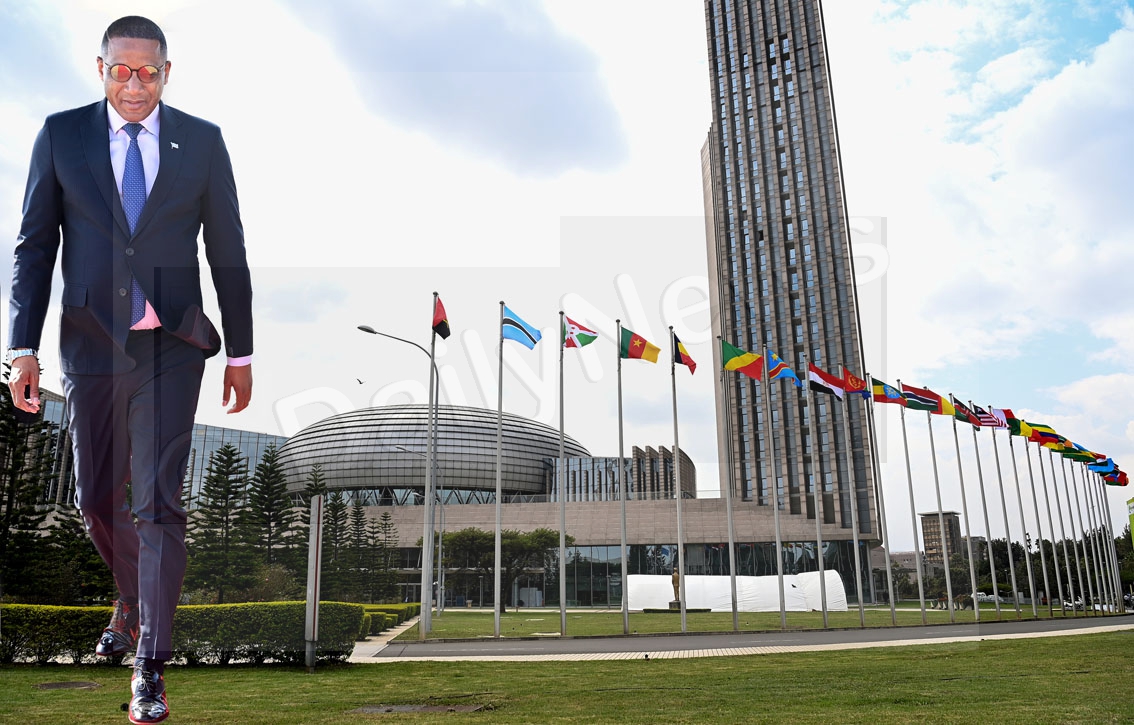
In his debut appearance and maiden address at the African Union (AU) in February, President Boko shared the story of Botswana’s peaceful democratic transition of power after nearly six decades of rule by the Botswana Democratic Party. He articulated Botswana’s vision and its role in Africa’s industrial and trade expansion, aligning the country’s aspirations with the AU’s Agenda 2063 for sustainable development.
At the United Nations General Assembly in September, during his inaugural address, President Boko was forthright in criticising what he described as the United Nations’ indifferent treatment of Africa and its failure to adequately heed the continent’s voice. He argued that it was time for the five permanent members of the United Nations Security Council, China, France, Russia, Britain and the United States of America, to honour their commitment to agree on a permanent seat for Africa, the only continent not represented in the Council’s 80-year history.
Political Parties’ elective congresses
It was a political roller-coaster year for party politics in Botswana, marked by intense jockeying for senior positions and the ushering in of new leaders and office bearers. For some, the moment offered an opportunity to recalibrate policy direction or depart from long-standing alliances. For others, it became a chance to consolidate influence and reward factional loyalists. Against the backdrop of the historic 2024 General Elections, major political parties convened elective congresses and conferences in 2025 to reconstitute their leadership structures.
Following its electoral defeat, BDP held an elective congress that ushered in a new central committee tasked with rebuilding the party. The leadership race attracted a competitive field, including former vice president Slumber Tsogwane, former minister Nonofo Molefhi, former ambassador Dorcas Makgatho, and former minister Mpho Balopi, all vying for various positions on the central committee. The contest culminated in Mr Balopi’s election as the new party president, signalling a generational and strategic shift within the BDP.
The Botswana National Front (BNF) also held its elective congress, coinciding with the party’s 60th anniversary celebrations. While members retained President Boko as party president, Moeti Mohwasa emerged as the new vice president, reinforcing continuity at the top while introducing fresh leadership dynamics.
In contrast, the Botswana Patriotic Front was thrust into the spotlight as one of the most disarrayed political parties of 2025. For the first time, its elective congress was marred by internal contentions and overt jostling for power. Among the year’s more momentous political developments were the party’s deepening internal challenges, which culminated with some members getting expelled.
On a sombre note, the country mourned the passing of Chimbombi, whose death touched the hearts of Batswana across the social and political spectrum, given his long and distinguished record as a public servant.
Following his death, the UDC retained its grip on the Kgalagadi South constituency through a by-election that ushered in a new representative, Tokyo Modise, who had previously served as an administration officer to the late MP. The UDC further surprised political observers by clinching a council by-election victory in Moreomaoto, a ward previously held under the BDP ticket. ENDS
Source : BOPA
Author : Mmoniemang Motsamai
Location : Gaborone
Event : The year That Was
Date : 18 Dec 2025
Related News


10 Oct 2026
Feature Reliving the Long March 90 years on
09 Oct 2026