RDC promotes sustainable projects
27 Oct 2013
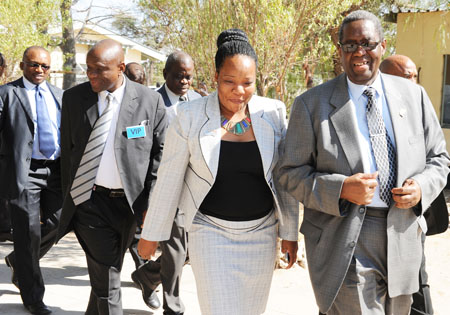
Through Rural Development Council (RDC), government encourages rural communities to initiate profitable and sustainable projects to improve the economy, the Vice President, Dr Ponatshego Kedikilwe has said.
Addressing residents of Letlhakane and Mmadikola recently, Dr Kedikilwe said RDC also encouraged communities in rural areas to engage in projects best suitable for their villages as a way of augmenting community empowerment programmes already in place.
Programmes such as ISPAAD, LIMID, Youth Development Fund, CEDA and Poverty Eradication packages, the Vice President said, were aimed at encouraging individual members of the community and groups to be independent by engaging in profitable activities that would help improve their livelihoods and create employment opportunities.
“Through RDC, we encourage communities in their respective villages to develop their economy by engaging in profitable and sustainable projects,” he said. He said the aim of the RDC was not to stop other programmes in place but the intention was to supplement what was already in place.
“We want communities to look back at some of their previous projects with the view of the reviving those with the ability to grow under the current environment and even come up with new possible ideas to consider,” Dr Kedikilwe said adding that some community projects such as trusts and cooperatives were abandoned due to lack of running capital, market and skilled personnel.
He said through RDC, government would be working closely with communities, assisting financially and with skilled personnel whenever need arose. However, Dr Kedikilwe said the community must be at the forefront of such projects.
He said the community should not only look up to government as the sole provider and that individual members of the community must strive to be independent and contribute towards growing and diversifying the economy by increasing locally produced goods and services.
He said in areas where there was adequate rainfall, the community had to focus in arable farming projects like fodder production. Dr Kedikilwe said small dams would also be developed to capture water that could be used for irrigation and even water livestock.
“We also intend to develop roads connecting ploughing fields, cattle posts and ranches as the aim is also to revive the agriculture sector,” he said. Dr Kedikilwe also added that funds permitting, farmers would also be assisted to connect electricity to their farms through RDC.
He said through RDC, communities would be mentored by providing skilled personnel depending on their project choice. Dr Kedikilwe said if rural communities engaged in income generating projects, it would ultimately result in improved rural livelihoods.
At Letlhakane, Dr Kedikilwe was not pleased with the community as they failed to show interest in any projects that would compliment government efforts. Dr Kedikilwe said it was unfortunate for the community of Letlhakane to ignore his appeal as RDC was the only tool with power to make the community economically independent. He said it was vital for the community to have a hand in the development of the economy.
“It is unfortunate as you do not seem to be interested in improving your livelihoods, I was expecting a lot from you, as the whole idea of RDC is to see the community being in charge of their own lifestyle, he said.
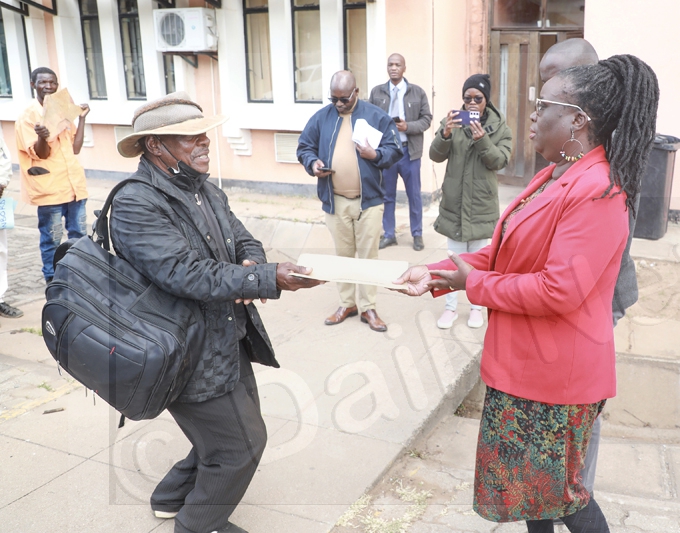
One resident in Mmadikola, Mr Pherethego Tshipietsile, informed the Vice President that he had started ploughing vegetables on a small scale but his efforts to grow were not successful as he was unable to get financial support.
He said he had applied for financial support provided by Karowe Diamond Mine but was unsuccessful due to old age. He complained of elephants that constantly destroyed his farm located along the stream of the Boteti River and lack of funds.
He was however optimistic that horticulture was viable in Mmadikola. Some of the residents had also indicated that the area was dry and therefore the environment did not provide enough for their livestock adding that a project in fodder production would be viable as the Boteti River provided water for irrigation. They also indicated that the project would also have a viable market from farmers within Boteti. ENDS
Source : BOPA
Author : Moshe Galeragwe
Location : Letlhakane
Event : Kgotla meeting
Date : 27 Oct 2013
Related News
10 Jun 2026

10 Jun 2026