


Restructure government agencies - Opposition
13 Feb 2022
The Botswana Congress Party (BCP), and the Alliance for Progressives (AP) have called for restructuring of government institutions and empowerment of Parliament to make it independent from the Executive.
The parties were making their contribution during interest groups’ meeting with the ongoing Presidential Commission of Enquiry into the constitution in Mogoditshane on Thursday. Former Mogoditshane legislator Mr Sedirwa Kgoroba represented the parties.
Mr Kgoroba said the parties also wanted a constitutional provision whereby a sitting President can be recalled.
The parties also wanted oversight institutions such as the Ombudsman, Directorate on Corruption and Economic Crime, Financial Intelligence Agency, Independent Electoral Commission and others to report directly to and be funded through Parliament as a way of building strong agencies. He said Botswana’s election date should be entrenched so that would be certainty about when elections would be held.
Additionally, he said the time had come for Botswana’s President to be directly elected by the people enhance democracy.
“Direct election of President places more power on the hands of the masses and this promotes democracy,” he said.
However Mr Kgoroba explained that even though they appreciated the constitutional review initiative, they were concerned about it’s non-inclusive approach.
He noted that constitution review was an intensive process, which called for inclusiveness of all stakeholders.
He said it was not proper for the President to select members of the commission without input from relevant stakeholders given the Presidency did not have power to amend the constitution.
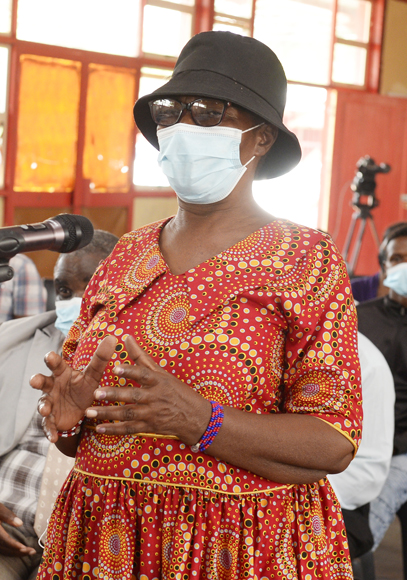
When presenting on behalf of traditional healers a representative of Botswana Dingaka Association Ms Koolebogile Mokgethi said the constitution should adequately make provision for recognition of traditional healers as an important sector of the society.
She said traditional healing had been a part of Batswana from time immemorial hence their disappointment that modern Botswana would not recognise them.
“We are being shunned and seen as bad people. However, just like medical doctors, we contribute a lot to the health sector of this country. We therefore want the constitution to recognise and appreciate what we do in society,” she said.
She noted that the discrimination prevented them from practicing freely, and made them live in fear. She said the same stigma pursued their clients, who preferred to consult under the cover of darkness.
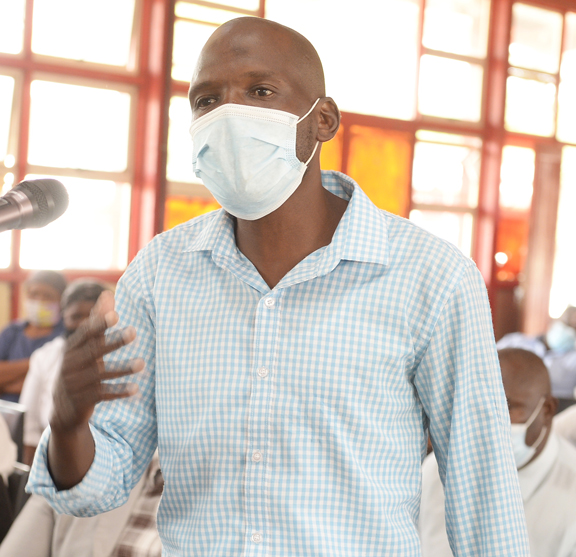
Speaking on behalf of Cheshire Foundation of Botswana, Mr Mabasa Ndikudze said even though Botswana had made strides in affiliating with international human rights bodies, there was need for clear provision in the constitution against discrimination of various groups of people.
He noted that Section 15 of the Constitution, which calls for non-discrimination, should be elaborate and adequately cater for people living with disabilities.
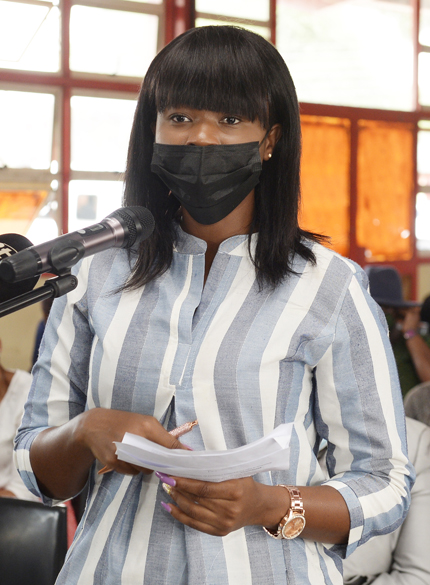
“The Constitution should be specific and provide for affirmative action for people with disabilities in areas such as education and employment among others,”he said. For her part, Ms Katlego Sechele of Botswana Network on Ethics, Law and HIV/AIDS (BONELA) also called for strengthening the right to health and non-discrimination for key marginalised groups such as women, children, sex workers, people living with disabilities and LGBTI, among others.
She noted that strengthening human rights protection would contribute towards ending AIDS by 2030.
She further said that Section 15, sub-section 4 (c) of the Constitution should be repealed since it was against gender equality. Additionally, she said more action should be taken to ensure full implementation and enforcement of laws that protected the right to gender equality, as well as ensuring specific prohibition of marital rape.
She noted that repealing laws that interfered with human rights and created barriers to HIV/AIDS and TB response measures would ensure improved health for marginalised groups.
“We should consider reviewing, with a view to repealing, punitive and coercive provisions in law, which interfere with human rights and create barriers to the HIV and TB responses,” she said.
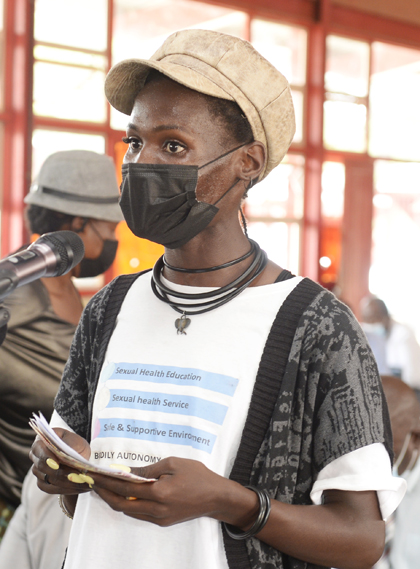
Representing the Transgender and Intersex Support Group, Ms Quing Matlhomane submitted that promoting social inclusion should start through human rights education in schools. She underscored the need to bridge the gender disparity gap and social exclusion in schools, which she said had resulted in discrimination for transgendered people.
“It is important to promote social inclusion by celebrating diversity and educating the community about sexual orientations and gender identity. Transgendered and intersex people are facing difficulties in this country yet the national anthem says Fatshe leno la rona,”she said.
She said the law should promote and protect their freedom of expression and allow them to choose their sexual orientation in identity documents. She said the gender markers were restrictive because the laws did not recognise transgender.
For his part, Dr Reverend Tebogo Motlhagodi said the time had come for Botswana to shift from a secular to a Christian state.
“We need to change because 90 per cent of Batswana are Christians,” he said.
He also said that religious leaders should be recognised and their roles be defined in their Constitution as nation builders.
He called for the establishment of house of religions, which he said would empower religious bodies to advise the government.
Further, he said all registered churches should align with mother bodies to ensure proper coordination. Rev Motlhagodi also said land allocation should be done by tribal leaders since the land boards were failing. He said increasing the number of Specially Elected Members of Parliament (SEMP) from six to 10 would accommodate other sectors such as faith-based organisations.
On the other hand, Mr Mmolotsi Motlhagodi said capital punishment should be abolished and replaced with life imprisonment. This, he said, would be aligned with Botswana’s stance as a democratic country.
However, he said he was against direct election of the President. He said the current system of electing the President had sustained the country as a peaceful nation for a long time and therefore should continue.
Mr Gaborutwe Thekiso also said he was against direct election of the President and the system should be left as was since Botswana did not use proportional representation. “Ha gongwe ha o tshwara ha go sa senyegang teng o helela o roba,” he said, meaning that fixing that which was not damaged could lead to damage.
He also said the Constitution should recognise councillors since they were engaged in national duty like Members of Parliament and Cabinet.
Mr Motlhagodi also said old age pension should be wound down from 65 to start at 60 years. Mr Phagenyana Phage said there was need to have a House of Representatives to accommodate various sectors of society such as faith-based organisations and youth structures, among others.
He also said the House of Chiefs should have terms of reference which clearly defined its mandate.
“The House of Chiefs must have its mandate reviewed because sometimes its motions are similar to those of Parliament,” he noted.
He said the President’s powers should be reduced and some responsibilities be given to other organisations.
Mr Phage called for direct election of the President and also said the President should cease sitting in tender committees upon assuming office.
Mr Pitso Sekao said even though he acknowledged that the constitution should be reviewed, fellow youth to should approach the constitution review inquiry with the sensitivity it required.
He said the constitution had worked for the country for a long time and therefore young people should realise that contributing towards its review was sensitive and needed sober and calm mindsets.
He said young people should not reject everything in the current constitution.
Opposing direct election of President, he said that Botswana should learn from other countries, which adopted the same system.
“Bodiba bo jeleng ngwana a mmago ere o bo bona o bo kekoge.” However, he called for equal recognition of all tribes in Botswana and for all to have paramount chiefs.
Even though over 16 groups and individuals had registered to make presentations at the interest group meeting, some indicated that due to inadequate preparations they had opted to make written submissions at a later date.
The deputy chairperson of the Commission, Mr Johnson Motshwarakgole encouraged them to continue making written submission through the availed postal and email addresses.
He commended the media for a doing a good job in publicising the consultations and related contacts for further submissions. However, he said as they made their contributions and communicated their different views, people should appreciate the existing constitution as it was in force.
He advised people should exercise their right of expression without ridiculing the constitution. “Ga re bue sentle ha re re lehatshe ga lena molao motheo. Re na le one e bile re tsamaya mo go Tautona wa botlhano. Gape le one mapolotiki a tshwana le Mapalamente a mo maemong ao ka ntlha ya molao motheo. Re tshwanetse ra bua maikutlo a rona mme re tlotla molao motheo o o leng teng,” he said. ends
Source : BOPA
Author : Kehumile Moekejo
Location : MOGODITSHANE
Event : Commission review
Date : 13 Feb 2022
Related News

07 Aug 2026
Xiplomacy Hosting the world building the future

07 Aug 2026
Xiplomacy Pursuing the greater good for all
06 Aug 2026
Gaolathe inspires learners to aim high
06 Aug 2026