SADC commemorates Julius Nyerere Day
13 Oct 2020
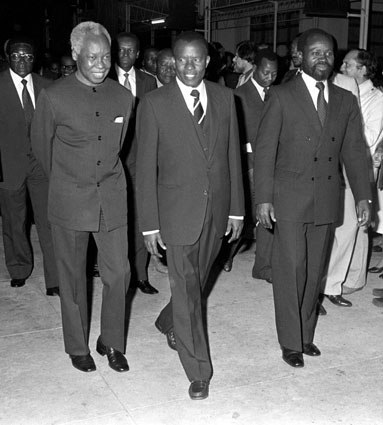
SADC today celebrates Julius Nyerere Day, in remembrance of Mwalimu Julius Nyerere, one of the founders of SADC who played an important role in the fight for liberation of Southern African states.
A statement from the SADC executive secretary, Dr Stergomena Lawrence Tax states that on October 14 every year, the people of Southern Africa honour the memory of Mwalimu Julius Nyerere, former President of the United Republic of Tanzania who died on October 14, 1999.
The statement says that after Tanzania gained independence in 1961, Nyerere supported the struggle for liberation and the fight against racism and colonialism in most African countries.
“This year, as SADC is commemorating its 40th anniversary since its establishment, we pay tribute to Nyerere for laying a solid foundation for the unity, peace, freedom and socio-economic developments we are witnessing today.
SADC will continue to honour such a man of unparalleled commitment to liberation and development,” says the statement.
It also states that, ‘today, as we celebrate Nyerere’s leadership and devotion to liberation and socio-economic development, I wish to underscore that the greatest honour that we can all bestow upon this great son of Africa is to carry forward the vision of peace, freedom, reconciliation, social cohesion, solidarity, resilience and development for the generations to come.
As his close friend and colleague, Dr Kenneth Kaunda, the former President of Zambia, said the best way of remembering Mwalimu Nyerere is to carry on where he left.”
It further says that although it is now 21 years after his death, Nyerere will always be remembered for his unrelenting support for total independence and freedom of many African countries which earned him the respect and admiration in Africa and beyond.
“Today, we see the footprint of Nyerere across the African continent for the pivotal role he played together with other eminent African leaders to establish the Organisation of African Unity (OAU) in 1963, which later became the African Union in 2002.
As a commitment to peace and justice in Africa, Tanzania hosted the Liberation Committee of the OAU.
In southern Africa, the history of SADC is incomplete without a special mention of Nyerere who, alongside other leaders, founded the Frontline States and the Southern African Development Coordination Conference (SADCC) in 1980 which he described as a ‘major instrument for self-reliant development in the southern part of Africa”.
SADCC was later transformed into SADC in 1992,” says the statement.
It also reads that while Nyerere was a leading and popular figure in Southern Africa and Africa at large, he was well respected in his home country of Tanzania, not only as ‘Baba wa Taifa’ which literally translates to ‘Father of the Nation,’ but also for his approach to socio-economic development.
“As Mwalimu, the Swahili word for teacher, Nyerere believed that education was a key to social progress.
He promoted quality education which resulted in a record increase in school enrolment and literacy levels among Tanzanians.
He established the Ujamaa Programme, a socio-economic programme geared towards transforming rural areas of Tanzania to be self-reliant and achieve sustainable development,” says the release.
In addition, it states that in 2019, SADC adopted Kiswahili as a language for oral communication for the SADC Summit in recognition of Mwalimu Nyerere’s and Kiswahili’s role in the liberation struggle.
Also, in August 2020, SADC adopted a mechanism to honour its founders like Nyerere, while at the continental level, it is pleasing to note that a statue in honour of Nyerere is being constructed at the African Union Peace and Security building in Addis Ababa, Ethiopia,” states the release.
ENDS
Source : BOPA
Author : BOPA REPORTER
Location : Gaborone
Event : STATEMENT
Date : 13 Oct 2020
Related News
10 Aug 2026
10 Aug 2026
MoU to drive innovation and investment
10 Aug 2026
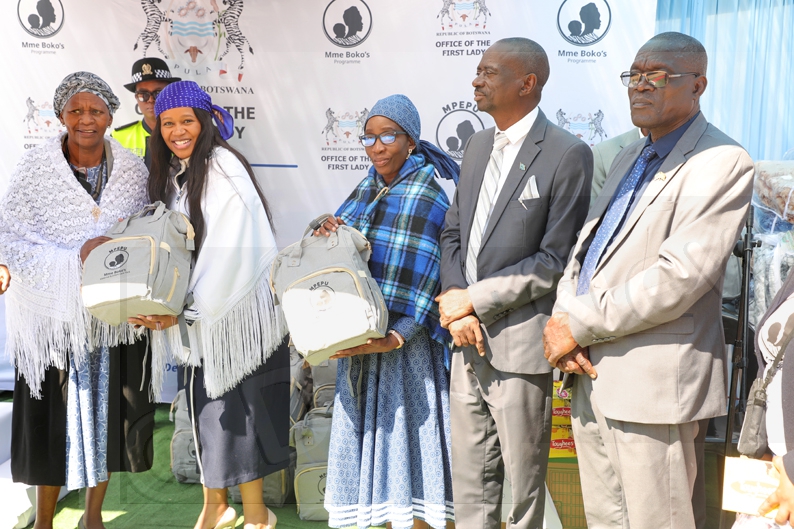
First Lady urges support for teenage mothers
10 Aug 2026
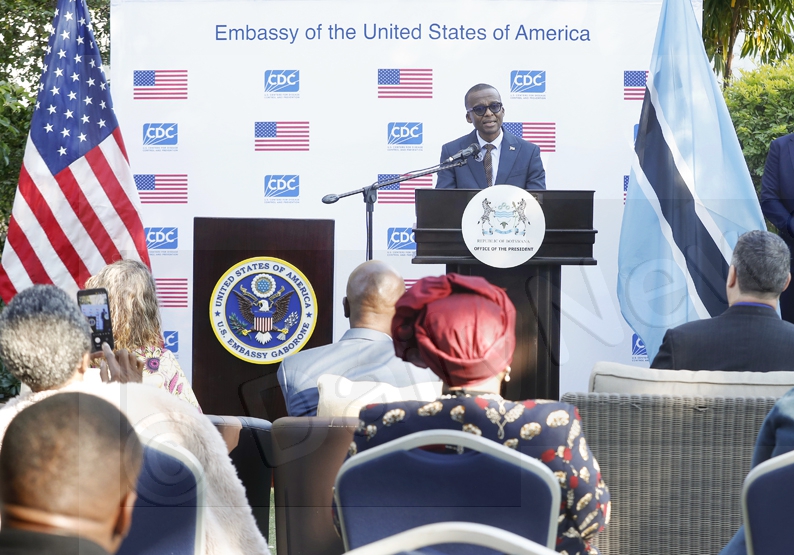
Gaolathe hails partnership for HIV response

10 Aug 2026