


How Festus Mogae tried to rewire Botswanas Public Service
13 May 2026
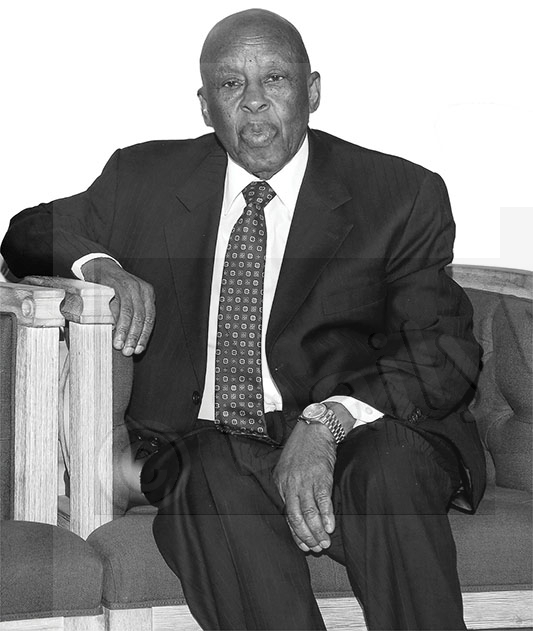
From salary reforms and performance management systems to controversial decisions that divided public opinion, the late Dr Festus Gontebanye Mogae leaves behind a governance legacy that remains both visible and contested within Botswana’s public institutions.
When former president Mogae assumed office in 1998, he inherited a state machinery many across Africa admired.
Botswana, sparsely populated but increasingly prosperous from diamonds, had built a reputation for political stability, fiscal discipline and a professional civil service. Its bureaucracy was widely regarded as one of the continent’s more effective public administrations, merit-based, comparatively clean and largely insulated from partisan politics.
But for Mogae, an economist by training and a technocrat by temperament, competence alone was not enough.
Those who worked closely with him say he envisioned a public service that was faster, more accountable and more productive, one capable of meeting the demands of a rapidly modernising society while competing with efficiency standards beyond southern Africa.
In the days following former president Mogae’s death, much attention has focused on his internationally recognised leadership during Botswana’s HIV/AIDS crisis. Yet beneath that defining chapter lies another, quieter legacy: a sustained effort to reform the machinery of government itself.
To supporters, former president Mogae strengthened professionalism and disciplined governance. To critics, some reforms became over-centralised, unevenly implemented or gradually abandoned. But even detractors acknowledge that Botswana’s third president believed deeply in the power of institutions.
“He was a professional,” recalled former Directorate of Public Service Management director, Ms Festina Bakwena, who worked under Botswana’s first three presidents and helped implement reforms during Mogae’s administration.
“He believed in doing things according to the dictates of the law. He was a straight talker and passionate about a productive public service,” she said.
To understand former president Mogae’s reform agenda, Ms Festina Bakwena argues, one must look much further back, to the years before diamonds transformed Botswana’s economy.
Ms Bakwena joined the public service in 1973 as a teacher after graduating from the then University of Botswana, Lesotho and Swaziland. At the time, Botswana was still a young republic grappling with poverty, weak infrastructure and a severe shortage of skilled manpower.
“We worked before diamonds were discovered,” she recalled. “At that time, the diamonds were the people.”
According to Ms Bakwena, Botswana’s early leadership under founding president Sir Seretse Khama invested heavily in education, viewing human capital as the country’s most valuable resource.
That vision expanded further under former president Sir Ketumile Masire, whose administration intensified education spending, built schools across the country and widened opportunities for Batswana to study abroad.
To bridge critical skills shortages, government recruited foreign professionals in large numbers, including Zimbabweans, Indians, Cubans and Europeans.
But by the time former president Mogae entered office, a new generation of educated Batswana had emerged.
“We decided to reduce expatriates because Batswana were now qualified,” Ms Bakwena said. “The country had invested in people.”
That philosophy, combining localisation with professionalisation, would shape much of Mogae’s approach to public sector reform.
According to Ms Bakwena, the civil service Mogae inherited prized neutrality, merit and administrative discipline.
“It was apolitical,” she said. “People were not recruited based on who they were or where they came from. Recruitment was based on qualifications.”
New public officers underwent induction on the Public Service Act, the Public Service Charter and General Orders, institutional safeguards intended to uphold fairness, transparency and professionalism.
Ms Bakwena said the culture of administrative discipline was so deeply entrenched that when Botswana established anti-corruption structures, some within government questioned whether they were necessary.
“There was little corruption,” she said. “People felt DCEC might even be a waste of money.”
Her recollections, while subjective, offer insight into the institutional ethos Mogae sought to preserve even as he pushed for reform.
THE REFORM YEARS
Although Mogae inherited a relatively effective bureaucracy, he nevertheless believed parts of the state machinery required modernisation.
Soon after joining the Directorate of Public Service Management in 1998, Ms Bakwena said she was tasked with helping implement reforms aimed at improving efficiency, accountability and service delivery.
Among the earliest changes was the introduction of a contributory pension scheme for public officers.
Government feared growing pension liabilities could eventually place unsustainable pressure on public finances and wanted to avoid a future in which it struggled to meet retirement obligations.
But the reforms required public trust.
“It took long because some workers were skeptical,” Ms Bakwena recalled, adding that trade unions played a critical role in persuading employees to support the system.
“Any government should be on the right side of unions,” she said.
That consultative approach would become one of the defining features of Mogae’s relationship with organised labour.
Perhaps the most ambitious reform associated with his presidency was the introduction of the Performance Management System (PMS), an attempt to make government more measurable, strategic and results-driven.
Under the system, ministries developed objectives linked to broader national priorities and cascaded performance targets throughout their institutions. The idea was straightforward: public servants would move beyond merely occupying offices to delivering measurable outcomes.
The initiative formed part of a broader shift towards a more performance-oriented public service focused on efficiency and service delivery.
It also introduced a range of management tools, including Work Improvement Teams (WITS), Balanced Scorecards, Business Process Re-engineering and Performance-Based Reward Systems.
Together, these reforms sought to strengthen strategic planning, improve customer service and position Botswana’s public administration to compete more effectively both regionally and internationally.
Ms Bakwena described PMS as part of Mogae’s wider obsession with productivity and institutional efficiency.
Government benchmarked internationally, studying performance systems in countries such as Singapore, China and the United States.
“Mogae believed in an agile and productive public service,” she said.
Yet the reforms were not without shortcomings.
Over time, Ms Bakwena argues, key components such as succession planning weakened, particularly at lower levels of government.
“Things slowly faded because of lack of proper handover and institutional memory,” she said.
Veteran trade unionist and Botswana Manual Workers Union consultant, Mr Johnson Motshwarakgole, agrees that implementation eventually faltered.
“People were trained abroad, benchmarked internationally, but results cannot really be felt,” he said.
He attributes much of the problem to weak supervision and poor leadership culture within parts of the public service.
“In some instances, people who are unproductive are the ones in leadership positions leading productive people,” he said. “That defeats the purpose of performance systems.”
DECENTRALISING THE STATE
Another major reform involved decentralising human resource functions that had previously been concentrated within the Directorate of Public Service Management.
At one point, even maternity leave applications required processing through the central bureaucracy.
“There was a gap between senior leadership and lower staff,” Ms Bakwena said. “Information became tangled somewhere in the middle.”
The response was to push human resource authority closer to ministries and departments.
Recruitment powers were expanded, administrative bottlenecks reduced and decision-making moved closer to service delivery points.
The objective, according to Ms Bakwena, was ultimately practical.
“To make sure services reach people quickly and appropriately,” she said.
THE SALARY COMMISSIONS
No assessment of former president Mogae’s public service reforms is complete without examining the succession of salary reviews and commissions undertaken during his presidency.
Three, in particular, stand out.
The TSABADIRI Consultancy Review of 2001 examined salaries, grading systems and conditions of service with the aim of improving competitiveness and staff retention within the public service.
It was followed by the De Villiers Commission in 2003, which assessed public sector remuneration, organisational efficiency and the long-term sustainability of Botswana’s public wage bill.
Then came the Ibrahim Salaries Review Commission in 2007, which focused on salary compression, staff morale, internal equity and labour market competitiveness.
Director of the Directorate of Public Service Management, Ms Gaone Macholo, said the commissions were intended to address low morale, disparities in pay structures and difficulties recruiting and retaining skilled professionals in critical sectors.
Mr Johnson Motshwarakgole, who served on some of the salary commissions, said organised labour was not merely consulted but actively involved in the process.
“When the budget was done, we presented so our views could be heard,” he said.
He describes Mogae as decisive yet accessible.
“It is not like we agreed on everything,” Mr Motshwarakgole said. “People know labour movements to be hard-headed. But when we presented issues to him, he listened.”
For many public servants, the salary adjustments introduced during Mogae’s presidency remain particularly memorable.
Mr Motshwarakgole recalls a major salary increment announced towards the end of Mogae’s tenure, roughly 15 per cent, moments when citizens closely followed national budget speeches in anticipation of financial relief.
WHEN REFORMS FAIL
Not every reform achieved its intended outcome.
One example involved outsourcing proposals that emerged from salary and efficiency reviews.
Government sought to outsource services such as cleaning, gardening and security, partly to enable affected workers to form businesses that could later contract with government.
But according to Ms Bakwena, implementation drifted away from the original vision.
“Senior officials ended up forming those companies instead,” she said.
A reform initially intended to empower lower-income workers instead became distorted by elite capture.
“This one failed,” Ms Bakwena concluded.
A PRESIDENT UNAFRAID OF CONTROVERSY
Mogae’s commitment to institutional order also shaped some of the most controversial decisions of his presidency.
He defended the execution of South African national Mariette Bosch, who had been convicted of murder, insisting that the law had to take its course.
He also backed the demolition of illegal structures in Mogoditshane using bulldozers that later became known as the “Yellow Monster,” a campaign still remembered painfully in some communities.
“As far as he was concerned, the law was to be followed,” Ms Bakwena said.
To supporters, such decisions reflected principled and disciplined leadership. To critics, they revealed rigidity and an overreliance on institutional authority.
THE UNION LEADER’S PRESIDENT?
For Mr Motshwarakgole, one of Mogae’s greatest political strengths was his willingness to engage.
He recalls how, during disputes over the privatisation of hospital refectories, Mogae personally contacted him after workers petitioned government.
“He said, ‘Since you petitioned government, I’m thinking of forming a task force,’” Mr Motshwarakgole recalled.
The eventual privatisation advisory structure included labour representatives, an example, he says, of a leader willing to accommodate opposing views.
“He didn’t take disagreements personally,” Mr Motshwarakgole said. “There were differences, yes, but there was no noise.”
THE UNFINISHED REFORM
Today, many of the systems introduced during Mogae’s presidency formally remain in place.
Performance Management System frameworks still exist. Work Improvement Teams survive in parts of government. The language of performance and efficiency continues to shape policy discussions.
Yet many insiders argue that the institutional energy behind those reforms has weakened over time.
Institutional memory faded as experienced officers retired. Succession planning deteriorated. Supervision weakened.
For Ms Bakwena, Botswana’s public service challenges are no longer primarily about designing reforms, but sustaining them.
“What is needed,” she said, “is re-engineering and follow-through.”
Mr Motshwarakgole offers a similar warning.
Public administration, he argues, must build upon institutional experience rather than repeatedly abandoning it.
“Experience is the best teacher,” he said.
THE TECHNOCRAT’S INHERITANCE
History will likely remember Festus Mogae first as the president who confronted HIV/AIDS at a time when many leaders across the continent hesitated.
But another legacy runs quietly beneath that achievement.
He believed in systems. He believed rules mattered. He believed governance depended on discipline, professionalism and institutions stronger than personalities.
Botswana’s public service today, with all its frustrations, ambitions and unfinished reforms, still carries traces of that technocratic vision.
Whether the project fully succeeded remains open to debate.
But nearly two decades after he left office, Botswana continues to wrestle with many of the same questions that defined Mogae’s presidency: how to build a state that is efficient without sacrificing fairness, disciplined without losing humanity, and productive while still retaining public trust. ENDS
Source : BOPA
Author : Lindi Morwaeng
Location : Molepolole
Event : Mogae National Mourning Service
Date : 13 May 2026
Related News


09 Oct 2026
Duma Boko School prepares for January intake
09 Oct 2026
Botswana and Zimbabwe seal waste management deal

08 Oct 2026