Ambassadors retain titles
13 Aug 2013
It is international practice that diplomats, who have served as ambassadors, retain their ambassadorship titles even after the tour of their duties.
Director of Public Relations, Research and Communications in the Ministry of Foreign Affairs and International Cooperation, Mr Diabi Mmualefe said, just like in the military circles, people who served as diplomats retained their titles.
Speaking in an interview, he explained that even if they were retired or transferred to other institutions, they were still addressed as ambassadors. He said diplomacy was based on hierarchy and the highest level was that of ambassador.
Mr Mmualefe said it was a matter of government taking a deliberate move to issue a paper of advice on the matter to make it official that indeed they had the right to retain their titles as per various agreements in various International Conventions regarding their tittles.
He said employees at the foreign affairs ministry were particularly under obligation to call ambassadors with their titles, otherwise they would be considered as being out of order.
He cited retired diplomats such as Ambassador Alfred Dube, who retired almost six years ago but still holds the title of ambassador when he is being addressed. He said any employee of the Ministry of Foreign Affairs and International Cooperation (apart from the ancillary staff) was a diplomat even if they were not serving abroad.
He further cited that the newly appointed Ambassador to Nigeria, Lieutenant General Matshwenyego Fisher, would retain his diplomatic title of ambassador even after his retirement and he would be referred to as Ambassador Lieutenant General Matshwenyego Fisher.
Ambassador Lt Gen. Fisher is one of the retirees who said it publicly not to be called Lieutenant General after leaving the Botswana Defence Force (BDF) because he felt that he had been demilitarised and now he was a member of the civilian community.
In accordance with the Vienna Convention on Diplomatic Relations, diplomats were not regarded as having officially taken up their duties until they received diplomatic accreditation.
This was done by means of a letter of credence (a formal letter from the head of state of the sending nation) which is presented by a new head of mission to the head of state of the receiving nation. (A chargé d’affaires is accredited not to the head of state, but to the foreign minister of the receiving state instead.)
The convention described an embassy as a diplomatic mission headed by an ambassador, a high commission as a diplomatic mission headed by a high commissioner and a legation as a diplomatic mission headed by an envoy or a minister resident
It also stated that the building in which the diplomatic mission was housed was called a chancery, thus it was technically incorrect to refer to such a building as an embassy.
All diplomats assigned to a nation were known collectively as the diplomatic corps, although one of them would be often recognised as the primus inter pares (first among equals). Such diplomat would be referred to as the dean of the diplomatic corps. Ends
Source : BOPA
Author : Thamani Shabani
Location : GABORONE
Event : Interview
Date : 13 Aug 2013
Related News
09 Jun 2026
09 Jun 2026
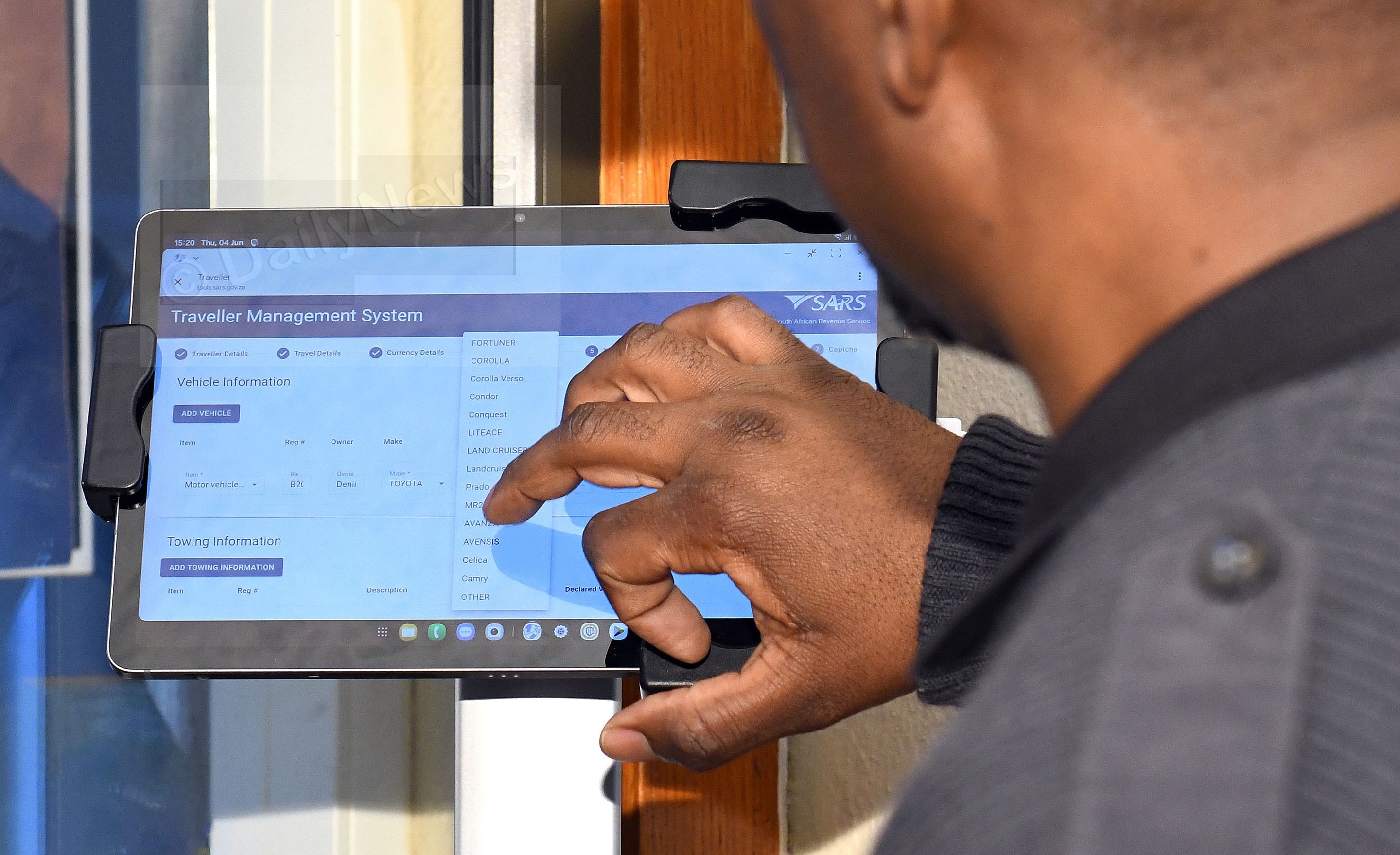
SARS cautions foreign motorists against scammers

09 Jun 2026
Labour agreement to strengthen workplace harmony
09 Jun 2026
Motsamai hails Werda for role in FMD fight
09 Jun 2026