GCC councillors reject privatisation idea
24 Mar 2019
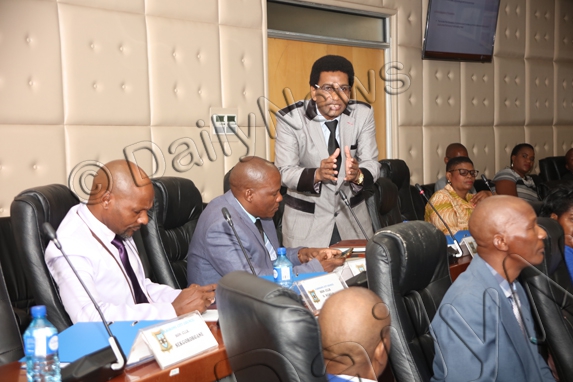
Gaborone City councillors have unanimously rejected the idea of privatisation, saying it was tantamount to selling Botswana.
Debating after the Public Enterprises Evaluation and Privatization Agency (PEEPA) presentation on March 21, Marulamantsi councillor Sergeant Kgosietsile, said privatisation was making the rich richer and the poor poorer as only the wealthy were able to buy companies.
“Who would buy BMC?” He asked, noting that service stations were popping up at every corner because only some people knew beforehand that government vehicles would soon fuel at private stations.
He said the exercise was meant for the select few. Another councillor, Mr Olebogeng Kemelo of Bontleng Ward said there was no citizen economic empowerment that privatisation could bring.
He said he believed that government was capable of providing services for the benefit of all Batswana.
For his part, Cllr Kagiso Ntime said government had to protect workers in the aftermath of privatisation, saying there had been instances where people had lost jobs after services had been privatised. “Gaborone City Council does not agree to privatisation,” he stated. Cllr Ntime urged government to stop privatisation, saying there was a risk of outsiders running and controlling Botswana economy.
However, PEEPA chief executive officer, Mr Obakeng Moumakwa said privatisation would be conducted for the benefit of all and not for the privileged few.
Mr Moumakwa said the process would be transparent and equitable so as to avoid perceptions of unfair dealings. Privatisation would present opportunities for citizen owned businesses, he said.
He said the aim of privatisation was to reduce the size of the public sector, to relieve government of the administrative and financial burden as well as to facilitate greater private sector participation in the economy.
Privatisation, he said, would increase direct citizen participation in ownership of national assets and promote competition, improve efficiency and increase productivity of enterprises as well as accelerate the rate of economic growth by stimulating entrepreneurship and investment. He clarified that privatisation could be full or partial transfer of assets and or services from state to the private sector.
Methods of privatisation included divestiture, sale of shares, strategic equity partner, management/employee buy-out, outsourcing, transfer of provision of services to the private sector and leasing, he said.
On PEEPA’s current undertakings, Mr Moumakwa mentioned that government had decided to liberalise the meat market, which meant ending the Botswana Meat Commission (BMC) monopoly in the exportation of meat. To facilitate an open market, Mr Moumakwa said a meat regulator would be established to regulate, among others, licensing of abattoirs, marketing and distribution agents.
In addition, compliance with international market requirements, standards and regulations would have to be enforced, he said.
Mr Moumakwa revealed that PEEPA was tasked with leading the privatisation of BMC, which would entail transformation of the parastatal into a limited liability company under the Companies Act, development of a privatisation strategy and the implementation of the privatisation option approved by cabinet. He said the process of engaging a consultant to develop the privatisation strategy for BMC (Lobatse and Francistown) was ongoing while Maun Abattoir would be hived off and retained by government to provide a market for cattle in Ngamiland, Okavango and Chobe.
Mr Moumakwa explained that the process of securing a strategic partner for Maun Abattoir on a long term concession had commenced. ends
Source : BOPA
Author : Lesedi Thatayamodimo
Location : GABORONE
Event : Full council meet
Date : 24 Mar 2019
Related News

15 Aug 2026
15 Aug 2026