Design Technology costly
08 Aug 2013
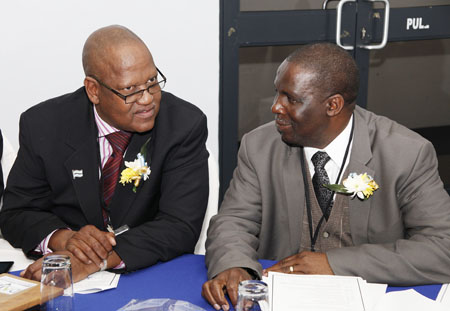
The main challenge associated with growing the design and technology subject in schools is its high cost, Ministry of Education and Skills Development deputy permanent secretary, educational policies and programmes, Mr Moses Kewagamang said
Officiating at the Design and Technology Association of Botswana (DATAB) stakeholders’ conference themed: Working towards improving students performance in design and technology on August 7, Mr Kewagamang said for a long time the subject has not been doing well.
He said for the past five years, the subject’s national average pass rate was 24 per cent, 25.4 per cent, 23.5 per cent, 26.8 per cent and 11.4 per cent respectively, at junior secondary level, while at senior secondary level it was 33.22 per cent, 26.4 per cent, 28.8 per cent, 23.58 per cent and 23.39 per cent respectively.
Nonetheless, he commended the conference organisers and participants for having found it necessary to engage each other and come up with possible solutions that could address the poor performance of students on design and technology.
“We want to do everything possible to support you in growing this subject. You are brave to have made this happen, so forge ahead don’t look back. Do your best to push your ideas and those of your students to the next level and we will support you,” he added.
Mr Kewagamang also encouraged teachers to continuously do extensive research on the subject.
By doing so, he said, design and technology teachers would be on par with their students, in terms of the knowledge they acquire.
However, he said that could be a challenge to teachers. “We are in an era where young people learn a lot of new things through the Internet and social media and this can be a challenge to design and technology teachers in terms of the knowledge they acquire,” he added.
In his keynote address, the head of industrial design and technology at the University of Botswana, Dr Olefile Molwane said teachers should be facilitators of students learning rather than becoming authoritative.
That, Dr Molwane said, was a clear sign that creativity was in crisis, adding that the declining rate of students’ performance in design and technology in 2012 where the national average rate was 11 per cent at junior certificate and 20 per cent at BGCSE also indicated a crisis.
Over the years, he said there had also been a diminishing impact of design and technology at divisions, which impacted on the entire society and the fora of the work environment.
He also noted that there had been reduced gender access in design and technology at secondary and tertiary level.
“Few girls are taking design and technology as opposed to the times around 1980 and 1992 when quite a number of females actually came upfront and they liked design and technology. And you could see the amount of work that was coming through that,” he added.
Another crisis indicator, Dr Molwane said, was lack of cohesion in the teaching and learning of the subject.
“What students are learning does not relate to what they are supposed to be learning,” he said.
Furthermore, he said design and technology teachers should give students design tasks in order to gauge their level of understanding on the subject, rather than a huge amount of work on multiple choice questions.
He said teachers used more of predominantly teacher-centred approaches as opposed to engaging students in the design practices anchored within the design processes.
The two-day conference was attended by design and technology teachers from across the country and experts on the subject. ENDS
Source : BOPA
Author : Lorato Gaofise
Location : Gaborone
Event : Design and Technology Association of Botswana stakeholders’ conference
Date : 08 Aug 2013
Related News
09 Jun 2026

09 Jun 2026
SARS cautions foreign motorists against scammers

09 Jun 2026
Labour agreement to strengthen workplace harmony
09 Jun 2026
Motsamai hails Werda for role in FMD fight
09 Jun 2026