Govt committed to combating terrorism
13 Feb 2019
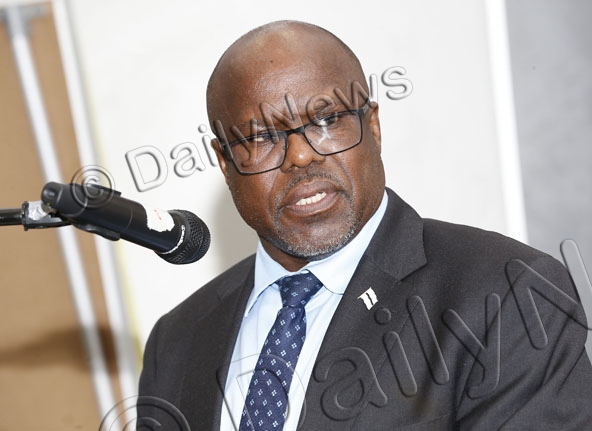
Botswana is committed to playing its part in efforts to combat terrorism in all its manifestations, Permanent Secretary to the President, Mr Carter Morupisi, has said.
Officiating at a workshop on Deepening Understanding of the Terrorist Threat on the African Continent in Gaborone on February 12, Mr Morupisi said terrorism was a global problem and a threat to humanity.
“Terrorism and violent extremism undermine international peace and security. They divide communities, exacerbate conflicts and destabilise entire region. They hamper our efforts to promote and protect human rights and are an obstacle to sustainable development,” he added.
This complex global challenge, Mr Morupisi said, had reached unprecedented levels and affected every part of the world, including Southern Africa “where countries like Mozambique and Tanzania had been violently targeted.”
For that reason, he said the workshop would help improve multilateral cooperation and information sharing as well as build new partnerships that could find practical solutions.
“Currently, the fight against terrorism is increasingly in cyberspace. Terrorists are exploring social media, encrypted communications and the dark web to spread media,” he added.
To create a criminal offence regime to combat various acts of terrorism, including terrorism financing and its related activities, he said in 2014 the government enacted the Counter Terrorism Act.
This act, he said, was subsequently amended in 2018 to close gaps and deficiencies identified through a Mutual Evaluation Exercise, conducted by the East and Southern African Money Laundering Group in 2016, for compliance with Financial Action Force standards.
Additionally, he said the act also provided for establishment of a National Counter Terrorism Committee, which implemented the United Nations Security Council Resolutions (UNSCR) relating to the suppression of financing of terrorism and prevention and disruption of the financing of proliferation of arms of war.
“The Counter Terrorism Regulations of 2018, provide for the full implementation of the UNSCRs. Further, Permanent Secretary to the President said the Act also established a Counter Terrorism Analysis and Fusion Agency whose functions included development and implementation of a national strategy to counter-terrorism within a broad regional and international strategy.
Mr Morupisi said the Counter Terrorism Analysis and Fusion Agency would also serve as a focal point for receipt, analysis and sharing or dissemination of terrorism related information between domestic law enforcement agencies and comparable bodies internationally.
“We are currently in the process of operationalising both the committee and the Agency,” he added.
Botswana has also enacted a wide range of laws which supplement the Counter Terrorism Act, which include; the Financial Intelligence Act, Arms and Ammunition Act, Chemical Weapons (Prohibition) Act, Nuclear Weapons (Prohibition) Act, Biological and Toxin (Prohibition) Act, Cybercrime and Computer Related Crimes Act, Customs Act, Mutual Legal Assistance in Criminal Matters Act, Extradition Act and Companies Act.
Furthermore, in 2015, he said SADC developed and adopted a Regional Counter Terrorism Strategy and a Plan of Action for its implementation. The strategy, he said was premised on four pillars of the Global Counter Terrorism strategy, such as; measures to address conditions conducive to the spread of terrorism, measures to prevent and combat terrorism, building capacity to prevent and combat terrorism, measures to ensure respect for human rights for all and the rule of law in the fight against terrorism.
The Plan of Action, he said, urged member states to develop their national strategies, adding that Botswana had since developed a zero draft National Counter Terrorism Strategy and was working towards finalising and implementing it. ends
Source : BOPA
Author : Lorato Gaofise
Location : GABORONE
Event : workshop
Date : 13 Feb 2019
Related News

15 Aug 2026
15 Aug 2026