Madigele calls for cancer fight
05 Feb 2019
In an effort to reduce the burden of cancer and other non-communicable diseases (NCDs), the ministry has developed the multi spectral national NCD strategy (2018-2023) which will consolidate and focus the country’s efforts in mitigating the burden of NCDs in Botswana.
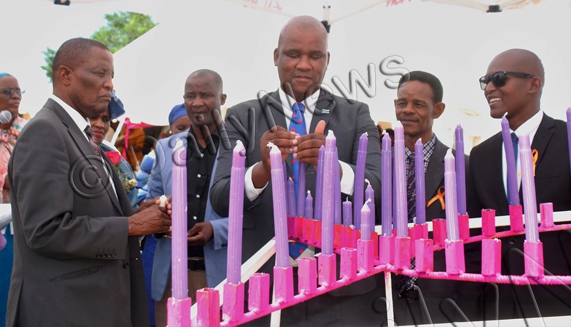
Speaking during a commemoration of World Cancer Day themed: I am and I will, in Mochudi on Monday, the Minister of Health and Wellness, Dr Alfred Madigele said cancer and other NCDs were the world biggest killers, fuelled largely by factors that could be changed such as tobacco and alcohol use, lack of exercise and unhealthy diets.
“In 2014 the ministry embarked on a national survey to assess the burden of risk factors of NCDs in Botswana and the study revealed that about 31 per cent of Batswana are overweight while 18 per cent smoke,” he said.
It further revealed that 20 per cent do not engage in enough physical activity, 26 per cent drink alcohol while 95 per cent does not eat enough servings of fruits and vegetables daily.
“If nothing is done about these figures, we will continue to see an increase in the prevalence of NCDs and we will continue to lose precious lives prematurely. We must act now,” said Dr Madigele.
He said government was committed to fighting cancer and would continue to provide health promotion, disease prevention and treatment services for cancer and other non-communicable diseases to all citizen.
“Early detection and treatment of various forms of cancer have been put in place, among them, screening modalities for cervical cancers such as see and treat, as well as Pap smear so that cancers are detected at an early stage and can be treated,” he noted
Dr Jeremy Slone of Global HOPE Botswana said cancer does not affect adults only, but children as well.
Dr Slone said according to the International Agency for Research in Cancer, pediatric cancer in high-income countries represented only about one per cent of a country’s cancer burden, but in such a country as Botswana, with half of the population children, adolescents and young adults, it could be up to five per cent.
Dr Slone said according to an article in The Economist published in 2014, cancer killed more people in resource-limited countries than TB, malaria and HIV combined.
He said through tremendous medical achievement, pediatric cancer went from an almost survivable death sentence 60 years ago to now over 80 per cent of children surviving, close to 100 per cent for selected cancers.
“The most significant predictor of whether a child will survive cancer is not the type of cancer, the age of the patient, stage of cancer or any other biological factor. The most important factor in whether a child will live or die if diagnosed with cancer is where they live,” he said.
Skin Cancer survivor, Ms Karabo Lekorwe said cancer could be beaten and encouraged everybody to test for cancer as early detection was the only way to beat it. ends
Source : BOPA
Author : Phenyo Letshwiti
Location : MOCHUDI
Event : World Cancer Day
Date : 05 Feb 2019
Related News

15 Aug 2026
15 Aug 2026