


Botswana natural resources haven
27 Sep 2018
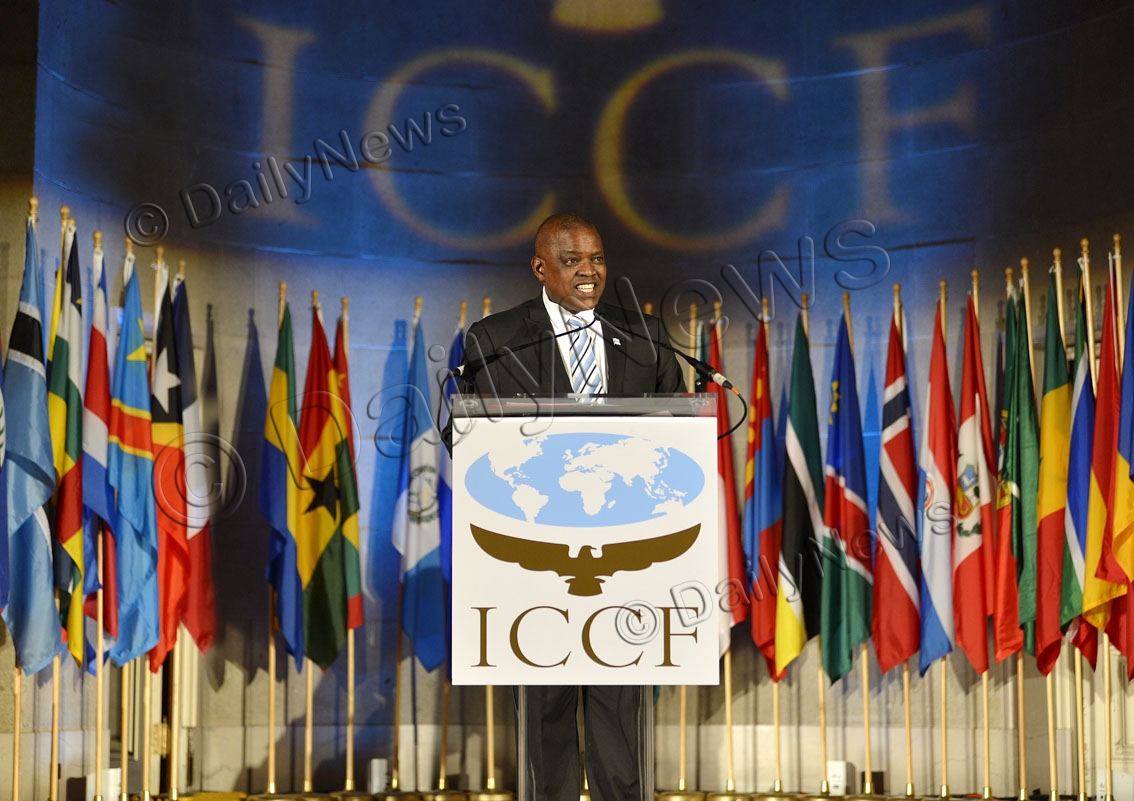
Botswana remains steadfast in the commitment to protect and safeguard the world’s natural heritage under its care, says President Mokgweetsi Masisi.
Giving a keynote address at the 2018 International Conservation Caucus Foundation (ICCF) gala dinner in Washington DC on September 25, he said the country remained committed to the maintenance and nurturing of the conservation ethos for the benefit of its future generations and the global community.
He assured conservation enthusiasts, who were passionate about the preservation of the world’s fauna and flora and its sustainable management, that “Botswana remains a country that is truly one with nature”.
The president informed his audience that approximately 42 per cent of Botswana’s land mass was designated as parks, resource and wildlife management areas, with the northern part of the country hosting four protected areas of diverse landscape and biodiversity.
“From the wetlands of the Okavango Delta to the beautiful vastness of the Makgadikgadi Pans, Northern Botswana is home to the world’s most distinct natural ecosystem with abundant wildlife, including the big five”, he said.
President Masisi said Botswana was one of the most sort after tourism destinations and had significant conservation in relation to many species of migratory birds.
The president said the Wildlife Conservation and National Parks Act of 1992 promoted progressive and effective policies that had resulted in the conservation of vast wildlife and increasing community involvement.
“To date, Botswana is home to several species which are globally threatened such as the cheetah and the wild dog,” he said adding that efforts to save the white rhino from the brink of extinction had been successful with the species having been reintroduced to the wild, where it was thriving.
Botswana, he said, was committed to implementing the Sustainable Development Goals particularly the goal addressing biodiversity conservation, combating poaching and trafficking of protected species.
President Masisi said Botswana’s elephant population remained key to the future survival of the species throughout much of its African range.
He however said the increasing expansion of the elephant range southwards and westwards from their core areas had resulted in increasing encroachment into areas of human occupation leading to human/wildlife conflict.
“Efforts are underway to mitigate the situation by dedicating increasingly scarce resources to provide additional water points, as well as to actively drive elephants away from conflict with humans around their settlements,” the president said.
He said in accordance with the country’s democratic practice of transparency and consultation, a national elephant action plan was being developed with active participation of all stakeholders.
President Masisi said tourism had emerged as a major contributor to the country’s economy and job creation for the youth, women and rural communities in general, stressing that “It is critical that we redouble our efforts in diversifying the tourism product to ensure maximum benefit for investors and our people”.
The president assured conservationists that recent media reports alleging a rise in elephant poaching in Botswana attributed to the withdrawal of weapons from the Department of Wildlife and National Parks’ Anti-poaching Unit were inaccurate.
He explained that the disarmament of the unit was in relation to a particular category of weapons which the law prohibited members from carrying let alone using.
“In Botswana we have been and remain committed to upholding the rule of law. Withdrawing certain weapons from the department was in accordance with the existing legislation,” he said adding that the action did not in any way affect the operational effectiveness of Botswana’s anti-poaching operators.
Mr Masisi also informed the conservationists that government would be conducting a public dialogue across the country to gather the views of citizens and various role players in consideration of lifting the 2014 hunting ban.
For his part, ICCF president, Mr John Gantt said the foundation was proud to support the conservation caucus model, which had extended to 13 countries globally, among them Botswana.
He said caucus leaders gathered for the Global Legislative Conservation Summit where they all signed the historic Mount Vernon Declaration, pledging their commitment to conservation and to go back to their countries where they would continue sustainable development efforts.
Botswana Conservation Parliamentary Caucus was represented by Messrs. Bagalatia Arone, Thato Kwerepe, Machana Shamukuni, Tawana Moremi and Kostatinos Markos.
The gala dinner was also attended by the Minister of International Affairs and Cooperation, Dr Unity Dow, Deputy Permanent Secretary to the President, Mr Elias Magosi, Ambassador David Newman and other senior government officials. ENDS
Source : BOPA
Author : Yobe Shonga
Location : WASHINGTON D.C.
Event : ICCF Gala Dinner
Date : 27 Sep 2018
Related News

18 Aug 2026
Men lead conversation on GBV root cause

18 Aug 2026
Botswana and US conclude Southern Accord 2026
18 Aug 2026