


Good governance predates modern democracy
25 Sep 2018
The uninterrupted peace, democracy and good governance that Botswana is often praised for predates the modern democratic discourse, says Acting President Slumber Tsogwane.
Officially opening a one-day Democratic Symposium in Gaborone on September 25, Mr Tsogwane said Botswana was fortunate to have had visionary leadership during its formative years having democracy and national interest at heart.
Leaders, he said, were able to distinguish Botswana from others through consistent adherence to shared values and principles particularly respect for human rights, democracy, rule of law and the spirit of consultation as well as Botho.
He said peace and tranquility were responsible for Botswana continueing to enjoy relative economic prosperity characterised by prudent management of its resources for the benefit of its entire people adding “that is an epitome of social democracy with special characteristics”.
Mr Tsogwane said Botswana had always had the kgotla system, a common level participatory governance system which maintained social cohesion, community identity and promoted freedom of expression as well as equality before the law.
He said the kgotla system had been infused into the democratic processes such that it continued to play an important role at community and national levels.
Botswana, he said, was one of the few countries in Africa where democracy, as a political system, had served the country well over the past five decades noting that the country had held eleven multiparty elections since independence and was preparing to hold the 12th next year.
He said although independent observers had always pronounced the elections as credible, free and fair, some critics considered the uninterrupted rule by one party as detraction from true democracy but pointed out that the BDP was returned to power at every election because it had earned the trust and confidence of the electorate.
Political parties, he said, were an important link between the people and the state in a well-functioning multiparty democracy because they were well placed to address issues of public accountability thereby making governments more effective, preventing the misuse of power and as a result lending legitimacy to government.
The acting president explained that Botswana’s stable democratic processes had been further buttressed by the peaceful transfer of power from one president to another.
“This started with the peaceful transfer of power from the late president Sir Seretse Khama to Sir Ketumile Masire following the death of the former. The tradition has continued up to today with ascendency to the presidency by Mr Mokgweetsi Masisi as the 5th president of Botswana,” he said.
Mr Tsogwane said another important point for the sustainability of peace and stability in Botswana was the respect for constitutional order and the rule of law noting there was a clear separation of powers among the executive, legislature and judiciary to ensure accountability.
“Botswana continues to have a vibrant and independent media and civil society which have reinforced accountability by government,” he stated.
Another important factor that contributed to Botswana success, he said, was the elaborate system of planning the country adopted at independence premised on the bottom up approach to consultation.He said the existence of 16 statutory local government entities served to deepen the democratic culture as representatives were elected by the people in their localities.
Mr Tsogwane said Botswana had made progressive changes to the constitution such as limiting the presidential term of office to two, reducing the voting age to 18 and extending voting rights to citizens living outside the country.
The symposium, held under the theme “Democracy as a vehicle to capable state”, was relevant as democracy needed to be jealously guarded at all times, Mr Tsogwane said adding its timing was appropriate as Botswana would be celebrating 52nd anniversary of independence in a few days time and as the country prepared for the 2019 general elections through the ongoing registration exercise.
He expressed the hope that the symposium would provide useful insights on issues of good governance and democracy, especially on enhancing participatory democracy, local governance, human right and the fight against corruption, the rule of law as well as transparency and accountability.
Its objectives, he pointed out, were to introspect and examine the journey of Botswana’s democracy as well as to identify ways and means of strengthening the country’s democratic dispensation and good governance.
He also mentioned that Botswana supported institutions promoting participatory democracy such as the International Institute for Democracy and Electoral Assistance and that President Masisi was committed to vigorously engaging members of the international community by among others participating in fora promoting the fundamental principles of democracy and good governance.
As an open and transparent country, he said, Botswana remained committed to strengthening institutions that played an oversight role including a free press and maintaining an apolitical public service.
He said government had established independent institutions such as the Independent Electoral Commission, Auditor General, Directorate of Public Prosecutions, Directorate on Corruption and Economic Crime, Ombudsman and Public Procurement and Asset Disposal Board.
Another oversight body, Mr Tsogwane said, was the Public Accounts Committee which monitored the use of government funds.
Meanwhile Mr Tsogwane said government had taken a decision to establish a Human Rights Council to strengthen the protection of human rights in Botswana.
“We strongly believe in the inviolability and universality of all human rights,” he said adding that was the reason Botswana continued to uphold the promotion and protection of human rights as enshrined in the constitution.
Mr Tsogwane also underlined the fact that the Southern African Development Community was deeply committed to the consolidation of democracy, peace and stability in accordance with the SADC principles and guidelines governing democratic elections.
He further mentioned that at the continental level, the African Union (AU) is intensifying efforts to address conflicts and other issues that cause instability saying that is a clear commitment by the AU leaders to achieve a peaceful and secure Africa.
He pointed out that President Masisi emphasized that at the global level Botswana would continue to work with the UN in pursuit of sustainable development as well as the maintenance of international peace and security.
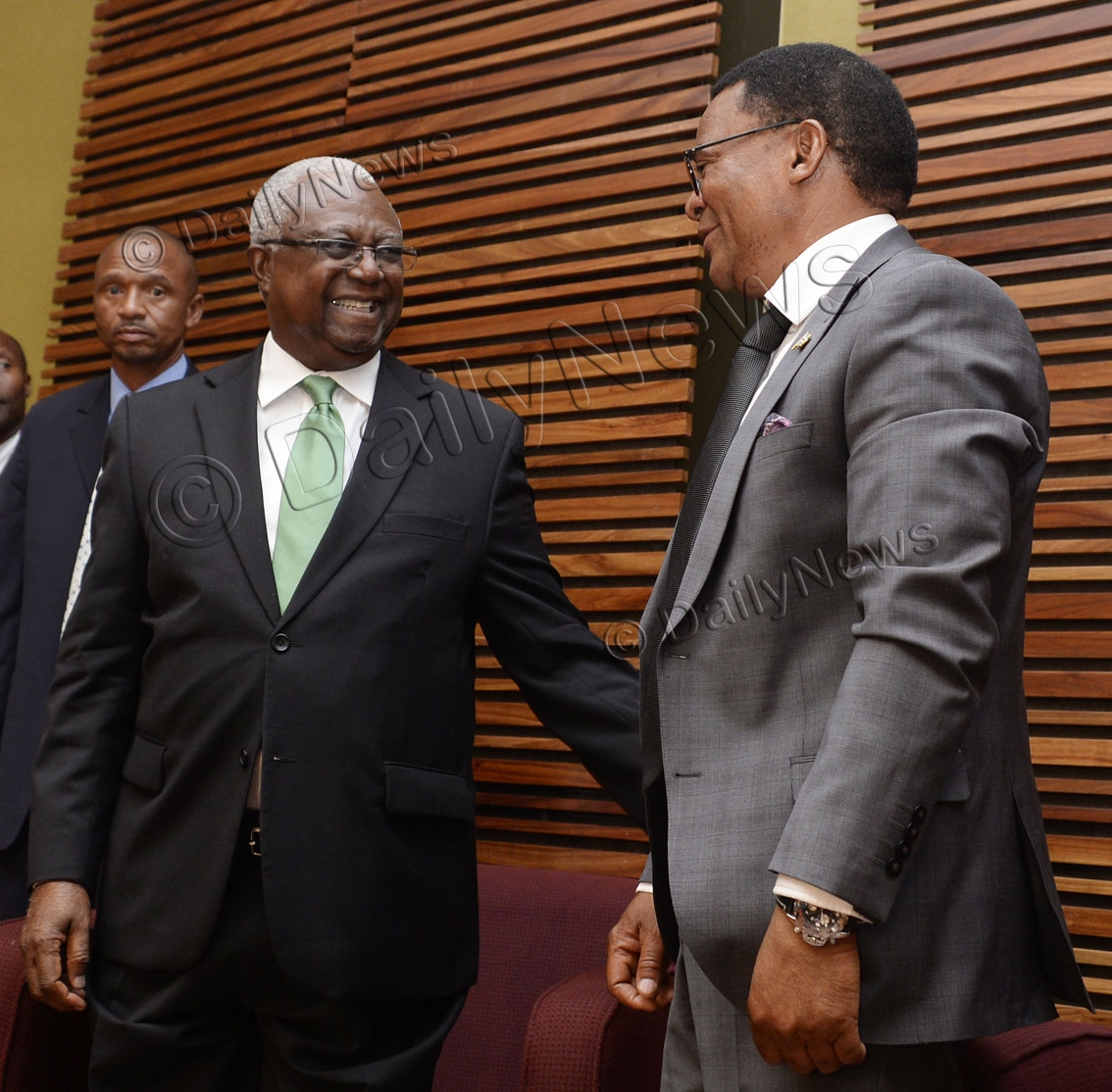
The symposium was graced by international experts including former Liberian president Professor Amos Sawyer and former and current MPs. ENDS
Source : BOPA
Author : Lesedi Thatayamodimo
Location : GABORONE
Event : Democracy Symposium
Date : 25 Sep 2018
Related News

18 Aug 2026
Men lead conversation on GBV root cause

18 Aug 2026
Botswana and US conclude Southern Accord 2026
18 Aug 2026