


Agreement on cataract campaign fruitful
07 Sep 2018
Blindness is a common natural occurrence especially for the elderly, and in most cases leaves victims hopeless with a belief that the condition is incurable.
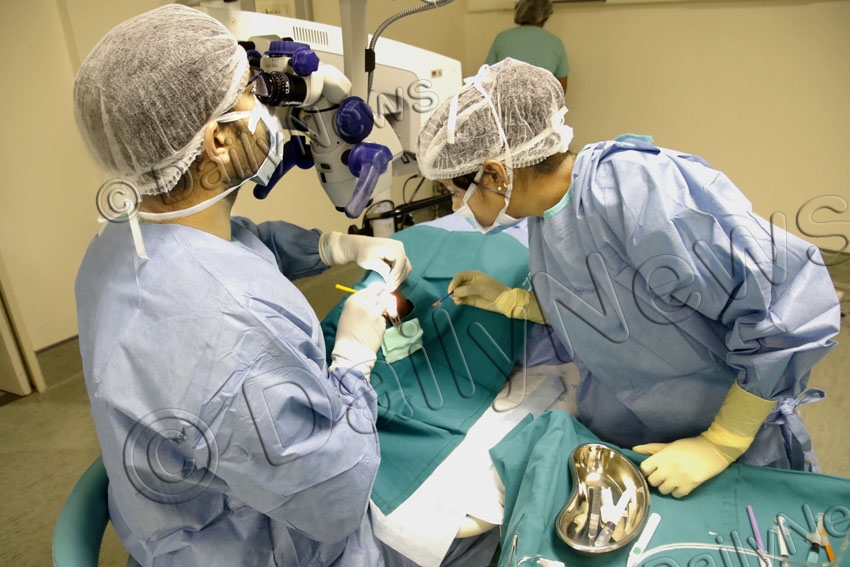
However, government has over the years partnered with international stakeholders to address the issue where in November 2016 the Ministry of Health and Wellness signed a three-year MoU with Dr Shroff’s Eye Hospital from India in its campaign to fight cataract.
One lucky patient, Ms Mmamonyanka Kgagara of Molepolole expressed gratitude to the government and the team from India for the programme, noting in mid 2016 she completely lost sight on her right eye and could partially see with her left eye.
“As a result I could not do anything at home and was forced to relocate from the lands where I spent most of my time as a farmer, but in March this year I went to seek medical help with my left eye deteriorating,” she said.
She said due to backlog of patients with a similar condition, she was scheduled for operation in February 2019, but things changed for the better when she was called for early assessment and eventually operation in August.
She said her vision had now been restored on her right eye and is awaiting another operation on the other eye, which would finally put her life back on rack, and advised those going through similar conditions to seek medical help on time and follow doctor’s prescriptions after surgery.
Scottish Livingstone Hospital head of Opticalology department, Dr Freddy Mbumba said cataract was an eye condition in which the lens becomes clouded, making it difficult for the eye to see clearly.
He said although the condition affected all ages, people over 50 years were more likely to have it and chances increase with age, to about 20 per cent on those aged between 65 and 74 and 50 per cent for those 74 years and above.
“Cataract is the main cause of blindness in developing countries and in developed countries the number of people going blind is much lower due to the availability of effective surgery.
Some of the symptoms of cataract include gradual and painless vision loss, contrast and colours becoming less clear. Some people can become sensitive to sunshine or bright lights, particularly at night,” he said.
He said 90 per cent of cataracts were caused by ageing, followed by injuries, diabetes, malnutrition, poor living condition, smoking and alcohol consumption, and that treatment was mainly surgical.
Dr Mbumba said with the team of specialists from India, they had operated on over 1 117 patents with some still lined up, surpassing a 1 000 target set, adding 80 per cent of the surgeries have been successful while a few experienced minor complications. ENDS
Source : BOPA
Author : Keorapetse Kgomotso
Location : MOLEPOLOLE
Event : Cataract campaign
Date : 07 Sep 2018
Related News

18 Aug 2026
Men lead conversation on GBV root cause

18 Aug 2026
Botswana and US conclude Southern Accord 2026
18 Aug 2026