


Indigenous knowledge key in fire management
16 Aug 2018
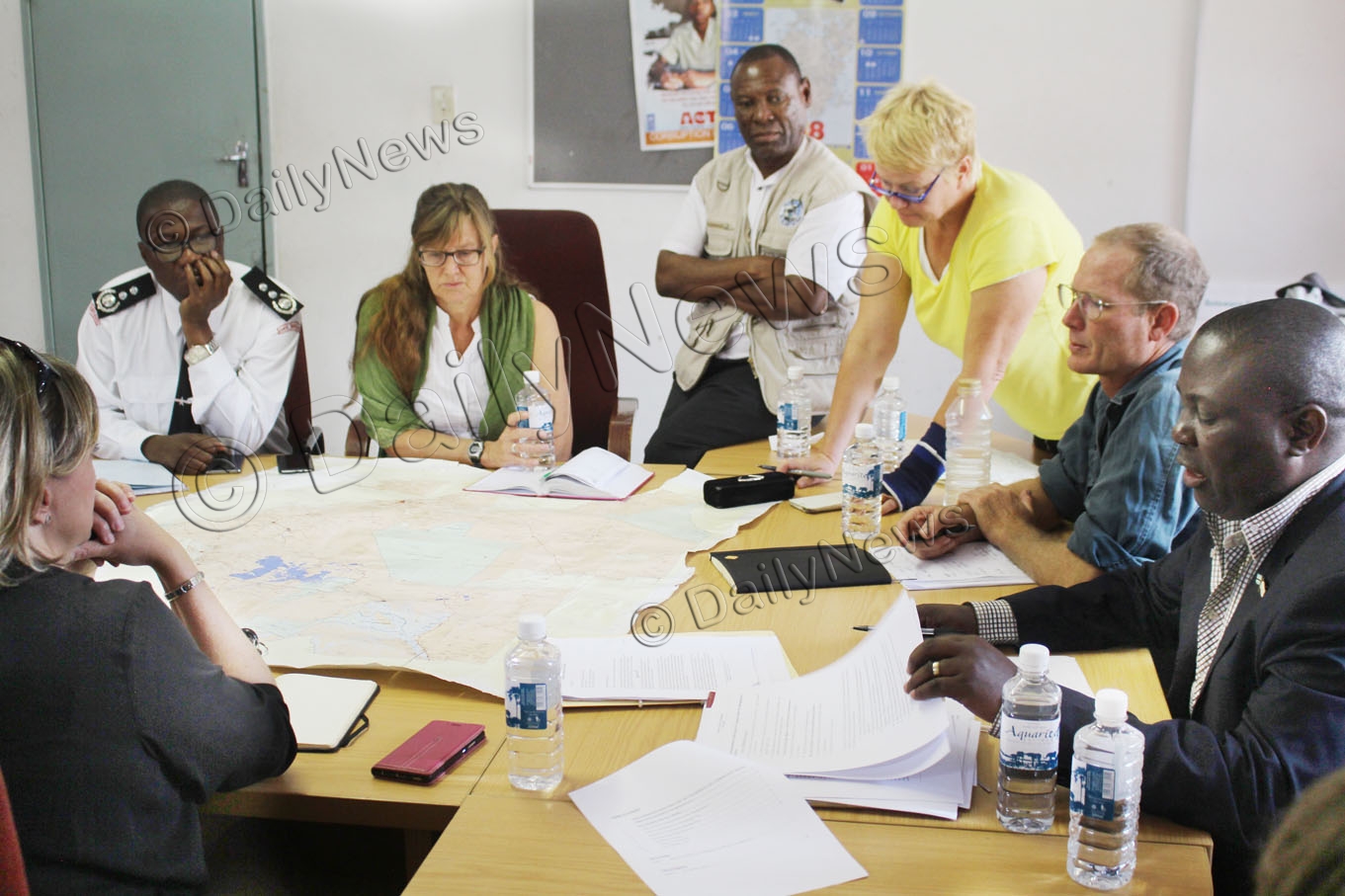
Members of an Australian core team are consulting with stakeholders in the North West District to get indigenous knowledge for a partnership project in traditional fire management.
The traditional fire management project is funded by the Australian government at about $3.8 million.
In an interview with BOPA in Maun on August 15, Ms Anja Hoffman from the Australian Core Team said the project promotes controlled early fires, which are less intense, less destructive and produce less emissions with less impact on natural resources.
Ms Hoffman noted that the early fires are more manageable when the grassland is still a bit wet, compared to late fires in dry seasons.
She said their first meetings were a fact finding mission to get ideas from the locals in Gaborone, Maun and Kasane.
The consultations, she said, would help with the activity plan as well as help identify the pros and cons of the project.
She said the whole core team from Australia would visit Botswana next month in another step of project planning.
Ms Hoffman said the three-year project would encompass research, implementation and community capacity building, which will run parallel.
Further, she said through reduction of emissions from fires, the project would help Botswana explore international carbon markets.
Briefing stakeholders, another core team representative, Mr Robin Beatty said Australia had many years of experience in fire management, with the Savanna traditional fire management approach having been in place for the past 10 years.
He said after assessment, the Australian government saw the benefit of extending the programme to Africa and South America.
He said the project entailed controlled fire burning, which uses indigenous ways, thus protecting the ecosystem.
Some stakeholders also said the project was a welcome development since most parts of the Ngamiland region were prone to veld fires, which threatened the Okavango Delta and wildlife.
The Department of Forestry and Range Resources North West coordinator, Mr Peter Olekantse said the pilot project would help some prone areas.
He cited Semboyo, Somelo and Ditshiping as some areas that may be considered after further consultations.
Batawana chief’s representative, Kgosi Oleyo Ledimo also emphasised the importance of infusing indigenous knowledge with modern techniques in finding solutions. ENDS
Source : BOPA
Author : Kedirebofe Pelontle
Location : MAUN
Event : Interview
Date : 16 Aug 2018
Related News
18 Aug 2026

18 Aug 2026
Sincerity The Key to Lasting Friendship
18 Aug 2026
Men lead conversation on GBV root cause

18 Aug 2026