


Xinhua Commentary Why stable China-U.S. ties matter more than ever
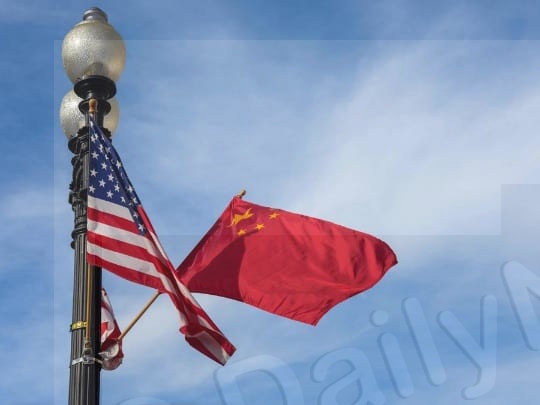
13 May 2026
U.S. President Donald Trump's upcoming visit to China comes at a time of global turbulence and profound changes.
Against such a backdrop, the world is looking to the summit to send a clear signal that China and the United States are capable of managing differences, expanding cooperation and maintaining global stability.
From global trade and financial markets to climate governance and artificial intelligence, few major international issues can be effectively addressed without coordination between Beijing and Washington.
This is precisely why stable China-U.S. relations are of paramount importance -- not only to the two countries, but to the world at large.
Since Trump returned to the White House, despite frictions in trade and technology, China and the United States have managed to maintain communication and prevent disputes from spiraling out of control. Head-of-state diplomacy has provided crucial strategic guidance in stabilizing relations at critical junctures.
Experience has repeatedly shown that when China and the United States strengthen dialogue and cooperation, the global economy gains confidence and international tensions ease. When communication breaks down, uncertainty abounds and spreads far beyond the bilateral sphere.
China has approached relations with the United States with consistency and a strong sense of responsibility as a major country. Beijing has emphasized that the two sides should uphold the spirit of equality, respect and mutual benefit -- principles that reflect both the hard-earned lessons of decades of interaction and the practical realities of today's world.
China understands clearly that competition between major countries is inevitable. But competition does not necessarily lead to confrontation, much less conflict. Managing differences through dialogue is not a sign of weakness; it is the rational choice expected of responsible major countries.
At the same time, China has continued to demonstrate openness to cooperation. Economic ties between the two countries remain deeply intertwined. Cooperation in areas such as counternarcotics, people-to-people exchanges and sub-national cooperation is also ongoing. These interactions underscore a simple reality: China-U.S. cooperation serves the interests of both peoples and the needs of the international community.
Of course, differences remain. Issues related to trade, technology and security continue to test the relationship. History has shown that unilateral pressure, attempts at "decoupling," or zero-sum thinking cannot provide lasting solutions. The nature of China-U.S. economic relations is fundamentally one of mutual benefit. Trade and technology wars produce no real winners.
For bilateral ties to move forward steadily, both sides must manage disagreements on the basis of equality and mutual respect. China welcomes a confident, open and prosperous United States. Likewise, Washington should view China's development in a rational and objective manner, respect China's core interests, and work with China to expand areas of cooperation while properly managing differences.
The world today faces mounting challenges: sluggish economic recovery, geopolitical conflicts, climate risks and rapid technological disruption. The international community increasingly looks to major countries for stability, coordination and leadership.
As permanent members of the UN Security Council and the world's two largest economies, China and the United States have a special responsibility to provide greater certainty and more public goods to the world.
A single summit will not resolve every issue between Beijing and Washington. But it can help strengthen communication, rebuild confidence and reaffirm a basic truth: stable China-U.S. relations are essential not only to the interests of both countries, but also to global peace and prosperity.
Source : Xinhua
Author : Xinhua
Location : Beijing
Event : interview
Date : 13 May 2026
Related News



09 Oct 2026
Duma Boko School prepares for January intake

09 Oct 2026
Botswana and Zimbabwe seal waste management deal


08 Oct 2026