



Backlog of cases remains a challenge
22 Jul 2013
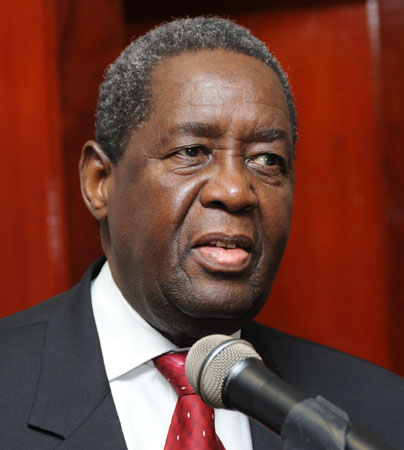
The turnaround time for completing cases before the Industrial Court and other courts remains a major concern in the judicial system, says Vice President, Dr Ponatshego Kedikilwe. Speaking at the Labour Conference for judicial officers under the theme “Adapting international Best Practices in the Labour Judicial System” in Kasane yesterday, Dr Kedikilwe explained that the ideal is to have a judicial system supported by structures that can address the backlog of cases.
He noted that some cases have been pending before the courts for an extremely long time, but commended the initiative of prioritising ‘entitlement disputes.’ “The anxiety of employees is dealt with quickly,” he stressed, adding that the dividends and returns of quick disposal of cases are a treasure to the system.
Not only does this enhance the image and confidence in the justice system, but industrial relations are nurtured and industrial peace virtually assured, he said. “Unscrupulous employers will be denied the nerve of unfairness to their former employees.
Any undue delay is not only justice delayed and ipso facto justice denied, it is also in my view a psycho-social malady that demeans the integrity of the courts,” Dr Kedikilwe further noted.
The Vice President said government is aware that the Industrial Court faces a big challenge in the use of manual record management. As a result, he advised that effective use of e-Government, business process re-engineering and automation of processes be embraced to address the challenges.
“We must harness all opportunities that technology has to offer in order to advance on the nation’s social and economic standing,” he said. Dr Kedikilwe also noted that Botswana has maintained a good balance in its dual system of laws, being the Common Law courts and the Customary courts systems, adding that harmony is attributable to the cohesion of the functionalities of the systems and the mutual respect of its service to the people of Botswana.
The interests of Batswana, he said, are well accommodated by this dualism. He stated that government is committed to fostering a legal system that promotes the rule of law in line with international demands.
“It is a concession that we as a country made, to become a global partner and to grow our systems in accordance with best practices,” he explained. Dr Kedikilwe confirmed that government is preparing amendments to the Trade Disputes Act to overcome unnecessary delays in resolving disputes, as pieces of legislation are not static.
Industrial Court Judge President, Tebogo-Maruping confirmed that backlog of cases continue to present challenges to the court. He noted that between 1994 and 2004, the number of cases that came to the court was manageably limited to between 300 and 400 per year.
Owing to the amendment of the Trade Disputes Act of 2004, the number of cases brought to the court have so far increased significantly.
“From the period 2004 to 2012, a total of 16 720 cases went through our courts. The disposed cases during this period were 9 085 which is 59 per cent,” he revealed.
He added that a number of strategies have been put in place to speed up resolution of disputes such as increasing circuit court sittings, stocktaking, roll call and fast tracking entitlement disputes such as claims for wages and severance benefits. The establishment of the Francistown Industrial Court division with two permanent judges has also been of great significance in this regard, he highlighted.
The two day conference has attracted delegates from countries such as the United States of America, Zambia, Zimbabwe, Nigeria and South Africa.
It is expected to provide a forum for sharing ideas and learning from one another about the best practices to put into place in respective countries for the benefit of the public served. BOPA
Source : BOPA
Author : Ludo Chube
Location : Kasane
Event : Labour conference for judicial officers
Date : 22 Jul 2013
Related News

16 Sep 2026


14 Sep 2026
Magistrate grants murder accused bail


11 Sep 2026
Armed robbery suspects on bail
10 Sep 2026