


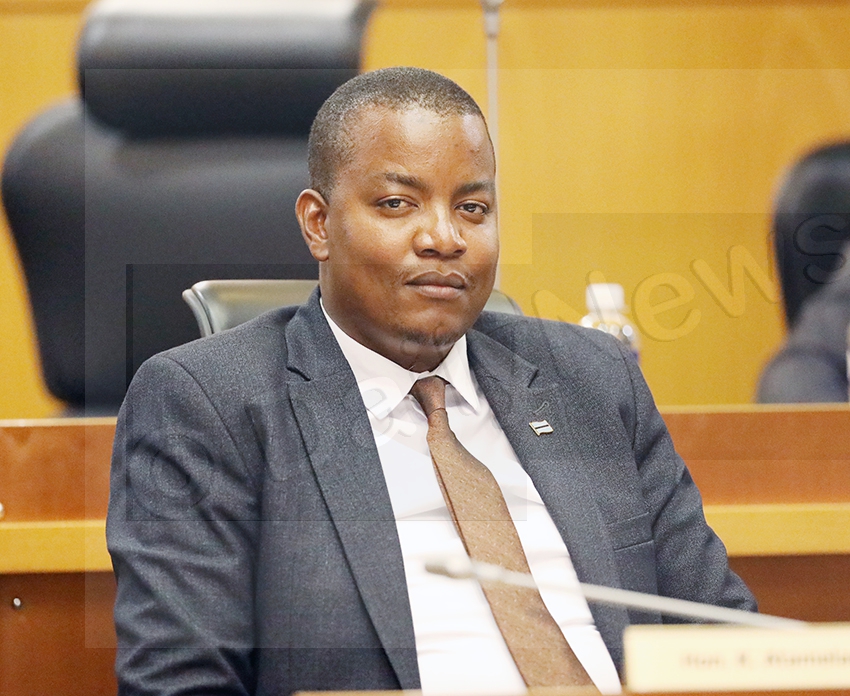
Kgamane reflects on 30 years of regency
25 Apr 2018
His parents could have presaged his future when they, after his birth in December 18, 1949, named him Sediegeng, a call to Bangwato not to stall to resolve their dynastic feud.
In March 1988, at 39-years-old, Kgosi Sediegeng Kgamane was installed as Bangwato regent and was charged with expeditiously resolving matters within the tribe.
Unbeknown to many, Kgosi Kgamane bears a middle name Harrigan, named after the judge who presided over the said Bangwato dynastic feud in 1949, so he said.
The feud has been explained by the following excerpt from Professor Neil Parsons’ paper, The Serowe Kgotla Riot of 1952: Popular Opposition To Tshekedi Khama And Colonial Rule In Botswana.
“The first cause” of the crisis was identified by historians within the colonial administration as a dynastic feud between royal houses. Seretse was the grandson of Khama the Great (d. 1923) by a wife who predeceased him; Tshekedi was the son of Khama by a wife who outlived him. The historian Anthony Sillery, first as resident commissioner of Bechuanaland and later as an Oxford academic, remained convinced that the tangled web of dynastic alliances dating back a century or more, to the time of Khama’s own father, was the key to an understanding of internal Bangwato conflict.”
The son of Setogile (died 1970) in Shoshong, Kgosi Kgamane was installed as Bangwato regent exactly 30 years ago, holding fort for Lt Gen. Dr Seretse Ian Khama, who was still under the employ of Botswana Defence Force.
At 39 years and having just resigned his post at Central District Council where he served from 1974-84, Kgosi Kgamane was a novice in bogosi issues at least by his own account. He had to learn the ropes and every change he effected bred resistance from some people.
Now 69, the experienced regent sits back and easily recounts a book of his regency with utmost ease. In fact, the man is a historical book unto himself.
He struggles to walk but is motivated to climb up the stairs into BOPA offices to field interview questions away from his ever busy office, a decision he made himself.
He gathers that while still under the employ of the CDC in the 70s then district commissioner, Mr Emmanuel Bontumetse delivered to him news that the late Sir Seretse Khama wanted him to hold the fort as regent, but that he had his fears.
Sir Seretse had three sons in Lt Gen. Dr Seretse Khama Ian Khama (heir apparent) and his two twin brothers, Messrs Anthony Khama and Tshekedi Khama. His uncle, Kgosi Tshekedi Khama, who once held the fort for the former when he was still young in 1925 following the death of Kgosi Sekgoma II, had four sons who could be regents.
Consequently, Kgosi Kgamane sent the district commissioner back with a proposition that the assignment be left with heir apparent, Lt Gen. Dr Seretse Khama Ian Khama to contact him directly, which he did.
The royal house, elders and morafe were consulted on the matter to beget a cordial working relationship and resultantly the appointment communicated to the then Minister of Local Government, Mr Patrick Balopi.
Throughout the interview, Kgosi Kgamane talks tolerance and collectiveness albeit in diversity to knit the region tightly together.
In fact, Kgosi Kgamane basks on the harmonious relationship with Kgosikgolo Khama and the 17 senior chief representatives who overlook the vast Central District.
However, Kgosi Kgamane faced insurmountable challenges of bogosi in his reserve and spent the better part of his regency quelling tribal fires where some villagers contested legitimacy of their dikgosi or even their village names.
By his knowledge, bogosi is hereditary, a process born of extensive consultations. Consequently, he moved, through assistance of CDC, to correct the anomaly of election of chiefs only where there is a proper lineage.
In contrast, where there is no heir apparent, chiefs will be elected provided that consultations with the people prevail.
Villagers would submit names of candidates for vetting. Some sections of the village will accuse him for the choice he makes and would channel their displeasure with the director of tribal administration, disregarding proper channels. He attributed this to educated people who, he said, were now willing to contest each and every decision taken.
Calls for remuneration by his subjects have caused Kgosi Kgamane headaches. First he is faced with simmering proliferation of new wards in the villages whereupon names of new chiefs are submitted to him for approval, who then seek financial benefits.
His advises, however, that such people submit to their original ward and kgosi.
Another headache is that of youth apathy towards kgotla meetings. In rendering their services they call for remuneration. This, he said, killed the spirit of self-reliance.
He is currently considering moving away from subsistence to commercial farming after being motivated by young farmers at Serowe District Agriculture Show.
A onetime supporter of Gaborone United, a team that recruited players from his former school, Gaborone Secondary, Kgosi Kgamane is a lover of adventure and a passionate bird-watcher.
In fact, he wants his son to produce a picture collection of birds because some of the birds he used to watch have or are getting extinct.
Once a chairperson of Ntlo Ya Dikgosi, which plays advisory role to government, Kgosi Kgamane said his rule was entirely incumbent on Kgosikgolo Khama and his health, which was not helped by old age. Ends
Source : BOPA
Author : Manowe Motsaathebe
Location : SEROWE
Event : Inteview
Date : 25 Apr 2018
Related News

21 Aug 2026

20 Aug 2026
Botswana Donates FMD Vaccines To Lesotho
20 Aug 2026