


Tobacco threatens health development
11 Jun 2017
Tobacco is extremely dangerous to health and highly damaging to economies.
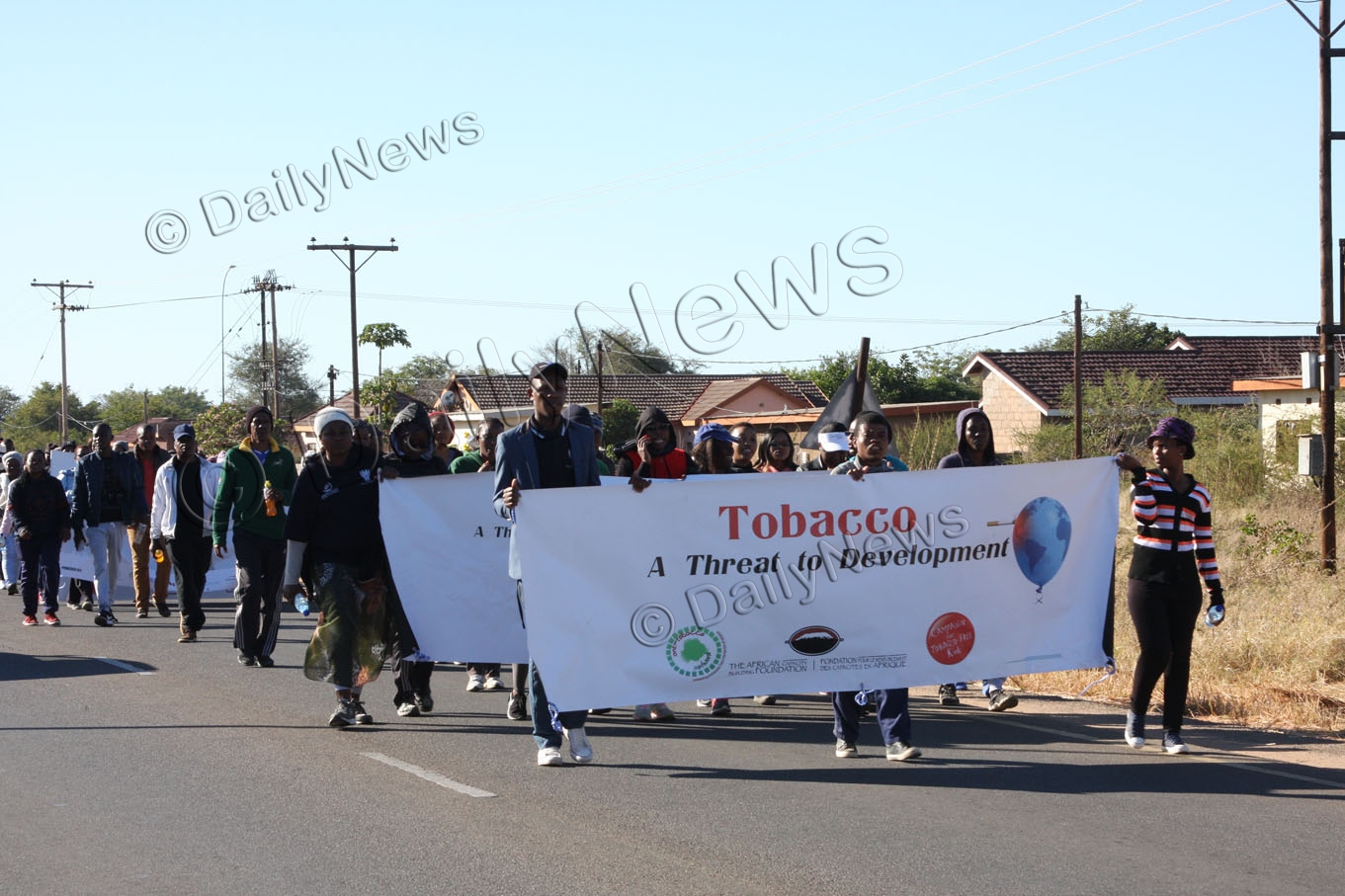
Giving a keynote address at the commemoration of the World No Tobacco Day held under the theme 'Tobacco- a Threat to Development,' Assistant Minister of Health and Wellness, Mr Dikgang Makgalemele said tobacco caused a wide variety of cancers, including cancer of the lung, mouth, oesophagus, larynx, pharynx, stomach and pancreas.
He said women smokers had elevated risk of stroke, bleeding in the brain, hardening arteries, developing cervical cancer, osteoporosis and other conditions of the reproductive system including spontaneous abortions, stillbirths, infertility, having children with low birth weights, painful menstruation and premature menopause.
He also indicated that women smokers who breastfed might produce less milk than non-smokers and eventually affect their children’s nutritional development.
He explained that tobacco related illnesses and premature mortality imposed high productivity costs to the economy because of sickness and premature deaths among the workforce.
Smoking related healthcare expenditure accounts for six to 15 per cent of all healthcare spending in high income countries while in low and middle income countries it ranges between 0.3 to two per cent.
He said all this was attributed to the differences in access to healthcare services as well as late onset of intensive cigarette use in developing countries.
This, he said had placed a heavy burden on the already stressed healthcare systems and the economy because government had to deal with the consequences and adverse effects of tobacco use.
The legislator noted that it was evident that tobacco was a threat to the sustainable development of all nations.
He said reducing tobacco use was critical to achieving all the 17 Sustainable Development Goals (SDGs) in order to improve collective health and prosperity.
“People often think that tobacco is just a health issue. It is against this background that many people often overlook the fact that tobacco use impedes the three main pillars of sustainable development including environmental sustainability, economic development and social inclusion,” he said.
“This is why the international community has agreed not to only focus on Goal three of the SDG’s, which addresses health and wellbeing, but incorporate the implementation of the World Health Organisation (WHO) Framework Convention on Tobacco Control (FCTC) throughout the entire SDGs,” said the assistant minister.
He noted that in order to pursue the 2030 Agenda for Sustainable Development, the government must commit to strong policy interventions and an enabling environment for tobacco control at all levels.
“I am therefore happy that my ministry is currently reviewing the Control of Smoking Act of 1992 towards enacting a much stronger Tobacco Control Law which shall be compliant to the WHO FCTC, which Botswana is party to,” he said.
He explained that ‘this is the world’s first treaty devoted to improving public health.’
Mr Makgalemele stated that as a country, Botswana conducted studies to determine the burden and extent of tobacco use problem in order to have targeted interventions.
He said in 2002, government conducted Global Youth Tobacco Survey and the study revealed that the overall prevalence of tobacco use was 14.3 per cent, out of which boys’ prevalence rate to smoking was significantly more than girls at a rate of 10.7 per cent while girls’ prevalence rate stood at 3.8 per cent.
He said in 2008, a repeat study found significant increase in prevalence among both sexes where girls were rated at 10.9 per cent and boys at 18.1 per cent.
The assistant minister pointed out the STEP Survey conducted among adults aged between 25-64 years in 2007 also showed that 19.7 per cent of adults were smoking tobacco and 16 per cent of them smoked daily.
“These figures have remained relatively unchanged in the 2014 STEPS study, which clearly indicates that Batswana are not left out from the tobacco epidemic,” he said.
Assistant Minister Makgalemele further indicated that the use of tobacco contributed to global mortality, where five per cent of all deaths from non-communicable diseases and 14 per cent of all deaths among adults aged 30 years and above were attributed to tobacco use. ENDS
Source : BOPA
Author : Tshepo Mongwa
Location : SELEBI PHIKWE
Event : World No Tobacco Day
Date : 11 Jun 2017
Related News

21 Aug 2026

20 Aug 2026
Botswana Donates FMD Vaccines To Lesotho

20 Aug 2026