


Access equity in education fundamental
21 Mar 2017
Access and equity in education and training remains a key in and for the government, says the Minister of Tertiary Education, Research, Science and Technology.
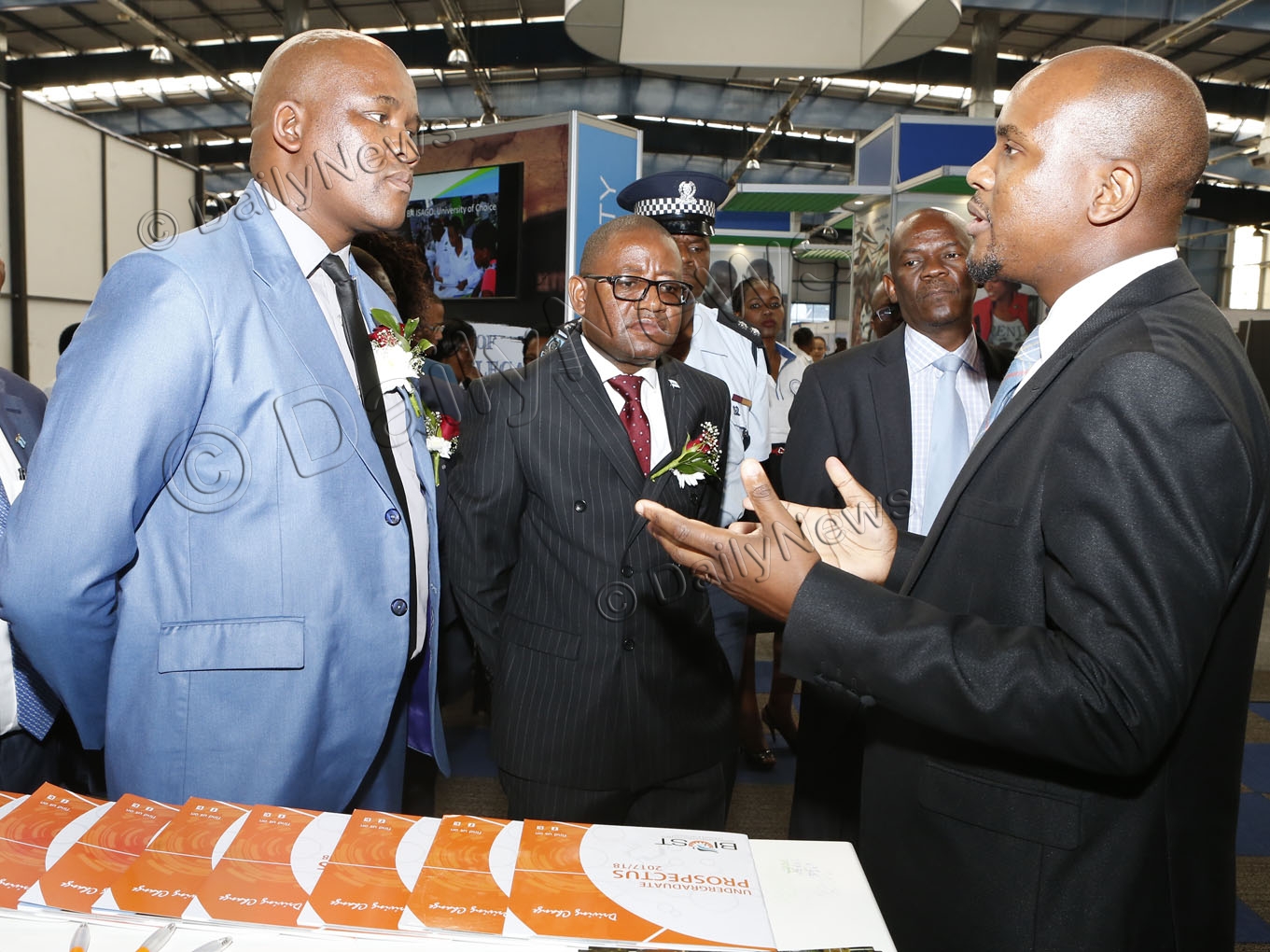
Dr Alfred Madigele said this at the 2017 development skills fair and career clinics recently that this was in line with one of the Vision 2036 pillars, “human and social development” that highlights education and skills as the basis for human resource development, offering prospects for capacitating citizens to realise their full potential and effectively compete globally.
He said government desired to develop a knowledge based economy, adding while to attest to government’s commitment to access and equity, the 2017/18 proposed ministerial recurrent budget which included tertiary education sponsorship stood at P39.66 billion of which P4.25 billion was proposed for allocation to the Ministry of Tertiary Education, Research, Science and Technology.
Dr Madigele said the allocation covered provision for student financing in both public and private tertiary institutions amongst others.
“It therefore follows that all stakeholders must play a key role in ensuring that we get value for money in the way we expend in tertiary education financing,” he said.
Still on the issue of financing, Dr Madigele said government’s prioritisation of education was increasingly under scrutiny on account of competing demands, hence the need for a comprehensive review of the current tertiary education funding model.
He noted that it was imperative to come up with a more sustainable funding model in the interest of access and equity.
Dr Madigele said the Human Resource Development Council and the ministry organised a Pitso to solicit the input of different stakeholders on the development of funding models that would be inclusive and sustainable.
The Pitso also interrogated ways in which stakeholders, being the parents, private sector and non-state actors could play in the financing of tertiary education.
HRDC chief executive officer, Dr Raphael Dingalo said the HRDC had an expanded mandate that enables it to, amongst others, more directly link tertiary education programmes to the country’s labour market demands.
Also as the coordinating agency of the National Human Resource Development Strategy, Dr Dingalo said HRDC had a critical responsibility to ensure that in line with the HRD strategy, Botswana developed relevant human resource base which enables the country to successfully transform into a knowledge based economy. ENDS
Source : BOPA
Author : Kabo Keaketswe
Location : GABORONE
Event : Development Skills Fair and Career Clinics
Date : 21 Mar 2017
Related News

21 Aug 2026