

Task Force report on BCL closure out

21 Mar 2017
Business Botswana has released the final report of its task team that was appointed to investigate circumstances surrounding BCL closure.
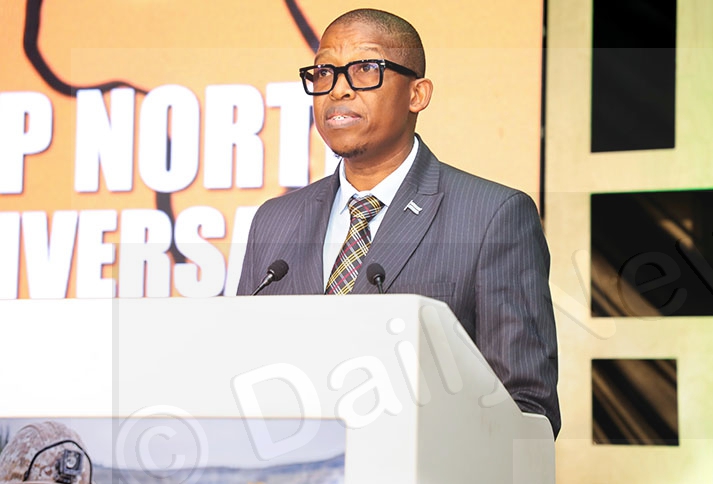
Speaking at the event that was organised to launch the report recently, Business Botswana president, Mr Lekwalo Mosienyane said there was need for more consultation before government took the decision to put the mine under liquidation, as the closure had more socio-economic implications that needed to be properly assessed.
Government’s decision to close BCL however, Mr Mosienyane acknowledged that was necessitated by the fact that BCL had become uneconomic to operate, mainly due to the decline of copper and nickel prices.
Since Business Botswana Council was astounded by the development, as was the case with many other stakeholders in both the public and the private sectors, he said, “Business Botswana appointed a task team to establish implications of the closure with a view to finding as much information as possible.”
The reaction, he said was mainly because of the likely socio-economic implications of the terminal exit of the region’s sole prime economic anchor, being the BCL mine from Selebi Phikwe.
Presenting the task team report, Business Botswana chief executive officer, Dr Racious Moatshe said government’s decision to place BCL, Tati Nickel Mining Company, and related entities under provisional liquidation in October 2016 was ostensibly made to minimise losses to the shareholder as the mine was fast spiralling towards a state of bankruptcy.
Findings of the task team, he said were that there could have been more important steps taken to avoid the abrupt closure.
Such approach, he said ‘would have been much more informative and would have minimised socio-economic and environmental implication around the closure from the provisional liquidation’.
“An important aspect of this would have been the conduct of socio-economic impact study and environmental impact assessment study of the closure of BCL,” he added.
However, Business Botswana CEO acknowledged that government was mitigating some of the negative effects of the closure, as the impact of the closure was unfolding over time.
The task team came up with suggestions on how to sustain Selebi Phikwe.
The major recommendation is that the mine should not be completely shut down as it still had potential to be mined profitably with some restructuring and change of ownership.
The team also recommended that Selebi Phikwe could be set up as a special hub for certain key sectors, including; Mineral Processing, Engineering, Tourism, Transport and Manufacturing.
Given the region’s richness in agriculture, it was also recommended that to attract tertiary training institutions such as the newly established Botswana University of Agriculture and Natural Resources, an additional campus be established in Selebi Phikwe.
“This will make the activities of this university more relevant in terms of problem-solving research, as well as ease out the space requirements for its expansion as it transforms to a fully-fledged university with all the faculties established,” he said.
As a way forward for Selebi Phikwe and the region at large, the team recommended that government, in collaboration with Business Botswana, should conduct a Socio-Economic Impact Assessment.
Instead of shutting the mine, ‘it should be sold to an investor with financial muscle to run and make sure the mine is profitable in an effort to have an economic value for the region.’
Furthermore, the team also recommended that there was a need to establish a steering team, inclusive of the entire group of critical stakeholders such as; government ministries; Business Botswana; Selebi Phikwe Multi-Stakeholder Coordination Committee (SPMSCC) - coordinated by the newly appointed coordinator of the Revitalisation Programme.
There should be a vehicle overseeing the implementation of any economic regeneration efforts and this should be representative of all the stakeholders including; business, academia, community based organisations and Business Botswana.
Additionally, given that the SPEDU region has massive amounts of water and fertile soils, the team recommended that ‘this would be a natural place for setting up some agricultural research facilities rather than have them in Sebele, as is currently the case’.
The area, as per the report, is also prone to Foot and Mouth Disease (FMD) and the researchers could be engaged more effectively, addressing real life issues on the ground, as opposes to the current situation, where they are all situated in Gaborone, away from the scene.
Using the already existing relationships with mining companies, the team recommended that tertiary schools could also set up a school of mines and metallurgy as well as related activities in Selebi Phikwe.
This, as apart from providing an avenue for teaching and research, the team said would provide some economic value in terms of small, but useful consumer demand for goods and services from students and teaching community.
Once activities have been agreed upon, Business Botswana CEO said there should be a development of a clear result-oriented action plan and a monitoring and evaluation framework to clarify roles and track the agreed projects as well as make sure they were delivered on time and on cost.
“It is essential that the recommendations proposed should be regarded as elements of a ‘project’ capable of being monitored and whose performance will be evaluated periodically.
An establishment of a legal framework for setting up Mine Closure Rehabilitation Fund needs to be done as a matter of urgency,” Dr Moatshe added. ENDS
Source : BOPA
Author : Lorato Gaofise
Location : GABORONE
Event : BCL Report Launch
Date : 21 Mar 2017
Related News

30 Jul 2026
BMC eyes new export deals
29 Jul 2026
Modisaotsile on rise to the top
29 Jul 2026
Poultry industry attains self-sufficiency
28 Jul 2026
Ross Breeders pioneers Botswana poultry exports
28 Jul 2026