


Goo-Moremi Gorge amazes
15 Feb 2017
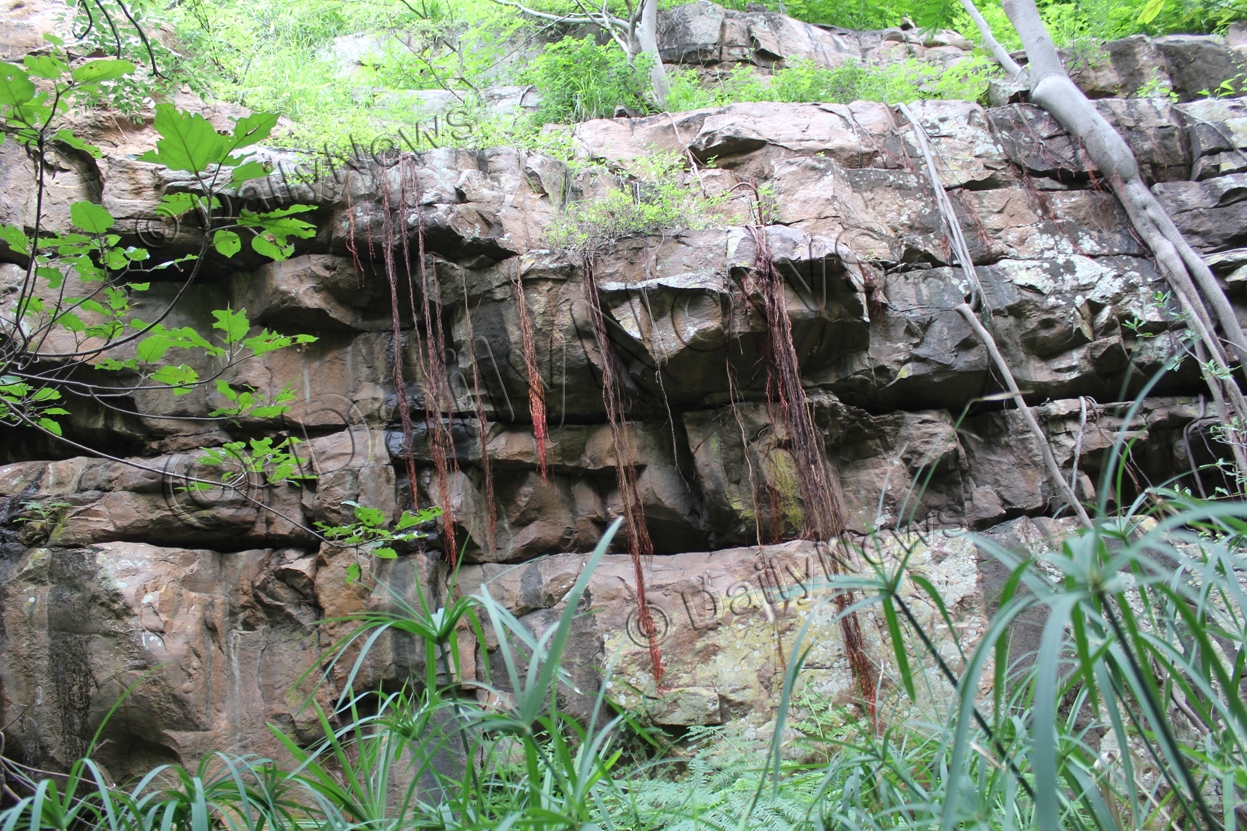
Located on the northern end of Tswapong Hills, next to the scenic Manonnye-Moremi gorge lies Goo-Moremi gorge sure to offer an exciting rock climbing adventure, without having to look across the borders.
Often Batswana make the mistake of thinking that for one to enjoy time away from the hustle and bustle of the city, they need to look to other countries but just 47km from Palapye in Goo-Moremi, is the aesthetic Goo-Moremi gorge and it offers the most soothing and tranquil experience any nature loving person can ask for.
Not to be confused with Moremi Game Reserve in the Okavango Delta, the gorge is undoubtedly one of the greatest getaways in the central district.
It was on February 11, when Botswana Tourism Organisation (BTO) invited media personnel to a pre-tour coverage of Goo-Moremi Gorge prior to its opening on February 24.
The weather was permitting and the ride from Palapye to Moremi was smooth in what would turn out to be an epic adventure.
Everybody was excited at seeing the gorge and little did they know that what lay ahead was a five hour and can I add not for the faint hearted rock climbing experience.
I challenge those who frequent Kgale Hill in Gaborone and those who regard themselves to be adrenalin junkies to experience Goo-Moremi gorge.
At the entrance is a big sign board stating the rules as the place is regarded as sacred and has to be treated with utmost respect.
Sometimes when visiting places like this one, one is tempted to take a souvenir with them in this case maybe a rock or plant but such is prohibited due to beliefs associated with the gorge.
The climb started with reporters taking selfies, wanting to capture every moment but after a while, it was just the wind and birds hovering above.
Mr Thapelo Kwadiba, a tour guide affectionately referred to as Tico, warned of a mmabi tree, which lay almost all the way to the main water source and the vulture gorge.
The gorge affords one a close view of the waterfalls and the diverse vegetative habitat with large beautiful tree species and the bush adventure creates memories that will linger longer than the African sunset.
When hiking, caution should always be taken against the mountain tree needle-mmabi, snakes, slipping and falling and the trail beyond the first waterfall is difficult to maneuver due to slippery patches, so extra care is needed to avoid injury.
An important advise beforehand was that swimming in the gorge was reserved for the ancestors.
There is no eating, smoking or drinking any beverage except water.
The gorge is an indulgence of nature where one can explore the diverse trails, rocky landscapes that form part of Goo-Moremi and a place abound in ancestral spirits (badimo).
The gorge, one of the most spectacular in the country boasts five waterfalls, with the first and second being the smallest and fan out into the large waterholes.
There is a telescope at the third waterfall for tourists to engage in bird viewing and there is an abundance of birdlife. It is from this end that one can see pools with crystal clear water.
Villagers especially Bapedi/Batswapong regard water from these pools as medicinal and for a change we were allowed to quench our thirst from the pools.
Just above the fifth waterfall lies an open space in between the hills which Tico explained to be the place where vultures drink water.
Tico said there were two types of vultures found at the gorge, the cape and the white backed vulture and there were more than 200 vultures around the gorge.
The cape vulture is classified as an endangered species by the International Union for Conservation of Nature and the gorge is one of the only two breeding sites in Botswana, the other being Otse.
It is not easy to see the vultures as they are camouflaged with the rocks.
This they do with their droppings and it is to protect themselves from predators.
Tico explained that a female vulture lays only one egg which takes 28 days to hatch and like humans they babysit their young ones.
Moremi village, which moved to its current location in the 1940s, is the ancestral village of the Bapedi/Batswapong of the Tswapong Hills.
The village, which was ruled by Kgosi Mapulane, whom the primary school at the new Moremi village was named after, was originally located at the site of the gorge and the spring served as a source of water for residents and their livestock.
The Bapedi/Batswapong believed that the gorge was home to their ancestral spirits and its exact location a guarded secret of the Komana. It remains a powerful force to the social and spiritual life of the village.
Apart from its rolling hills, unspoilt gorges, perennial crystal clear water pools, quiet flowing waterfalls and exclusive birdlife, Goo-Moremi is an area covered in mystery with many amazing myths and legends.
The area around the gorge is home to historical remains including Kgosi Mapulane and his sons’ graves as well as the original village, kgotla and school.
Also in the vicinity of the gorges is legendary ‘Tshekedi’s Road,’ which connected Moeng College and Palapye.
Along the trails of the gorge is the Sir Seretse Khama Alarm Stone which the legend has it that in the morning of July 13, 1980 between 2am and 5am villagers of Goo-Moremi heard a loud rumbling as a huge rock tumbled from the gorge.
This is said to have been a sign or message that someone of great importance had passed on hence the name and indeed, news followed that the first president of Botswana and paramount chief of Bangwato Sir Seretse Khama had died.
Goo-Moremi gorge is a spectacular tourist spot and a must see for both local and international toursist. ENDS
Source : BOPA
Author : Leungo Rakgati
Location : MAHALAPYE
Event : INTERVIEW
Date : 15 Feb 2017
Related News

15 Oct 2026

15 Oct 2026
Botswana open for business

15 Oct 2026
Financial constraints hamper project delivery

15 Oct 2026
Due signs new dissemination MoU

15 Oct 2026