

Benjamin leather Intellect
12 Apr 2016
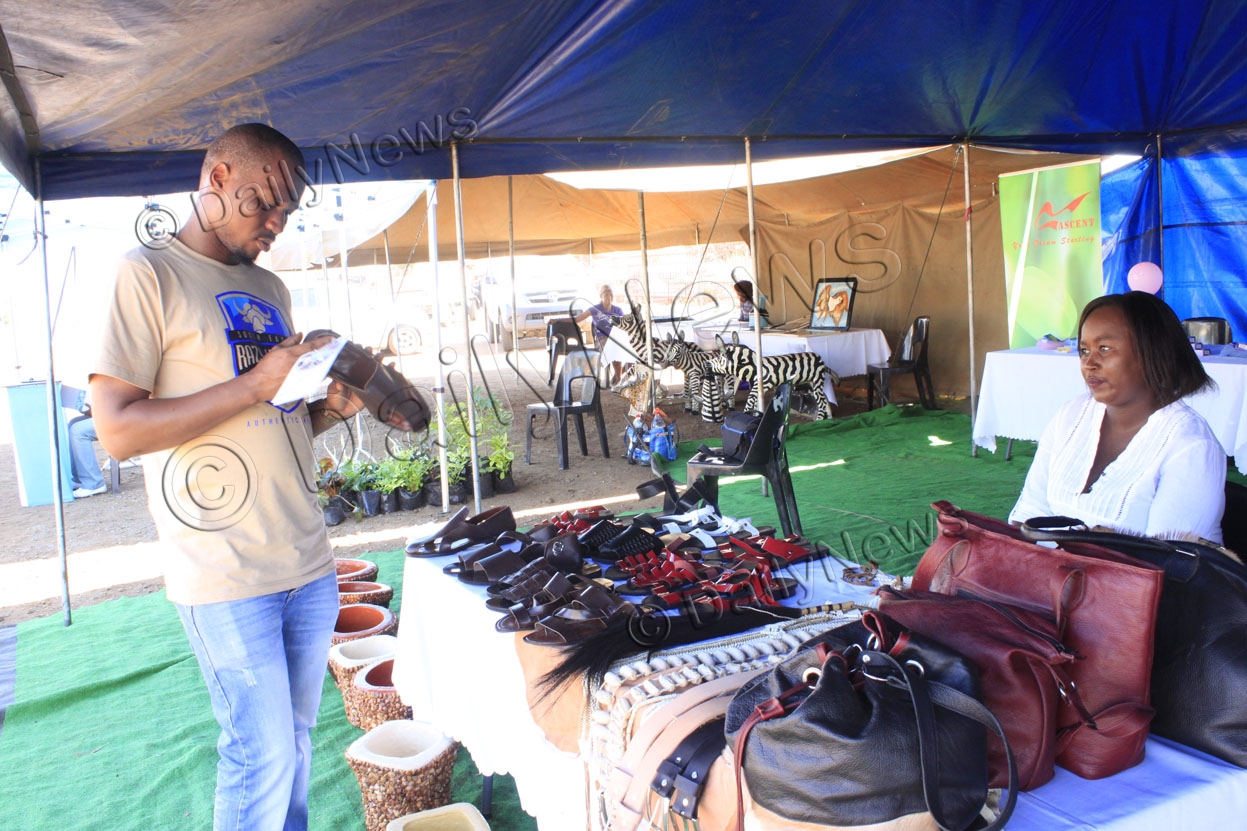
A distinctive smell of leather, glue and the smooth sounds of a grinding machine are the vital elements which make up Ms Masego Benjamin’s workshop.
Located at the Local Enterprise Authority (LEA) incubators in Ramotswa, the workshop produces quality leather products ranging from shoes, belts to wallets.
The small business, registered under the name Leather Interlecual Enterprise, traces its origins to the boot camp organised by Ministry of Youth, Sport and Culture (MYSC), which Ms Benjamin attended.
It was during the boot camp that the 34-year-old was exposed to various business ideas but eventually fell in love with leather work. After the camp, Ms Benjamin attended another six months training by the Ministry of Agriculture, where she learnt leather processing, tanning and sewing.
In February 2015, she was funded by the Youth Development Fund (YDF) and started operating in May the same year.
Currently, the business has two employees and most of their products are made of cattle leather with an exception of women handbags that are made of wild animal leather.
According to Ms Benjamin, the type of material used determines the price for her products, adding that the more the raw materials of a product cost, the higher the end product will be.
Leather Interlecual Enterprise does not only specialise in shoes and belts, but it also provides traditional attire for traditional groups.
The business also makes customised products and customers also have the privilege of bringing their own designs.
Ms Benjamin said it takes her only a day to make and finish a pair of shoes and her prices range between P100 and P400.
She said it was easier to make a product for a customer who already has a design than the one who does not as it takes longer to devise a design.
The toughest challenge, she said, was to convince new customers that her products were local products.
She suspects that this was because her products were of high quality.
In addition, she said it could also be due to the fact that shoe soles were imported from South Africa and branded, hence they were easy to deceive customers to believe that she imports all her shoes.
Nonetheless, she is thrilled that she has by far managed to convince her customers by inviting them to her workshop to witness how she manufactures a pair from the beginning to the end.
Ms Benjamin said she purchases some of her raw materials like soles in South Africa because there were no manufacturers of such in Botswana.
Another challenge she is faced with is the low turnout of customers at her workshop
She has since tackled this situation by attending market day hosted by LEA and expositions organised by the Department of Gender Affairs. ENDS
Source : BOPA
Author : Tlamelo Moagi
Location : RAMOTSWA
Event : Interview
Date : 12 Apr 2016
Related News

30 Jul 2026
BMC eyes new export deals
29 Jul 2026
Modisaotsile on rise to the top
29 Jul 2026
Poultry industry attains self-sufficiency
28 Jul 2026
Ross Breeders pioneers Botswana poultry exports
28 Jul 2026