


Measles challenge to beef industry
15 Dec 2015
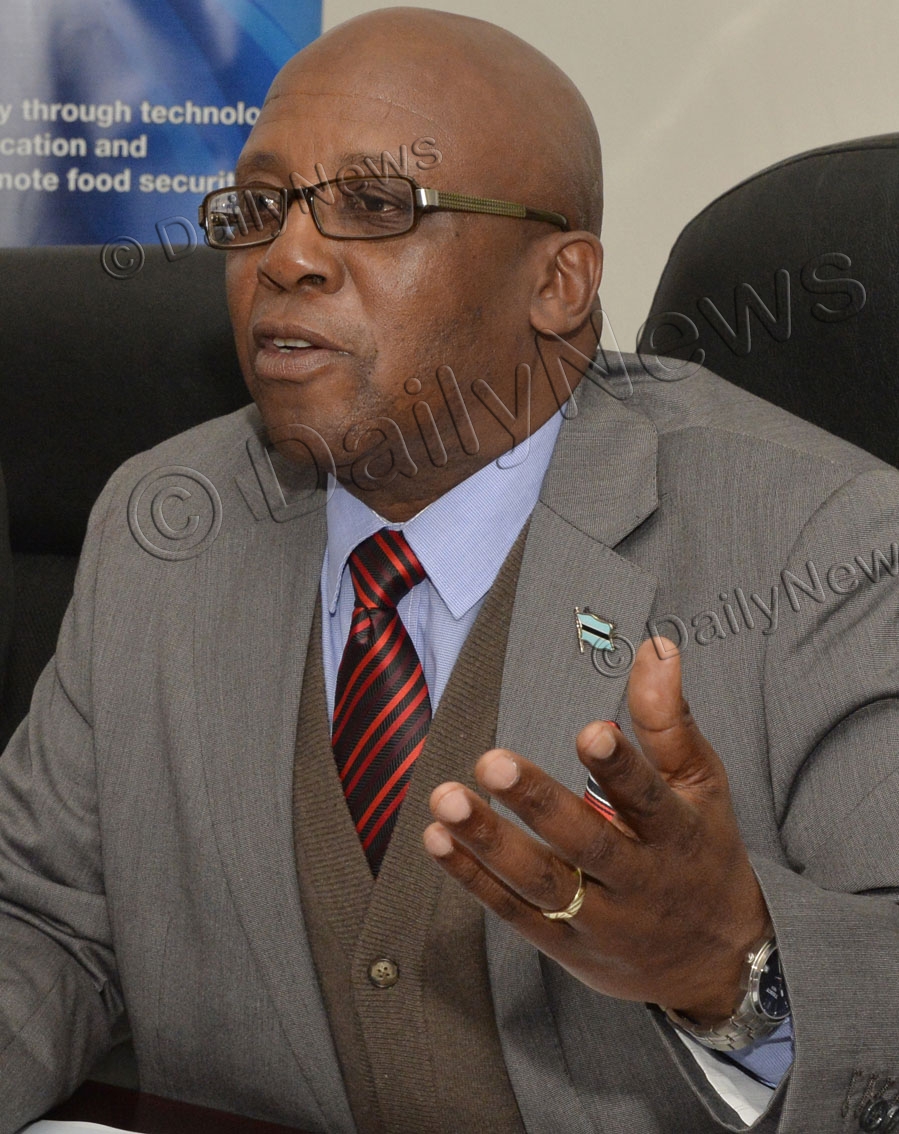
Minister of Agriculture, Mr Patrick Ralotsia, has advised farmers in the Southern District to work closely with Botswana Meat Commission (BMC) to help address challenges of measles disease.
Mr Ralotsia said measles continued to be a challenge to the beef industry.
The beef industry, he said, had potential to add value to the economy and improve Batswana’s livelihoods. Mr Ralotsia was addressing a kgotla meeting in Kanye on Monday (December 14).
He said it had become a norm that during Christmas and New Year holidays, various choirs’ competitions were held at lands where there were no toilets. People relieved themselves anywhere and cattle fed on human waste, which caused measles.
He said the measles situation called for a national campaign with farmers fully engaged.
Minister Ralotsia also appealed to farmers to intensify campaign on the fight against measles, adding that the use of pit latrines at cattle posts and farms would help address the measles challenge.
As a result of such challenges, he noted that BMC incurred running costs while on one hand received few cattle from farmers.
Therefore, Mr Ralotsia appealed to farmers to work closely with BMC to help address challenges affecting the growth of the industry and even work towards satisfying European Union (EU) requirements.
Batswana communal farmers kept cattle as savings rather than for commercial purposes, he said.
‘’If cattle ingest tapeworm eggs from humans, they can affect their carcass. In beef cattle, the human tapeworm is the culprit. Cattle feed can become contaminated with this parasite if untreated human waste makes its way onto cattle pastures,’’ he said.
He said given the poor quality of cattle, they were kept in feed lots for days to make them EU compliant. He added that it took some weeks to reach the market and realise profits from the sales.
BMC, he said, also faced challenges of animal traceability as some had multiple boluses while the traditional cattle delivery system also had serious limitations hence BMC never reached the quota set by EU. EU still remained Botswana’s biggest market, he said.
Minister Ralotsia said Botswana could not compete on volume, as BMC slaughtered few cattle per month.
He emphasised the need for Botswana to concentrate on the niche market, adding that the product had to be of high quality, consistent and should meet requisite volumes.
He said such challenges ultimately lead to delay in payments and unsatisfactory prices.
On Economic Stimulus Programme (ESP), the minister stated that it encompasses construction of roads to farms and electrification.
Commenting, residents appealed to the government to assist farmers with livestock cluster fencing.
“Construction of toilets along highways will result in a clean environment and address the disease,” said Mr David Kerekang.
Former MP for Kanye North, Mr Kentse Rammidi appealed to farmers to construct toilets at cattle posts and lands. He, however, advised government to include purchasing of tractors in the public officers government loan scheme.
The former Southern District Council chairperson, Mr Leach Tlhomelang said ESP should concentrate on construction of roads, water conservation and electricity. Ends
Source : BOPA
Author : Tshiamiso Mosetlha
Location : Kanye
Event : Kgotla meeting
Date : 15 Dec 2015
Related News

03 Aug 2026


30 Jul 2026
BMC eyes new export deals
29 Jul 2026
Modisaotsile on rise to the top
29 Jul 2026