

Palapye to host energy conference
18 Aug 2015
Energy availability is a fundamental requirement for wealth generation, development and sustainable growth of nations.
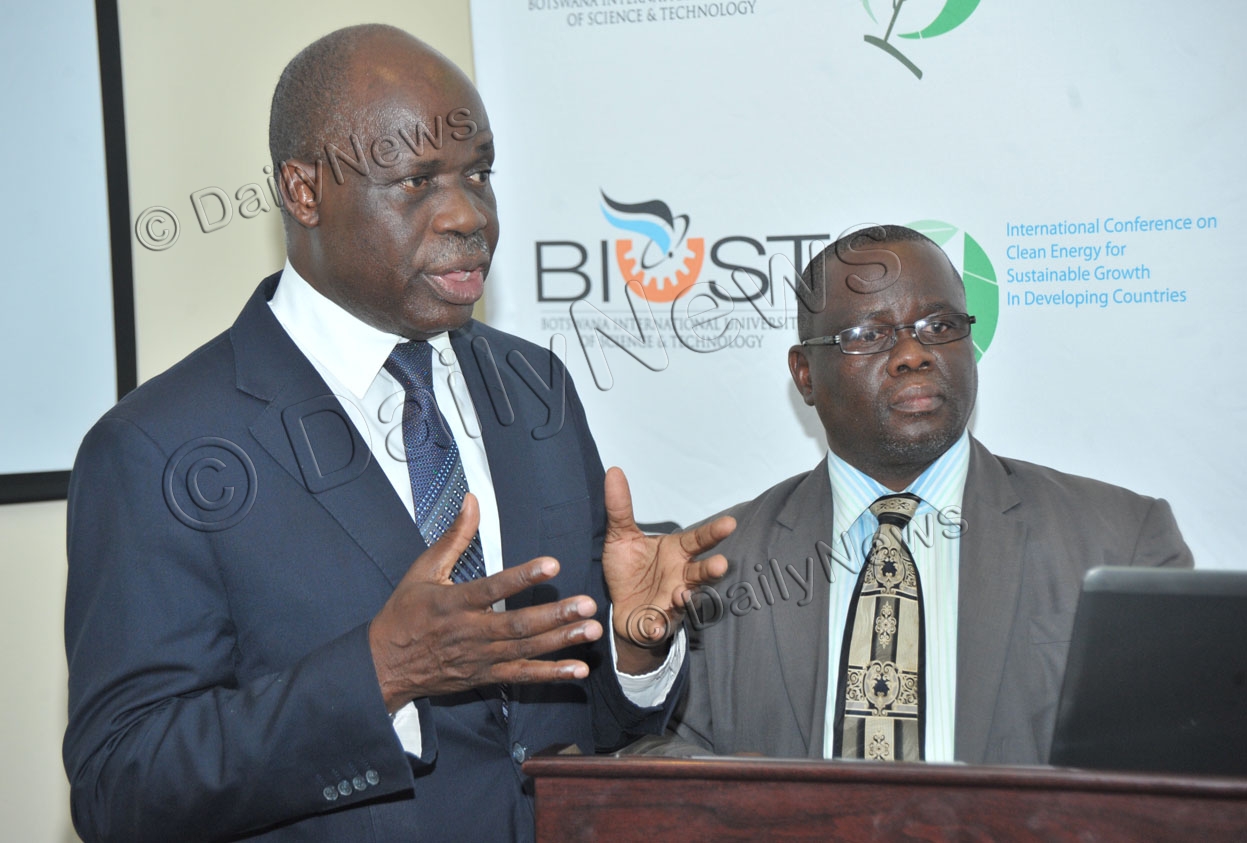
Botswana International University of Science and Technology (BIUST), head of the Department of Mechanical Energy and Industrial Engineering, Proffessor Tunde Oladiran said this at a press briefing in Gaborone on the planned international conference on clean energy for sustainable growth in developing countries.
He said the Millennium Development Goals provide measurable milestones, adding that it was, however, unfortunate that out of the eight pillars, none of them was specifically on energy.“It is crucial to apprehend that successful implementation and achievement of these goals requires provision of modern and uninterrupted energy supply,” he said.
He also expressed concern that over one billion people in the world do not have access to electricity and three billion had no access to good cooking systems and infrastructures. He noted that the United Nations had adopted the sustainable energy for all pillar which made cleaner, more efficient and more accessible energy a priority agenda for nations.
“The principal objectives of the pillar was to ensure universal access to modern energy services, double the global rate of improvement in energy efficiency and double the share of renewable energy in the global energy mix,” he said.
He said electricity consumption had increased significantly and that it was disheartening that energy consumption has outstripped supply. He also expressed satisfaction that the government was committed to sustainable energy provision.
Prof. Oladiran noted that “Botswana has one of the highest solar radiation regimes, and that the government is also committed to diffusion of renewable energy technology.”
The purpose of the conference, which will be held at the Palapye International Convention Centre next month, will bring together professionals, academics, researchers, industrialists and policy makers engaged in the assessment, design, service provision, mainstreaming and maintenance of clean energy system.
“Energy is not usually emphasised during various stages of project delivery. The impact of uncontrolled energy use is manifested in its severe negative impact on the environment.
When energy provision is not sustainable, health and safety, comfort, productivity, education delivery and general standard of living are also compromised. Effective clean energy must be planned and introduced pragmatically. Energy culture must be developed and natured,” he said.
For his part, the director of the Department of Energy in the Ministry of Minerals, Energy and Water Resources, Mr Kenneth Kerekang said the conference would provide an opportunity for networking and to share and refine the draft energy policy to be presented to Parliament in November.
“Botswana is committed, but unfortunately in terms of renewables, satisfactory achievements have not been reached yet. Currently, renewables contribute one per cent to the total energy supply, but we plan that by 2030, it should contribute 15 per cent. We have undertaken several initiatives which include the expression of interest for 100 megawatts,” he said. ENDS
Source : BOPA
Author : Thuso Kgakatsi
Location : GABORONE
Event : Press briefing
Date : 18 Aug 2015
Related News
09 Jun 2026
Harvard Health Partnership role significant

09 Jun 2026