


MEWT grows tourism
19 Mar 2014
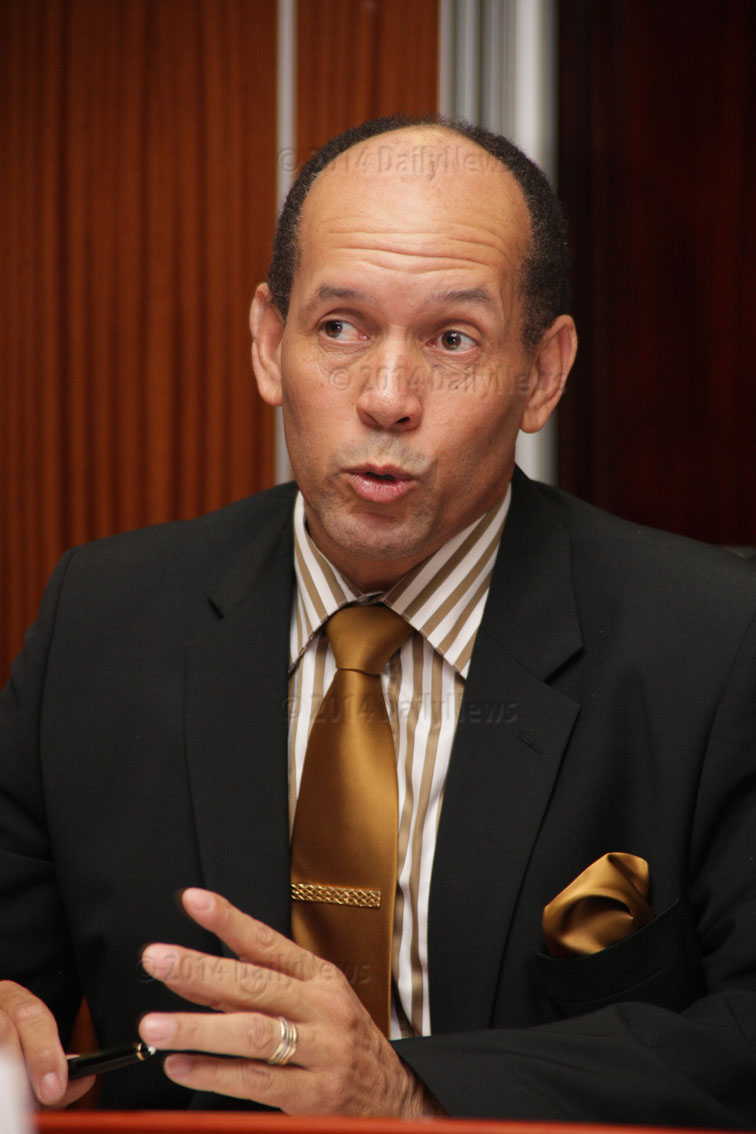
Minister of Environment, Wildlife and Tourism (MEWT), Mr Tshekedi Khama has told Parliament that there is a positive outlook on the growth of domestic tourism.
Presenting his ministry’s budget request for the 2014/15 financial year on Tuesday, March 18, Mr Khama said their targeted campaigns included ‘Explore your Botswana’ and cultural festivals such as Domboshaba, Dithubaruba, Batlokwa Cultural day, Son of the soil and others.
He said sporting events such as the Khawa Dune Challenge and the Toyota Kalahari Botswana 1000 Desert Race continued to grow. Mr Khama said as at the end of December last year, there were 937 licensed facilities and out of this number, 561 were wholly citizen owned, 148 were joint ventures and 228 non-citizen owned.
He noted that his ministry had also made a decision to expand tourism activities into wildlife management areas for community empowerment. The minister said so far, six potential sites had been identified in Kgalagadi, Kweneng and Chobe districts.
He noted that additional sites would be identified in Central District as part of the Makgadikgadi Nxai Pans National Park western boundary fence realignment exercise and the process would yield over 10 sites for community use.
To further enhance investment in tourism, Mr Khama said they had completed the Kasane/Kazungula Tourism Strategy and Maun Educational Park Management Plan, both of which would be implemented with the respective local authorities.
He said he had instituted a moratorium on licensing of new tourism facilities in Kasane and Kazungula to ensure smooth implementation of the strategy.
Minister Khama said tourism projects, namely Tsabong Camel, Kasane Recreational Park and Cultural village as well as the Lepokole Nature Reserve are complete and would be operational in the first quarter of the year.
He noted that these projects would contribute positively to the livelihoods of communities while also broadening the tourism product offering in other geographic areas of the country.
Furthermore, Mr Khama said the process of nominating the Okavango Delta as a World Heritage Site has gone through community and stakeholder consultation.
He said the dossier has been accepted as complete by the World Heritage Committee and the site has been assessed by the International Union for the Conservation of Nature (IUCN).
The minister told the House that the decision to list, defer or reject the nomination would be taken in Doha, Qatar in June this year, and if listed, it would be Botswana’s second World Heritage Site after Tsodilo Hills.
He said they have employed 72 custodians for the 100 monuments, which have roads, access trails and signage.
On wildlife management, the minister said they have observed alarming declines in a number of wildlife species such as wildebeest, sable, giraffe and springbok in the delta and Kgalagadi.
He said the ministry has taken a decision to temporarily ban hunting to allow the causes of the declines to be investigated and remedial measures put in place where feasible.
Mr Khama further said the fight against human wildlife conflict continues to attract considerable attention and resources, adding that although wildlife is a resource, it can be detrimental to people’s lives.
He said they have revised compensation rates for elephant and lion with a view to lessen the impact on communities and industries affected.
Mr Khama said through the Northern Botswana Human Wildlife Co-existence project co-founded by government and World Bank, over 300 farmers have been trained and are using human-wildlife conflict mitigation techniques.
These, he noted, included the use of chilli pepper as an elephant deterrent, use of livestock guard dogs and innovative predator proof kraaling techniques.
He said he was concerned that even with assistance offered to communities, some of the farmers and legislators are not committed and therefore these efforts become futile.
Mr Khama said poaching in Botswana and around the world is increasingly becoming a challenge, not only from the environmental perspective but security wise too.
He said there has been an increase in poaching of high profile species, which is a new type found in the country and poaching of elephants continues to be high. The minister said they have taken a decision to augment law enforcement in the Department of Wildlife and National Parks (DWNP) and have requested additional posts, vehicles, equipment as well as staff houses and offices.
On waste management and pollution control, the minister said indiscriminate and uncoordinated disposal of waste in the open environment by individuals and companies remains a challenge, which requires urgent attention.
He said government has invested a lot of capital into construction of landfill sites and waste water treatment facilities, which are not performing to the required standards.
Mr Khama said in an effort to encourage waste recycling, they have undertaken a pilot project on source segregation of waste at four primary schools in collaboration with the water recycling industry.
Furthermore, the minister informed the house that they have developed a forest conservation strategy as part of efforts to improve forest resources conservation and sustainable utilization.
He said the tree planting initiative, which was intended to combat land degradation, continues to bear fruit although the main challenge has been poor rains.
On climate change mitigation, the minister said his ministry was involved in development of a policy and strategic plan to address climate change and consultancy services for the project were procured in August last year and completion date would be December this year.
He said a Southern African Development Community (SADC) project on the development of an Intergrated Monitoring System for Reduced Emissions from Deforestation and Degradation (REDD+) is also being done. ENDS
Source : BOPA
Author : Kesentse Ketumile
Location : GABORONE
Event : Parliament
Date : 19 Mar 2014
Related News

25 Aug 2026
Forensic audit generates 90 priority actions
25 Aug 2026