

Camera-Drammeh commends Botswana

09 Mar 2014
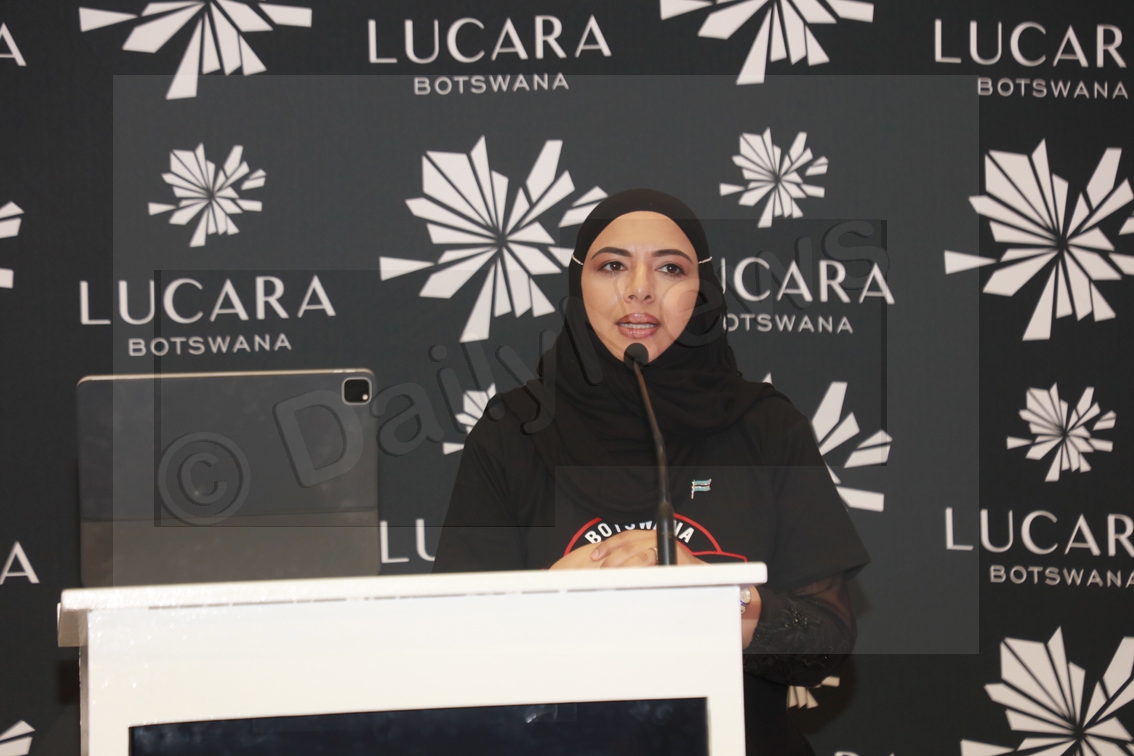
The acting United Nations (UN) resident coordinator, Ms Camara-Drammeh has commended Botswana for its commitment on putting in place good legal and policy frameworks that have facilitated institutionalisation of different gender equality and women’s equality programmes.
Speaking at the commemoration of the International Women’s Day in Lerala on March 6, Ms Camara-Drammeh said it was encouraging to note the efforts and accomplishments by Botswana and in particular the department of gender affairs in the Ministry of Labour and Home Affairs.
She called on every sector to recognise that everyone has a responsibility to strongly support addressing feminisation of poverty through integration of gender concerns in macro-economic policy and in poverty reduction strategies.
She said she was hopeful that through the commemoration of Women’s Day, the country would re-dedicate and renew the efforts to empower women including adolescent girls and also boys with comprehensive information and knowledge to facilitate their ability to make informed choices for the destiny of their future.
Ms Camara-Drammeh said governments, international organisations, civil societies, communities, families, religious leaders and women and girls had an important role in affecting change. Moreover, she said, men need to be involved if gender equality was to be achieved.
She said UN in Botswana remains committed to supporting government initiatives that promote gender equity, equality and women’s empowerment.
Ms Camara-Drammeh said the 2014 theme: Equality for Women is Progress for All, resonated the collective efforts in addressing concerns and major challenges such as poverty, inequality, violence against women and girls and insecurity which the world was grappling with.
She said gender based violence (GBV), economic discrimination, reproductive health inequalities, and harmful traditional practices remained the most pervasive and persistent form of inequality.
She said despite many international agreements affirming their human rights women were still much more likely than men to be poor and illiterate. “About two thirds of the illiterate adults in the world are female,” she said.
She said women usually had less access than men to medical care, property ownership, credit, training and employment adding that they were far less likely than men to be politically active and far more likely to be victims of domestic violence.
She said women for both physiological and social reasons were more vulnerable than men to reproductive health problems.Reproductive health problems including maternal mortality and morbidity, represents a major but preventable cause of death and disability for women in developing countries, she said.
Ms Camara-Drammeh said failure to provide information, services and conditions to help women protect their reproduction health therefore constitutes gender based discrimination and a violation of women’s rights to health and life.
She however said it was not all gloom and doom because gender issues now receive more attention than they did in the past. She said legal changes which most countries have now implemented are often a necessary step to institute gender quality.
She said formal international agreements such as International Conference on Population and Development (ICPD) Programme of Action and the Millennium Development Goals, Convention on the Elimination of All Forms of Discrimination against Women (CEDAW), Beijing Declaration and Platform for Action and many others have provided key areas for policy changes.
“Nearly 20 years after the Beijing Women’s Conference and 15 years after the Millennium Summit we look back at the achievements that have been made,” she said.
She said the recent ICPD review report reveals that worldwide over 97 percent of countries report having programmes, policies and strategies addressing gender equality, equity and empowerment of women and as such women are gaining ground in the labour market.
Globally, she said, 40 out of every 100 wage earning jobs in the agricultural sector were held by women in 2011 and this shows an improvement since 1990 when only 35 out of 100 were held by women.
She said more girls are in school and in the sub-Saharan Africa Region net-enrolment rates have risen substantially from 47percent to 75percent between 1990 and 2011.
She said there is now 93 girls enrolled in primary school to 100 boys, fewer women die in pregnancy and childbirth and more women are in leadership positions.
Therefore, she said it was a cause for all to join the people of the world in celebration of the progress made for women’s rights, women’s empowerment and gender equality and still acknowledging that progress has been low, uneven and in some cases women and girls face new and more complex challenges. Ends
Source : BOPA
Author : Portia Rapitsenyane
Location : LERALA
Event : International Women’s Day
Date : 09 Mar 2014
Related News
08 May 2026

07 May 2026
Kagame wraps visit with DTCB tour
07 May 2026
BURS donates nine chain saws
07 May 2026
Donation boosts primary schools in Gaborone
07 May 2026