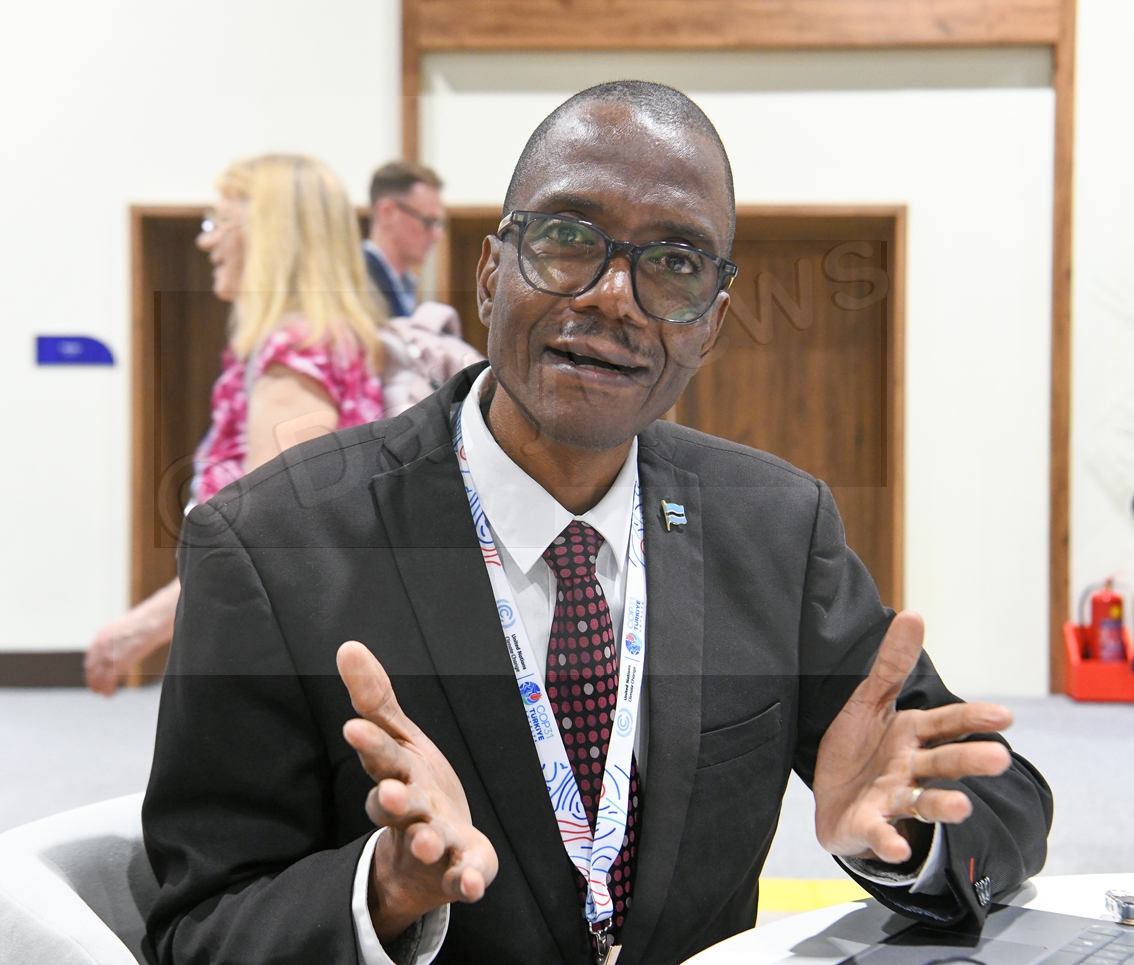
Budget Pitso paves path to economic recovery
17 Nov 2026
Government has commenced preparation for the 2027/28 budget, consulting with stakeholders from the civil society and private sector with an aim to shift public fiscal flows away from diamond dependency to building a new era of domestic production and private sector-led economic growth.
The Ministry of Finance convened a Budget Pitso in Gaborone on Monday, a forum that builds on the nationwide consultation cycle following the youth and local authority sessions that recently took place in Selebi Phikwe and Maun respectively.
The process will ultimately conclude with a Budget Strategy Paper set for Parliament before the final 2027/28 budget is presented early next year.
Leading the consultation, Vice President and Minister of Finance, Mr Ndaba Gaolathe delivered a an analysis of the country’s financial position, emphasising that the Budget Strategy Paper was more than a financial document but a tool for open, dialogue where citizens participated on how the limited public funds were used.
“We are navigating a challenging period, not merely because the pressures are heavy, but because the structure of our economy must change as government can no longer be the sole engine for growth,” said Mr Gaolathe.
He stressed that sustainability depended on empowering the private sector to lead business activity and job creation, noting that government was improving management of public funds, and ensuring that every Pula spent delivered real value to households.
Ministry of Finance, deputy secretary for Macroeconomic Policy, Mr Batane Matekane, presenting the core findings of the 2027/28 Budget Strategy Paper, provided stakeholders with insights into the country’s macro-economic performance and outlook, noting how economic current projections suggested signs of recovery.
“Overall, Botswana’s Gross Domestic Product (GDP) is projected to grow by 3.8 per cent in 2026 and accelerate to 4.2 per cent in 2027, supported by recovering mining output and non-mining activity,” said Mr Matekane.
Despite improved growth figures, Mr Matekane acknowledged that everyday life remained difficult for many households, with high unemployment rates at about 27.3 per cent, and youth unemployment remaining a pressing concern at 39.8 per cent.
“Economic growth must therefore, become more inclusive so that recovery translates into real paychecks and lower living costs for ordinary families,” he explained.
Mr Matekane also briefed stakeholders on the recent country’s global financial ratings, stating that Moody’s report slightly lowered Botswana’s credit rating to Baa2 but improved its future outlook to stable.
He further explained that during the same period, S&P Global kept the country’s rating at BBB, while still maintaining a negative outlook.
“To international investors, these ratings signal that the country remains a reliable, well-governed place for business although with caution because lower diamond revenues have widened budget deficits and pushed public debt toward 45 per cent of GDP. Therefore, borrowing money internationally could become more expensive if government does not control spending and rebuild its financial savings,” said Mr Matekane.
To protect stability while nurturing growth, the 2027/28 strategy prioritises five key areas: fiscal discipline, infrastructure maintenance, human capital, social protection and private-sector enablement.
He further cautioned that economic recovery faced several threats spanning from a volatile trade landscape, geopolitical tensions and growing competition from lab-grown diamonds all creating an unstable environment for mineral revenues.
Locally he cited climate risks, particularly recurring drought threaten agriculture as well slow job creation caused by delays in implementing government projects.
Outlining the nation’s detailed strategy to diversify the economy away from diamonds, Botswana Economic Transformation Programme (BETP) secretariat, Ms Shelter Sheleni deliberated on how the programme was designed to end the culture of government ministries working in isolation, instead coordinating 186 high-impact projects over the next decade, turning plans into real jobs and diverse industries, with 60 per cent led and funded by the private sector and 40 per cent supported by government.
“Diversification needs to be activated. We intend to achieve our aspiration with project funding rations at 60 per cent private sector led and 40 per cent government supported.
By focusing on six core economic sectors, BETP aims to remove obstacles such as slow land approvals and outdated regulations, ultimately doubling the size of the economy and generating over meaningful jobs,” she highlighted. ENDS
Source : BOPA
Author : Mpho Mosojane
Location : GABORONE
Event : Budget Pitso
Date : 17 Nov 2026
Related News
17 Nov 2026

17 Nov 2026
A year of putting children first-Mpepu Programme
17 Nov 2026